


Tired of generic advice like "be authentic"? You need concrete, actionable social media strategy examples that solve real problems, like running out of content, posting inconsistently, or failing to see business results from your efforts. This isn't another high-level guide filled with theory; it's a practical playbook for marketing teams, agencies, and creators who need solutions that work.
This article breaks down 10 proven strategies used by successful brands. We skip the fluff and provide the exact steps, platform-specific tactics, and common pitfalls for each. Whether you're trying to streamline your workflow, make sense of your analytics, or build a loyal community, you will find a replicable framework here.
Each example is structured for immediate implementation. We detail the core goal, the problem it solves, and the key performance indicators (KPIs) to track. More importantly, we provide tactical insights and show you how to execute these plans efficiently. For those managing multiple accounts, we’ll highlight where a tool like PostPlanify can help automate scheduling and reporting, letting you focus on strategy instead of manual tasks.
1. Content Batching and Bulk Scheduling
The Problem This Solves
You're constantly scrambling for content ideas, creating posts at the last minute, and your posting schedule is inconsistent. This reactive approach leads to burnout and a disjointed social media presence that fails to build momentum with algorithms or your audience.
How It Works
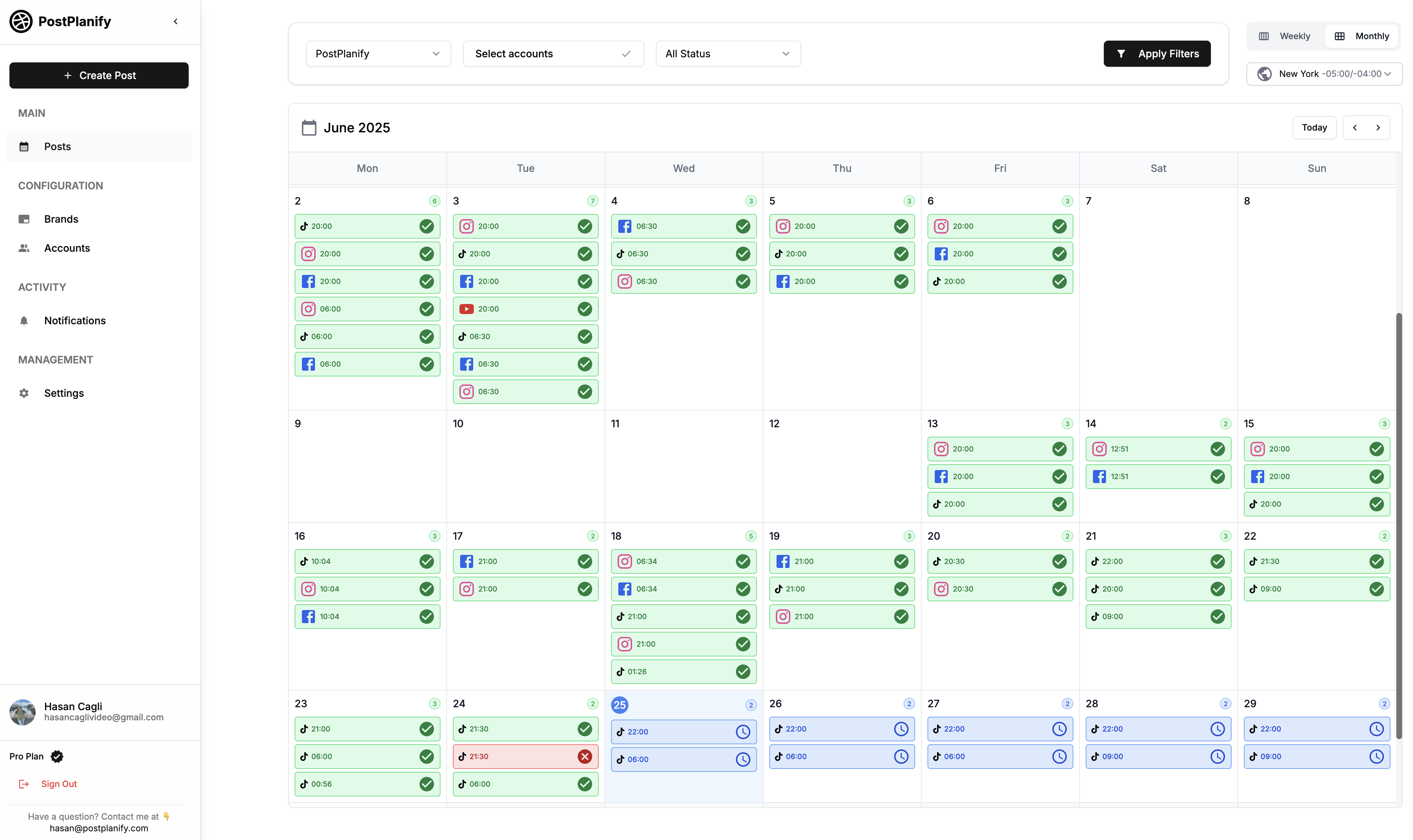
Content batching is a workflow system. Instead of creating and posting content daily, you dedicate specific blocks of time to produce a large volume of posts at once. These posts are then scheduled in bulk to be published automatically over the coming weeks or months. This method groups similar tasks (copywriting, graphic design, video editing), reducing mental fatigue from context-switching.
This is one of the most effective social media strategy examples for teams managing multiple accounts or creators juggling various platforms. It transforms social media from a reactive, daily chore into a proactive, strategic function.
 PostPlanify
All your social media in one simple dashboard
Schedule posts, track analytics, and reply to comments/DMs without switching tabs.

Engagement
+18%
Views
52.8k
Actionable Steps to Implement
- Define Your Content Pillars (and assign them to theme days): Before you create anything, identify 3-5 core themes your content will cover (e.g., Educational Tips, Behind-the-Scenes, Product Features, User-Generated Content). This prevents you from staring at a blank page. Mapping each pillar to a recurring day builds a predictable rhythm your audience learns to expect — a fitness coach might run Mindset Mondays, Workout-Tutorial Tuesdays, and Nutrition Wednesdays, while a financial advisor rotates retirement planning, investment tips, and client success stories. See our full content batching guide for the production workflow.
- Schedule Batching Blocks: Block out specific, recurring times in your calendar. For example:
- Monday (9 AM - 11 AM): Ideation and Copywriting. Write all captions for the week/month.
- Tuesday (9 AM - 12 PM): Visual Creation. Film all Reels, design all graphics, and edit all photos.
- Use a Content Calendar for Bulk Upload: Organize all your completed assets (visuals and copy) in a folder. Use a scheduling tool like PostPlanify to upload everything at once. Drag and drop the posts onto your calendar to visualize your feed and ensure a balanced mix of content pillars.
- Schedule and Forget: Once your content for the next 2-4 weeks is scheduled, you can free up your daily mental energy for high-value tasks like community engagement and analyzing performance data.
Limitations and Pitfalls
- Rigidity: A fully batched calendar can make it difficult to react to trending topics. Always leave 1-2 "flex" slots per week for real-time marketing.
- Creative Burnout: A full day of content creation can be draining. Break it into smaller, task-specific blocks (e.g., writing in the morning, visuals in the afternoon).
- Platform Nuances: Don't just copy-paste the same post everywhere. During your batching process, create variations of captions and visuals optimized for each platform's format (e.g., a formal tone for LinkedIn, a casual one for TikTok).
2. Data-Driven Analytics and Performance Tracking
The Problem This Solves
You're posting consistently but have no idea what's actually working. You're tracking vanity metrics (likes, follower count) but can't connect your social media efforts to tangible business goals like leads, sales, or website traffic. Your strategy is based on guesswork, not evidence.
How It Works
This strategy involves systematically tracking key performance metrics to make informed decisions. By understanding what content resonates, you can continuously refine your content pillars, posting times, and platform focus for optimal results. It shifts social media from a creative-only function to a measurable growth engine. You can also research competitor ads through the Meta Ads Library to see what messaging and creatives are working in your market.

Actionable Steps to Implement
- Define Your Goal-Oriented KPIs: Stop focusing only on likes. Choose metrics that align with your business objectives:
- Brand Awareness: Track Reach and Impressions.
- Engagement: Track Comments, Shares, and Saves (Saves are a key indicator of high-value content on Instagram).
- Conversion: Track Click-Through Rate (CTR) on links, form fills, and sales from UTM-tagged URLs.
- Establish a Reporting Cadence: Set a recurring time for analysis (e.g., every Monday morning). Don't just look at the numbers; ask "why?" Why did that Reel get so many shares? Why did this LinkedIn post have a high CTR?
- Consolidate Your Data: Use a tool with a unified analytics dashboard. Instead of logging into Instagram, TikTok, and Facebook separately, a platform like PostPlanify can pull all your key metrics into one view, making it easier to spot cross-platform trends.
- Run Structured A/B Tests: Use your data to form hypotheses. For example: "I believe Reels with voiceovers perform better than those with just music." Test this by posting one of each and comparing audience retention and share rates. Isolate one variable at a time for clear results.
Limitations and Pitfalls
- Data Overload: It's easy to get lost in dozens of metrics. Focus on the 3-4 KPIs that are most critical to your primary business goal.
- Misinterpreting Correlation for Causation: Just because you posted at 9 AM and got high engagement doesn't mean 9 AM is always the best time. Look for consistent patterns over several weeks before making major strategy changes.
- API Limitations: Third-party tools can only access the data that platforms make available via their APIs. For the most granular data (like follower demographics), you may still need to refer to the native analytics on each platform.
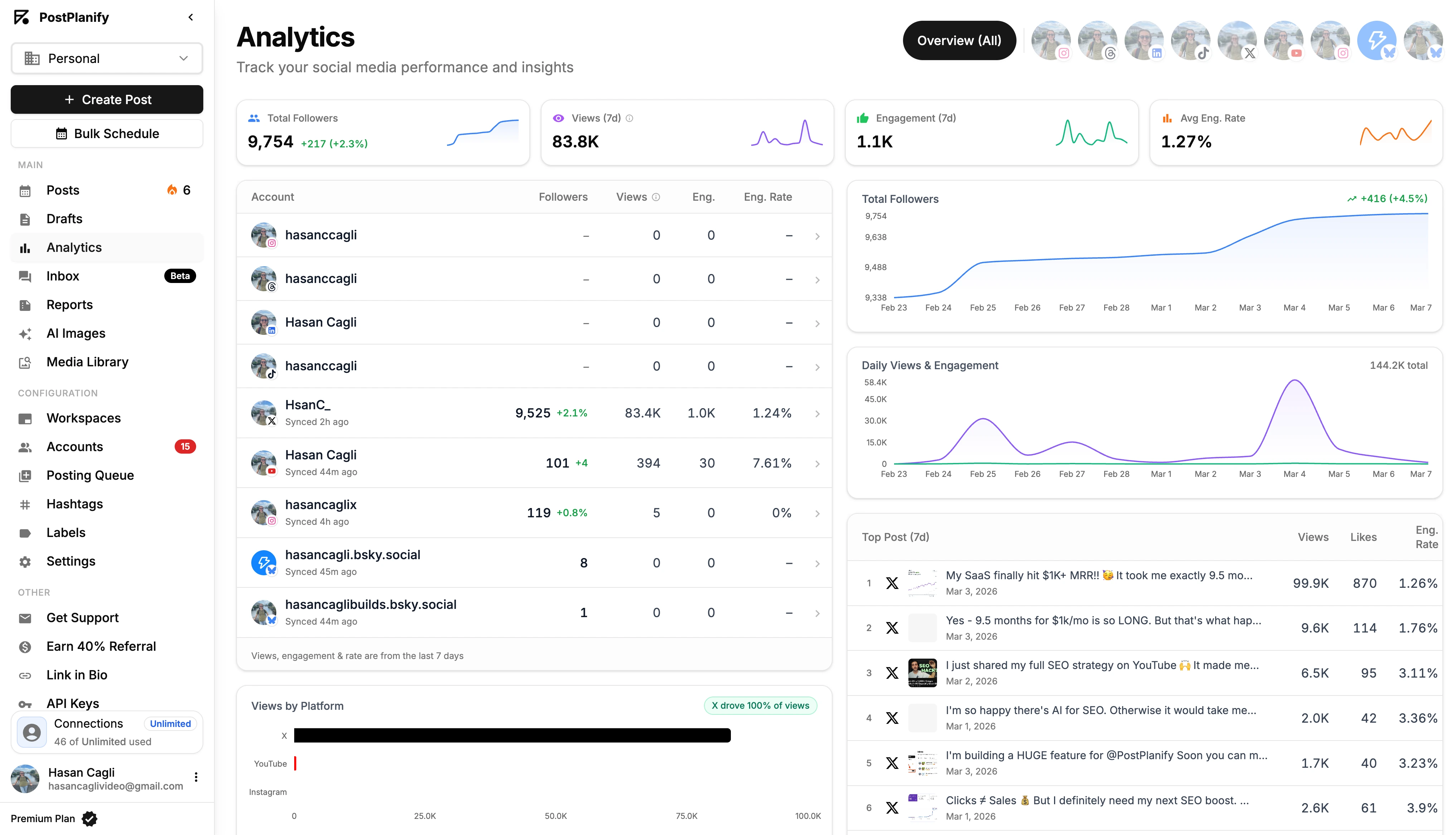
👉 Learn more about social media analytics and reporting.
3. AI-Powered Personalized Caption Generation
The Problem This Solves
Writing compelling, on-brand captions for every post across multiple platforms is time-consuming and can lead to creative bottlenecks. You spend more time writing than engaging, and your brand voice can become inconsistent, especially with multiple team members.
How It Works
This strategy uses artificial intelligence to create platform-specific captions at scale. Instead of writing from scratch, you provide the AI with a prompt, a link, or brand guidelines, and it generates optimized text. It adapts content for different platform requirements—from Instagram's hashtag-heavy format to X's concise character limits.
Actionable Steps to Implement
- "Train" Your AI on Brand Voice: Before you start generating, create a "Brand Voice" guide for your AI assistant. Provide it with:
- Tone Words: (e.g., "Witty, helpful, professional, but not stuffy.")
- Past Examples: Feed it 3-5 of your best-performing posts.
- Rules: Specify things like "Always include a question" or "Never use these emojis."
- Integrate AI into Your Workflow: Use a tool with a built-in AI assistant, like PostPlanify. When creating a post, instead of writing from a blank slate, give the AI a descriptive prompt.
- Bad Prompt: "Write a caption for this photo."
- Good Prompt: "Write 3 Instagram caption options for a photo of our new eco-friendly coffee cup. The tone should be excited and urgent. Mention the limited-time 15% launch discount and ask followers what color they like best."
- Use AI for Idea Generation: If you're stuck, use the AI as a brainstorming partner. Ask it for "10 Reel ideas for a SaaS company" or "5 ways to announce a new feature on LinkedIn."
- Review, Refine, and Humanize: Always treat AI-generated text as a first draft. Review captions for accuracy, tone, and add a final human touch. AI is great for speed, but your oversight ensures quality.
Limitations and Pitfalls
- Generic Output: Without proper training and specific prompts, AI can produce generic, "marketing-speak" captions. The quality of the output depends directly on the quality of your input.
- Lack of Context: AI doesn't understand current events or viral trends unless you provide that context in your prompt. It's not a substitute for real-time cultural awareness.
- Over-Reliance: Don't let AI replace strategic thinking. It's a tool for execution, not for defining your core message or brand strategy.
4. Cross-Platform Content Repurposing
The Problem This Solves
You're spending hours creating a single piece of high-value content (like a blog post, podcast, or YouTube video), but it only gets a short burst of attention before it's forgotten. You don't have the time or resources to create unique content for every social platform, every day.
How It Works
This strategy maximizes the value of every piece of content. It involves adapting one core "pillar" asset into multiple formats optimized for different channels. This amplifies your message, maintains a consistent multi-platform presence, and significantly reduces the content production workload.
Actionable Steps to Implement
- Identify a "Pillar" Piece of Content: Start with a substantial asset. For example, a 30-minute podcast episode.
- Create a Repurposing Map: Before you even publish the pillar content, map out all the "micro" content you can extract from it.
- Podcast Episode ->
- 3x Short Video Clips (Reels/TikToks): Pull out the most impactful 60-second quotes. Add captions.
- 1x Carousel Post (Instagram/LinkedIn): Summarize the 5 key takeaways in a swipeable format.
- 1x X (Twitter) Thread: Break down the main argument into a series of 10-15 tweets.
- 2x Quote Graphics: Design visually appealing graphics with the most powerful quotes.
- Podcast Episode ->
- Use Templates for Efficiency: Create Canva or Figma templates for each repurposed format (quote graphics, carousel slides, video end cards). This speeds up the adaptation process and ensures brand consistency.
- Schedule the Rollout: Don't post all the repurposed content at once. Use a scheduler to spread it out over 2-3 weeks, driving traffic back to the original pillar piece and extending its lifespan.
Limitations and Pitfalls
- Not All Content is Repurpose-able: Some content is too niche or platform-specific. The best pillar content is broad, educational, and evergreen.
- Requires Planning: Repurposing is most effective when planned from the start, not as an afterthought. During your video recording, think about creating natural "break points" for clips.
- Quality Drop-off: Simply cropping a horizontal video to vertical often results in a poor user experience. Take the extra time to properly re-edit and re-format content for each platform's native experience.
5. Community Engagement and Relationship Building
The Problem This Solves
Your posts get decent reach, but very little interaction. Your comment section is a ghost town, and your audience feels distant. You're broadcasting content at people instead of building a community with them.
How It Works
This strategy prioritizes two-way conversations over one-way broadcasting. It involves actively responding to comments, direct messages, and mentions to build genuine relationships. It transforms your social media from a megaphone into a community hub, fostering loyalty and word-of-mouth marketing.
This is one of the most powerful social media strategy examples for brands seeking passionate advocates. It builds social proof and drives conversions by nurturing trust directly with your followers. For more tactics, see our guide on how to improve social media engagement.
Actionable Steps to Implement
- Schedule "Engagement Blocks": Don't be "always on." Dedicate two 30-minute blocks per day (e.g., 9 AM and 4 PM) solely to engagement. During this time, your only goal is to:
- Respond to every new comment on your posts.
- Reply to all direct messages.
- Check your brand mentions and tags, and thank people for sharing.
- Ask Open-Ended Questions: End your captions with questions that encourage thoughtful responses, not just "yes" or "no." Instead of "Do you like this?", ask "What's the biggest challenge you're facing with [topic] right now?"
- Go Beyond Your Own Page: Spend 10 minutes of your engagement block interacting with content from your followers, industry peers, or accounts that use relevant hashtags. Leave genuine comments to build relationships and increase visibility.
- Automate to Facilitate, Not Replace: For high-volume accounts, use tools that can help manage interactions. For example, automating Instagram DMs for engagement can send a welcome message or a link to new commenters, but a human should still handle the follow-up conversation.
Limitations and Pitfalls
- Time-Consuming: Genuine engagement cannot be fully automated and requires a significant time investment.
- Handling Negative Feedback: You must have a clear protocol for responding to negative comments publicly—when to address, when to take it to DMs, and when to ignore.
- Scaling Challenges: As your account grows, it becomes impossible to respond to every single comment. Prioritize responding to the most thoughtful comments or questions first.
6. Influencer Partnerships and Collaborative Content
The Problem This Solves
You're struggling to reach new, relevant audiences. Building trust and credibility from scratch is a slow, difficult process. Your organic reach is limited, and you need a way to get your brand in front of qualified potential customers.
How It Works
This strategy leverages partnerships with creators, influencers, and complementary brands to tap into established, engaged audiences. Collaborative content, like joint campaigns or account takeovers, introduces your brand to new followers through a trusted source.
This is one of the most effective social media strategy examples for emerging brands that need to bypass the slow grind of organic growth.
Actionable Steps to Implement
- Identify Micro-Influencers: Start with creators in the 10k-100k follower range. They often have higher engagement rates and a more dedicated community. Look for creators whose audience demographics and brand values align perfectly with yours. Check their comment sections—are their followers genuinely engaged?
- Craft a Clear Partnership Brief: Create a one-page document that outlines:
- Campaign Goal: (e.g., "Drive 100 sign-ups for our webinar.")
- Key Talking Points: (e.g., "Please mention our sustainable materials and 30-day guarantee.")
- Deliverables: (e.g., "1 Instagram Reel, 3 Stories with a swipe-up link.")
- Creative Freedom: Emphasize that you want their authentic style to shine through.
- Provide a Unique Tracking Method: Give each influencer a unique discount code or a trackable UTM link. This is crucial for measuring the direct ROI of the collaboration.
- Build a Long-Term Relationship: The best partnerships are ongoing. Turn successful one-off campaigns into long-term brand ambassador programs. This fosters genuine advocacy. For more on this, see this guide on understanding the role of brand ambassadors.
Limitations and Pitfalls
- Authenticity Mismatches: Partnering with the wrong influencer can damage your brand's credibility. Thoroughly vet their past content and audience engagement.
- FTC Compliance: All sponsored content must be clearly disclosed with hashtags like #ad or #sponsored. Failure to do so can result in penalties for both the brand and the creator.
- Measurement Difficulty: While codes and links can track conversions, measuring the impact on brand awareness or sentiment is more challenging and requires post-campaign surveys or brand lift studies.
7. Storytelling and Narrative-Driven Content
The Problem This Solves
Your content is informative, but it lacks personality and doesn't create an emotional connection. Followers consume your posts but don't feel invested in your brand. Your feed looks like a series of disconnected ads rather than a cohesive brand experience.
How It Works
This strategy shifts the focus from product features to emotional connection. It uses narrative arcs, personal stories, and brand missions to create content that is more memorable and engaging. By sharing origin stories, customer transformations, or behind-the-scenes journeys, brands forge a deeper, human connection with their audience.
Actionable Steps to Implement
- Define Your Core Narrative Pillars: What are the foundational stories your brand can tell?
- The Founder's Story: Why did you start this company? What problem were you trying to solve for yourself?
- The Customer Transformation: Share a real story (with permission) of how a customer's life was improved by your product/service.
- The "Behind-the-Curtain" Journey: Show the messy, unpolished process of creating your product or building your company. A SaaS team might film a developer shipping a new feature or a day in the life of a support agent; an e-commerce brand might show how an order gets packed or a product gets designed. Keep it raw, not sloppy — clear audio and decent lighting still matter.
- Plan a Story Arc on Your Content Calendar: Don't tell a story in a single post. Use your content calendar to map out a multi-post narrative. For example:
- Week 1: A Reel introducing a problem a customer faced.
- Week 2: A carousel post detailing the steps they took to solve it (using your product).
- Week 3: A video testimonial from the customer sharing their results.
- Use Formats Built for Narrative: Leverage features that support sequential storytelling:
- Instagram/Facebook Stories: Use polls, quizzes, and text overlays to walk your audience through a day-in-the-life or a creation process.
- Carousels: Use each slide to reveal the next part of a story.
- X (Twitter) Threads: Unfold a long-form narrative tweet by tweet.
- Follow the Classic Story Structure: A good story has a hook, rising action, a climax, and a resolution. Apply this to your content. Start with a relatable problem (the hook) and end with a solution (the resolution).
Limitations and Pitfalls
- Requires Vulnerability: Effective storytelling often requires sharing failures and challenges, which can be uncomfortable for some brands.
- Can Be Time-Consuming: Crafting a compelling narrative takes more effort than creating a simple promotional graphic.
- Maintaining Authenticity: If the story feels forced or overly polished, it can backfire and come across as inauthentic "story-selling."
8. Trending Topic and Real-Time Marketing
The Problem This Solves
Your planned content is solid, but your brand feels disconnected from current conversations online. You're missing opportunities to be relevant and tap into the massive organic reach that comes with viral trends, memes, and cultural moments.
How It Works
This strategy centers on capitalizing on what's happening right now. Instead of sticking rigidly to a pre-planned calendar, brands using this approach react quickly to join conversations. This agility boosts visibility and relevance, making the brand feel more human and culturally aware.
Actionable Steps to Implement
- Actively Monitor Trend Hubs: Dedicate 15 minutes each morning to checking the "For You" page on TikTok, the "Explore" page on Instagram, and the "Trending" tab on X. Look for recurring audio, formats, or topics.
- Create a "Trend Evaluation" Checklist: Not every trend is right for your brand. Before you jump on one, ask these questions:
- Is it relevant to my audience?
- Does it align with my brand's values? (Crucial to avoid controversy).
- Can I add a unique, valuable perspective, or am I just copying?
- Is the trend past its peak? (If you're seeing it on the morning news, it's too late).
- Have "Fast-Track" Content Templates Ready: You need to act within hours, not days. Have simple video or graphic templates ready so you can quickly insert a trending element and get the post live.
- Use Your Scheduler for Last-Minute Posts: Even reactive content should be scheduled for optimal timing. A tool like PostPlanify lets you quickly upload and schedule a timely post without disrupting your pre-planned content. You can simply pause a scheduled post to make room for the trend.
Limitations and Pitfalls
- High Risk, High Reward: Getting it wrong can lead to significant backlash. If you don't fully understand the context of a meme or trend, it's better to sit it out.
- Short Lifespan: A trend can die within 24-48 hours. This strategy requires a team that is empowered to act quickly without multiple layers of approval.
- Can Dilute Your Core Message: If you jump on too many unrelated trends, your brand's core message can get lost. Use this tactic sparingly, making up no more than 10-20% of your total content.
9. User-Generated Content (UGC) and Community Co-Creation
The Problem This Solves
You're running out of authentic content ideas, and your marketing feels one-sided. Your audience sees your brand as a faceless corporation, and you lack the powerful social proof that comes from real customers showcasing your product.
How It Works
This strategy empowers your audience to create and share content featuring your products or services. By promoting a branded hashtag, running contests, and showcasing customer photos, you turn your followers into brand advocates. UGC acts as authentic social proof, builds community, and reduces your content creation burden.

Actionable Steps to Implement
- Create a Clear Call-to-Action and Hashtag: Don't just hope for UGC—ask for it. Create a simple, memorable branded hashtag (e.g., #BrandInTheWild) and explicitly tell your audience what to share.
- Example: "Show us how you style our new jacket! Post a photo with #BrandStyle for a chance to be featured on our page every Friday."
- Provide an Incentive: People are more likely to create content if there's something in it for them. The incentive can be:
- A Feature: The chance to be showcased on your official page.
- A Prize: Entry into a contest for a gift card or free product.
- A Discount: A coupon code for anyone who shares a post.
- Establish a System for Curation and Permissions:
- Monitor your branded hashtag and mentions daily.
- When you find a great post, always ask for permission via DM before you reshare it. Say something like, "We love this photo! Would you be okay with us sharing it on our feed? We'll be sure to give you full credit."
- Integrate UGC into Your Content Calendar: Dedicate a recurring content slot to showcase your community. A "Fan Photo Friday" or "UGC Tuesday" creates anticipation and encourages more submissions. Schedule these posts in your content calendar to ensure consistency.
Limitations and Pitfalls
- Legal and Rights Issues: Reposting content without explicit permission can lead to legal trouble. Always get written consent.
- Quality Control: The quality of UGC will vary. You'll need to curate heavily to find content that aligns with your brand's aesthetic.
- Getting the Ball Rolling: If you're a new brand, you may need to kickstart your UGC campaign by gifting products to micro-influencers to generate the initial wave of content.
10. Consistent Posting Schedule and Frequency Streaks
The Problem This Solves
Your posting is sporadic and unpredictable. Your audience doesn't know when to expect content from you, and your visibility is low because platform algorithms favor active, reliable accounts. You're losing momentum because of inconsistency.
How It Works
This foundational strategy centers on maintaining a predictable posting cadence. You commit to a set schedule (e.g., three times weekly on Instagram, daily on TikTok). This consistency signals to algorithms that your account is active, while also training your audience to anticipate your content.
Actionable Steps to Implement
- Choose a Sustainable Frequency: This is critical. It's far better to post consistently 3 times a week than to aim for daily posts and fail. Analyze your resources and commit to a cadence you can realistically maintain for at least 3 months.
- Tailor Frequency to the Platform:
- High-Frequency Platforms (TikTok, X): Aim for 1-3 times per day if possible.
- Mid-Frequency Platforms (Instagram, Facebook): 3-5 times per week is a strong goal.
- Low-Frequency Platforms (LinkedIn): 2-4 times per week is often sufficient for high-quality posts.
- Use a Scheduler to Enforce Discipline: A content scheduling tool is non-negotiable for this strategy. Use content batching (Strategy #1) to fill your calendar 1-2 weeks in advance. This ensures your streak is never broken, even on busy days.
- Optimize Your Posting Times: Consistency is most effective when posts go live during peak audience activity. Check your native platform analytics to see when your followers are most active, or use a best time to post on social media reference as a starting point, and schedule your posts for those windows.
Limitations and Pitfalls
- Quality over Quantity: Consistency doesn't mean you should post low-quality content just to meet a quota. If you're sacrificing quality, reduce your frequency.
- Can Lead to Repetitive Content: A strict schedule can sometimes lead to uninspired "filler" content. Ensure your content pillars are diverse enough to keep your feed interesting.
- Ignoring Real-Time Events: Don't be so rigid that you miss opportunities for real-time marketing (Strategy #8). Your schedule should be consistent but flexible.
Quick Comparison: Which Strategy Fits You
| Strategy | Best for | Effort | Primary payoff |
|---|---|---|---|
| 1. Content Batching | Teams/creators stretched thin | Medium | Consistency without the daily scramble |
| 2. Data-Driven Analytics | Proving ROI to stakeholders | Medium | Decisions based on evidence, not guesswork |
| 3. AI Caption Generation | High-volume, multi-platform posting | Low | Faster on-brand copy at scale |
| 4. Content Repurposing | Small teams with limited resources | Medium | More mileage from every asset |
| 5. Community Engagement | Brands with low interaction | High | Loyalty, advocacy, word-of-mouth |
| 6. Influencer Partnerships | New brands needing reach | Medium | Warm access to qualified audiences |
| 7. Storytelling & Behind-the-Scenes | Brands that feel corporate or distant | Medium | Emotional connection and memorability |
| 8. Real-Time Marketing | Nimble, culturally-aware teams | High | Relevance spikes and viral reach |
| 9. User-Generated Content | E-commerce and community brands | Low–Medium | Authentic social proof, less production |
| 10. Consistent Posting | Anyone with a sporadic cadence | Low | Algorithmic favor and audience trust |
Final Summary and Checklist
Great social media doesn't happen by accident; it's the result of a deliberate plan that solves specific problems. The brands that win are building systems, not just posting content. They use data to inform their decisions and tools to automate repetitive tasks, freeing them up to focus on creativity and community.
Your Actionable Strategy Checklist
Don't try to implement all ten strategies at once. Select 2-3 that address your biggest challenges right now.
-
Problem: Burnout and Inconsistency
- Solution: Start with #1 Content Batching and #10 Consistent Posting Schedule. These are foundational strategies that create the time and discipline needed for everything else.
-
Problem: Low Engagement and No Community Feel
- Solution: Prioritize #5 Community Engagement and launch a #9 User-Generated Content campaign. Shift your focus from broadcasting to conversation.
-
Problem: Stale Content or Creative Blocks
- Solution: Focus on #7 Storytelling to build an emotional connection and use #4 Content Repurposing to get more mileage out of your best ideas.
-
Problem: Slow Growth and Limited Reach
- Solution: Turn to #6 Influencer Partnerships to tap into new audiences and use #8 Real-Time Marketing to capitalize on trending conversations.
Ready to turn these strategies into a seamless workflow? PostPlanify is the platform designed to execute these tactics, from bulk scheduling and AI caption generation to in-depth analytics. Stop juggling spreadsheets and start building a content engine that works.
PostPlanifyAll your social media in one simple dashboard
Schedule posts, track analytics, and reply to comments/DMs without switching tabs.
Engagement
+18%
Views
52.8k
About the Author

Hasan Cagli
Founder of PostPlanify, a content and social media scheduling platform. He focuses on building systems that help businesses, agencies, and teams plan, publish, and manage content and social media more efficiently across platforms.


