


Which social media platform actually pays creators the most money?
If you search this question, you'll find a dozen articles that all rank the platforms differently. One says YouTube. Another says TikTok. A third claims Instagram because of brand deals. The confusion exists because most comparisons mix up completely different types of income — ad revenue, creator funds, sponsorships, and tips — as if they're the same thing.
They're not. And combining them into one "average" is how you end up with misleading advice.
This guide compares what each platform actually pays creators per view through its own monetization program in 2026. We're separating direct platform payments from brand deals and sponsorships, because one you can predict and scale — the other depends entirely on your negotiation skills and audience demographics.
We've already published deep-dive earnings breakdowns for YouTube, TikTok, and Facebook Reels individually. This article brings all the data together so you can compare them side by side and make an informed decision about where to invest your time.
What changed in 2025–2026: YouTube Shorts RPM is trending upward, TikTok stabilized at $0.40–$1.00, Facebook merged its creator programs into unified Content Monetization, X slashed its revenue sharing pool by 50-80%, and Instagram still pays creators $0 directly. Full trend breakdown below.
The Quick Answer: Platform Earnings Ranked (2026)
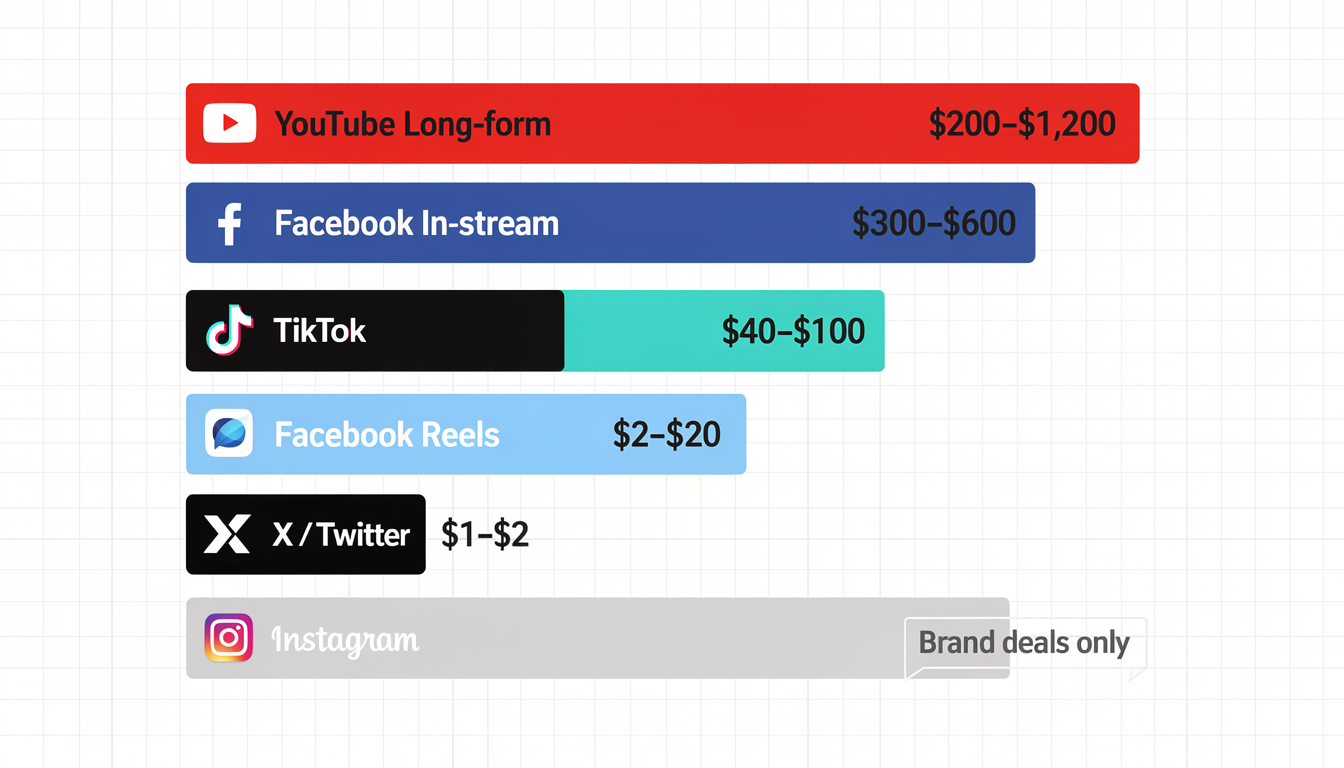
If you want the short version, here it is. These are direct platform payments — what the platform itself pays you per 1,000 views through its monetization program, not including brand deals or sponsorships.
| Rank | Platform | RPM (Per 1,000 Views) | 100K Views Earnings | Primary Payment Model |
|---|---|---|---|---|
| 1 | YouTube (Long-Form) | $2–$12 | $200–$1,200 | 55% ad revenue share |
| 2 | Facebook (In-Stream Ads) | $3–$6 | $300–$600 | 55% ad revenue share (long-form) |
| 3 | YouTube Shorts | $0.03–$0.08 | $3–$8 | Shorts revenue pool |
| 4 | Snapchat (Spotlight) | $0.01–$0.05 | $1–$5 | Revenue share on Spotlight |
| 5 | TikTok | $0.40–$1.00 | $40–$100 | Creator Rewards Program |
| 6 | Facebook Reels | $0.02–$0.20 | $2–$20 | Content Monetization |
| 7 | X (Twitter) | $0.01–$0.02 | $1–$2 | Ad revenue share (verified only) |
| 8 | $0 (direct) | $0 (direct) | No platform ad revenue share | |
| 9 | Threads | $0 | $0 | No monetization program |
| 10 | $0 | $0 | Creator rewards discontinued |
YouTube long-form video is the clear winner. A creator earning 100,000 views on YouTube makes $200–$1,200 from the platform alone. That same creator getting 100,000 views on TikTok earns $40–$100. On Instagram, the platform pays them nothing — every dollar has to come from brand deals.
But this ranking doesn't tell the whole story. Read on for why the "best" platform depends heavily on your niche, your audience location, and your content format.
What 100,000 Views Pays on Every Platform (Real Numbers)
Abstract RPM ranges don't mean much until you see them in concrete dollar amounts. Here's what a creator in a mid-tier niche (think: fitness, cooking, travel — not finance, not gaming) with a US-majority audience can realistically expect from 100,000 views on each platform in 2026:
| Platform | Content Type | Estimated Earnings (100K Views) | How You Get Paid |
|---|---|---|---|
| YouTube | 10-min video | $400–$800 | Ad revenue (55% share) deposited monthly via AdSense |
| YouTube | 60-sec Short | $3–$8 | Shorts revenue pool, paid via AdSense |
| TikTok | 3-min video | $50–$80 | Creator Rewards, paid monthly via PayPal/Zelle |
| TikTok | 30-sec video | $0 | Not eligible (under 1-min minimum) |
| 3-min+ video (in-stream ads) | $300–$600 | Content Monetization, paid monthly via bank transfer | |
| Reel (short-form) | $5–$15 | Content Monetization, paid monthly | |
| Reel or post | $0 from platform | No direct platform payment | |
| X (Twitter) | Tweet or thread | $1–$2 | Ad revenue share, paid monthly (X Premium required) |
| Snapchat | Spotlight video | $1–$5 | Spotlight revenue share, paid monthly |
| Twitch | Live stream | $250–$500 | Subscriptions ($2.50–$3.50/sub) + bits + donations |
A few things jump out from this data:
YouTube long-form dominates on a per-view basis. No other platform comes close for direct ad revenue. A single YouTube video earning 100K views generates more income than the same views would on TikTok, Facebook Reels, X, Snapchat, and Instagram combined.
Facebook in-stream ads are the sleeper. Most creators overlook Facebook, but long-form video with in-stream ads pays $3–$6 RPM — competitive with YouTube for the same content. The challenge is that Facebook's monetization requirements (10K followers + 600K minutes watched) are harder to hit.
TikTok's short-form loophole. Videos under 60 seconds earn $0 from Creator Rewards regardless of view count. This is a critical detail that most comparison articles miss. That viral 15-second clip with 5 million views? Worth nothing in direct platform payments.
Instagram pays creators nothing directly. Despite being the most popular platform for influencer marketing, Instagram has no ad revenue sharing program. Every dollar comes from brand deals, affiliate links, or selling your own products. We'll cover why this still makes Instagram valuable in the brand deals section below.
Platform-by-Platform Breakdown
YouTube: The Highest-Paying Platform
YouTube pays creators more per view than any other social media platform. This isn't close, and it hasn't been close for years.
How it works: YouTube runs ads on your videos and gives you 55% of the ad revenue. This is the same model traditional TV uses — except YouTube's version is more transparent, and you don't need a network deal to participate.
What you can earn:
| Content Format | RPM Range | 1M Views Payout | Revenue Share |
|---|---|---|---|
| Long-form video (8+ min) | $2–$12 | $2,000–$12,000 | 55% of ad revenue |
| Shorts (under 60 sec) | $0.03–$0.08 | $30–$80 | Pool-based allocation |
| YouTube Premium views | $0.50–$2.00 | $500–$2,000 | Based on watch time share |
Why YouTube pays the most: It comes down to ad format. YouTube runs unskippable pre-rolls, mid-rolls in longer videos, and companion ads — all of which command premium prices from advertisers. A 10-minute video can serve 2-3 mid-roll ads, each generating revenue. No other social platform offers this.
Monetization requirements:
- 1,000 subscribers + 4,000 watch hours (past 12 months) for full ad revenue
- OR 1,000 subscribers + 10 million Shorts views (past 90 days)
- 500 subscribers + 3,000 watch hours for fan funding only (no ads)
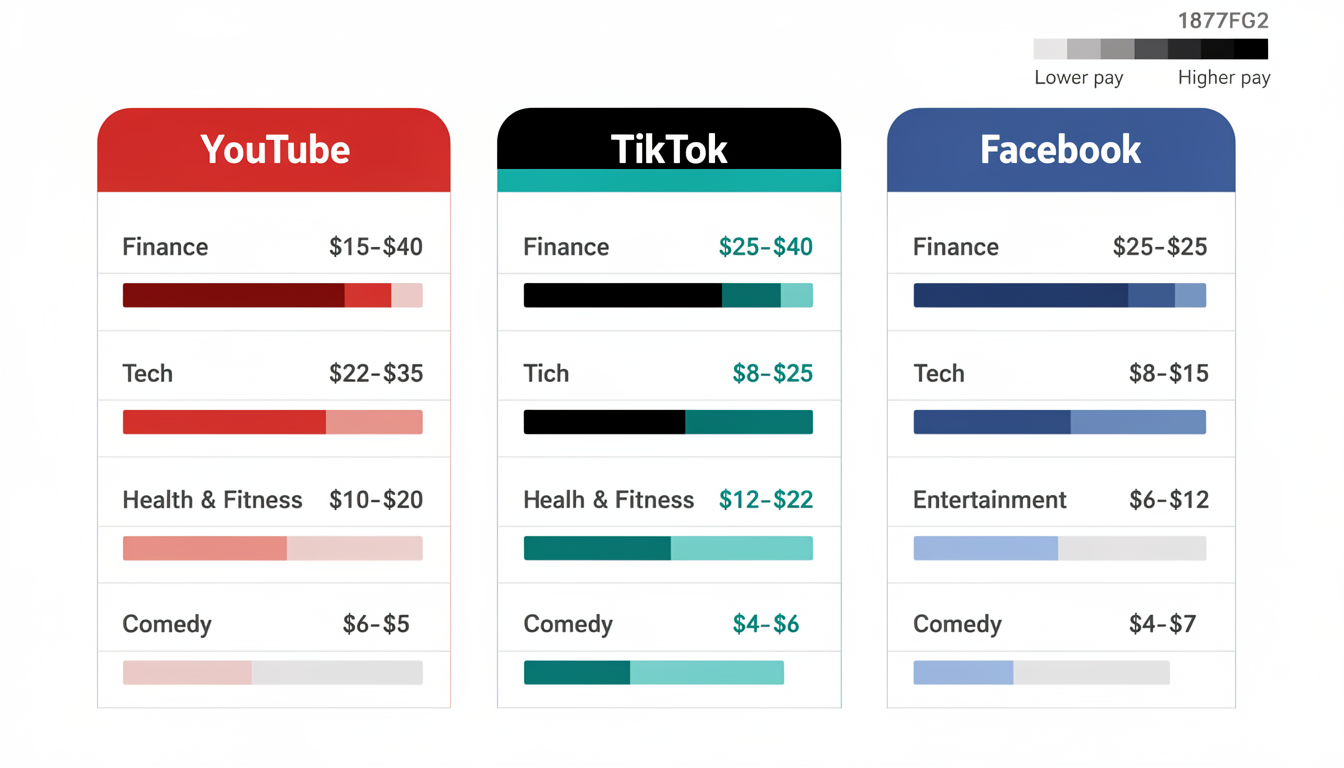
The niche factor matters enormously. A finance creator on YouTube earns $8–$25 RPM. A comedy creator earns $1–$3 RPM. That's an 8x difference on the same platform for the same number of views. We broke this down in detail in our YouTube earnings by niche guide.
👉 Related: When Does YouTube Start Paying You? — the full timeline from zero to first paycheck. | Best YouTube Scheduling Tools — keep your upload schedule consistent.
TikTok: Best Growth, Moderate Pay
TikTok is where most new creators get discovered in 2026. The algorithm is still the most powerful at surfacing unknown creators to large audiences. But the per-view pay is significantly lower than YouTube.
How it works: TikTok's Creator Rewards Program pays creators based on "qualified views" — views on original content that's over 1 minute long, with adequate watch time. Videos under 60 seconds earn nothing from the program.
What you can earn:
| Content Format | RPM Range | 1M Views Payout | Requirements |
|---|---|---|---|
| 1–3 min video | $0.40–$0.70 | $400–$700 | Creator Rewards eligible |
| 3+ min video | $0.60–$1.00+ | $600–$1,000+ | Higher watch time = higher RPM |
| Under 60 sec | $0 | $0 | Not eligible for Creator Rewards |
Monetization requirements:
- 10,000+ followers
- 100,000+ video views in the last 30 days
- 18+ years old
- Based in an eligible country (US, UK, France, Germany, Japan, South Korea, Brazil)
The 60-second rule is the key detail. TikTok's most viral content format — the quick, punchy 15-30 second clip — earns creators exactly $0 in direct platform payments. TikTok designed Creator Rewards to incentivize longer content, pushing creators toward the 1-3 minute format that generates more ad inventory.
TikTok's real value is audience building. Many successful creators use TikTok as a top-of-funnel platform: build an audience on TikTok, then funnel them to YouTube (for ad revenue), Instagram (for brand deals), or their own website (for products/courses). The platform pays less per view, but gives you the most views. Posting at the right time helps — see our guide on the best time to post on TikTok.
We analyzed TikTok earnings in full detail — including niche-by-niche data and country comparisons — in our TikTok earnings breakdown. You can also estimate your own earnings with our free TikTok Money Calculator.
👉 Related: How to Schedule TikTok Posts — stay consistent without posting manually every day.
Facebook: Underrated for Long-Form Video
Facebook surprises most creators. Its in-stream ad program for long-form video actually pays comparable rates to YouTube — but almost nobody talks about it because Facebook isn't seen as a "creator platform."
How it works: Facebook's Content Monetization program (launched mid-2025) pays creators through a unified system that covers Reels, long-form video, and other content types. Long-form videos (3+ minutes) with in-stream ads earn significantly more than Reels.
What you can earn:
| Content Format | RPM Range | 1M Views Payout | Revenue Model |
|---|---|---|---|
| Long-form video (3+ min, in-stream ads) | $3–$6 | $3,000–$6,000 | 55% ad revenue share |
| Reels (short-form) | $0.02–$0.20 | $20–$200 | Content Monetization pool |
| Stars (virtual gifts) | $0.01 per Star | Varies | Fan tips during Live/Reels |
Monetization requirements:
- 10,000+ followers
- 600,000 total minutes watched in the past 60 days
- At least 5 published videos
- Account age of 90+ days
The long-form vs. Reels gap is massive. Facebook in-stream ads on a 5-minute video can earn $3–$6 RPM — almost YouTube-level. But Facebook Reels? Most creators report $0.02–$0.20 RPM. That's a 30–100x difference between formats on the same platform.
Why most creators miss this: Facebook's audience skews older (25-55), which is actually advantageous for ad revenue. Older audiences have higher purchasing power, which means advertisers pay more to reach them. If your content appeals to a 30-45 demographic, Facebook's long-form video might outperform your YouTube channel on a per-view basis.
👉 Related: How to Schedule Facebook Posts — set up a consistent publishing schedule for long-form video.
Instagram: $0 From the Platform, Millions From Brands
Instagram is unique on this list. The platform itself pays creators nothing through ad revenue sharing. No matter how many views your Reel gets or how many followers you have, Instagram doesn't cut you a check.
So why is Instagram still the #1 platform for influencer income? Brand deals.
How creators earn on Instagram:
| Income Stream | Typical Earnings | How It Works |
|---|---|---|
| Brand sponsorships | $100–$100,000+ per post | Brands pay you directly to feature their product |
| Affiliate marketing | 5–30% commission per sale | You earn a cut when followers buy through your link |
| Subscription badges | $0.99–$4.99/month per subscriber | Monthly fan subscriptions (limited rollout) |
| Gifts on Reels | ~$0.01 per Star | Virtual gifts from viewers (minimal income) |
| Product sales | Varies | Sell your own products through Instagram Shop |
Brand deal benchmarks by follower count (2026):
| Creator Tier | Followers | Avg. Sponsored Post Rate | Avg. Sponsored Reel Rate |
|---|---|---|---|
| Nano-influencer | 1K–10K | $50–$250 | $100–$400 |
| Micro-influencer | 10K–50K | $250–$1,000 | $400–$2,000 |
| Mid-tier influencer | 50K–500K | $1,000–$5,000 | $2,000–$10,000 |
| Macro-influencer | 500K–1M | $5,000–$15,000 | $10,000–$25,000 |
| Mega-influencer | 1M+ | $15,000–$100,000+ | $25,000–$100,000+ |
The catch: Brand deals aren't passive income. You have to pitch, negotiate, create sponsored content, manage relationships, and maintain engagement rates that brands find attractive. Ad revenue from YouTube flows automatically once your videos are published. Brand deals on Instagram require active sales work.
Instagram's real strength is that it's the platform where brands go to find creators. If your monetization strategy centers on sponsorships rather than platform payments, Instagram is still the most valuable platform to be on — even though it pays $0 directly. To maximize your brand deal potential, focus on growing your Instagram followers organically and understanding which format works best for your niche.
👉 Related: Instagram Caption Generator — create scroll-stopping captions that boost engagement for brand partnerships.
X (Twitter): Minimal Pay, High Effort
X introduced ad revenue sharing for verified users in 2023. The payouts are extremely low.
How it works: X shares a portion of ad revenue with X Premium subscribers (formerly Twitter Blue) based on impressions their posts generate from other verified users. Only impressions from other premium subscribers count toward your earnings.
What you can earn:
| Metric | Value |
|---|---|
| RPM (per 1,000 impressions) | $0.01–$0.02 |
| 1M impressions payout | $10–$20 |
| Requirements | X Premium ($8–$16/month) + 500 verified followers + 5M impressions in last 3 months |
| Payout threshold | $10 minimum |
The economics don't work for most creators. You need X Premium ($8–$16/month), at least 500 verified followers, and 5 million impressions in the last 3 months just to qualify. Then you earn roughly $0.01 per 1,000 impressions — only counting impressions from other premium users. Most creators report that their X ad revenue doesn't even cover the cost of their premium subscription.
Where X does work: X is valuable for building authority in specific professional niches (tech, finance, politics, media) and driving traffic to monetized content on other platforms. Think of it as a distribution channel, not a monetization platform. If you want to grow your X presence, see our guide on how to gain Twitter followers.
👉 Related: How to Schedule Posts on X — automate your X presence without spending hours on the platform.
Snapchat: Small Payouts, Young Audience
Snapchat monetizes creators through Spotlight (their TikTok competitor) and Stories with ads. The payouts exist but are generally low.
What you can earn:
| Program | RPM Range | Requirements |
|---|---|---|
| Spotlight revenue share | $0.01–$0.05 per 1K views | 50,000+ followers, active Spotlight posting |
| Stories with ads | $1–$3 per 1K views | Snapchat Star program invitation |
| Gifting | Varies | 50,000+ followers, 25K monthly Story views |
Snapchat's audience is heavily Gen Z (13–24), which means lower CPMs because younger audiences have less purchasing power. The platform is useful for reaching that demographic, but for pure monetization, other platforms pay significantly more.
Twitch: Subscription-Based, Not View-Based
Twitch works completely differently from every other platform on this list. Instead of paying per view, Twitch monetizes through subscriptions, bits (virtual tips), and donations.
What you can earn:
| Income Stream | Earnings | Your Cut |
|---|---|---|
| Tier 1 subscription ($4.99) | $2.50 per sub | 50% (70% for top partners) |
| Tier 2 subscription ($9.99) | $5.00 per sub | 50% |
| Tier 3 subscription ($24.99) | $12.50 per sub | 50% |
| Bits (cheers) | $0.01 per bit | 100% of bits received |
| Donations (StreamLabs etc.) | Varies | 100% (minus processor fees) |
| Ads | $2–$5 CPM | Revenue share |
Twitch's model rewards loyalty over virality. A streamer with 500 dedicated subscribers earning $2.50 each makes $1,250/month — more than most TikTok creators with millions of views. But building a subscriber base requires streaming consistently for hours, multiple days per week.
Monetization requirements (Twitch Affiliate):
- 50 followers
- 500 total minutes broadcast in last 30 days
- 7 unique broadcast days in last 30 days
- Average of 3 concurrent viewers
 PostPlanify
All your social media in one simple dashboard
Schedule posts, track analytics, and reply to comments/DMs without switching tabs.

Engagement
+18%
Views
52.8k
The Niche Factor: Why It Matters More Than Platform Choice
Here's the insight most comparison articles miss: your niche affects your earnings more than your platform choice.
A finance creator on TikTok can earn more per view than an entertainment creator on YouTube. The platform matters, but the advertisers bidding on your audience matter more.
Here's how the same 100,000 views pays across platforms and niches:
| Niche | YouTube (100K views) | TikTok (100K views) | Facebook In-Stream (100K views) |
|---|---|---|---|
| Finance & Investing | $800–$2,500 | $80–$130 | $500–$1,500 |
| Tech & Software | $600–$1,200 | $70–$110 | $400–$1,000 |
| Health & Fitness | $400–$1,000 | $50–$80 | $300–$700 |
| Beauty & Fashion | $300–$700 | $50–$90 | $200–$500 |
| Food & Cooking | $300–$700 | $50–$80 | $200–$500 |
| Travel | $300–$800 | $40–$70 | $200–$400 |
| Entertainment | $100–$400 | $30–$60 | $100–$300 |
| Gaming | $200–$600 | $30–$50 | $100–$300 |
| Comedy | $100–$300 | $30–$50 | $100–$200 |
Why finance pays 10x more than comedy on the same platform: It comes down to customer lifetime value. A financial services company acquiring one customer through a YouTube ad might earn $5,000+ from that customer over their lifetime. A mobile game advertiser acquiring one player might earn $5. When the customer is worth 1,000x more, the advertiser pays 10x more per ad impression — and you earn 10x more per view.
Monetization Requirements Compared: What It Takes to Start Earning
Before you can earn anything, you need to qualify. Here's every platform's requirements side by side:
| Platform | Followers Needed | Additional Requirements | Time to Qualify (Typical) |
|---|---|---|---|
| YouTube (Full) | 1,000 subs | 4,000 watch hours OR 10M Shorts views (12 months) | 6–18 months |
| YouTube (Fan Funding) | 500 subs | 3,000 watch hours OR 3M Shorts views (90 days) | 3–8 months |
| TikTok | 10,000 | 100,000 views in last 30 days | 3–12 months |
| 10,000 | 600,000 minutes watched in 60 days | 6–18 months | |
| None (brand deals) | High engagement rate to attract brands | 3–12 months | |
| X (Twitter) | 500 verified followers | X Premium ($8–$16/month) + 5M impressions in last 3 months | 6–18 months |
| Snapchat | 50,000 | Active Spotlight posting | 6–24 months |
| Twitch (Affiliate) | 50 | 500 min broadcast, 7 days streaming, 3 avg viewers | 1–3 months |
Key takeaway: Twitch has the lowest barrier to entry (50 followers), but the income model requires consistent live streaming. YouTube takes the longest to monetize but pays the most once you qualify. TikTok and Instagram let you start earning through brand deals before meeting any official threshold — but those earnings are inconsistent.
👉 Related: When Does YouTube Start Paying You? — the full timeline from channel creation to first paycheck.
The Multi-Platform Strategy: How Top Creators Actually Make Money
The highest-earning creators in 2026 don't rely on a single platform. They use each platform for what it does best, and publish to all of them from one posting app rather than logging into each:
Stage 1: Build an audience (TikTok + Instagram)
- TikTok's algorithm gives unknown creators the most reach
- Instagram builds a visual portfolio that attracts brand deals
- Post short-form content consistently to grow followers
Stage 2: Monetize with ad revenue (YouTube + Facebook)
- Repurpose top-performing TikTok content into longer YouTube videos
- Upload long-form video to Facebook for in-stream ad revenue
- YouTube ad revenue scales predictably with views
Stage 3: Diversify income streams
- Brand deals on Instagram and TikTok
- Subscriptions on Twitch or YouTube Memberships
- Products, courses, or services promoted across all platforms
- Affiliate marketing through blog content and link-in-bio
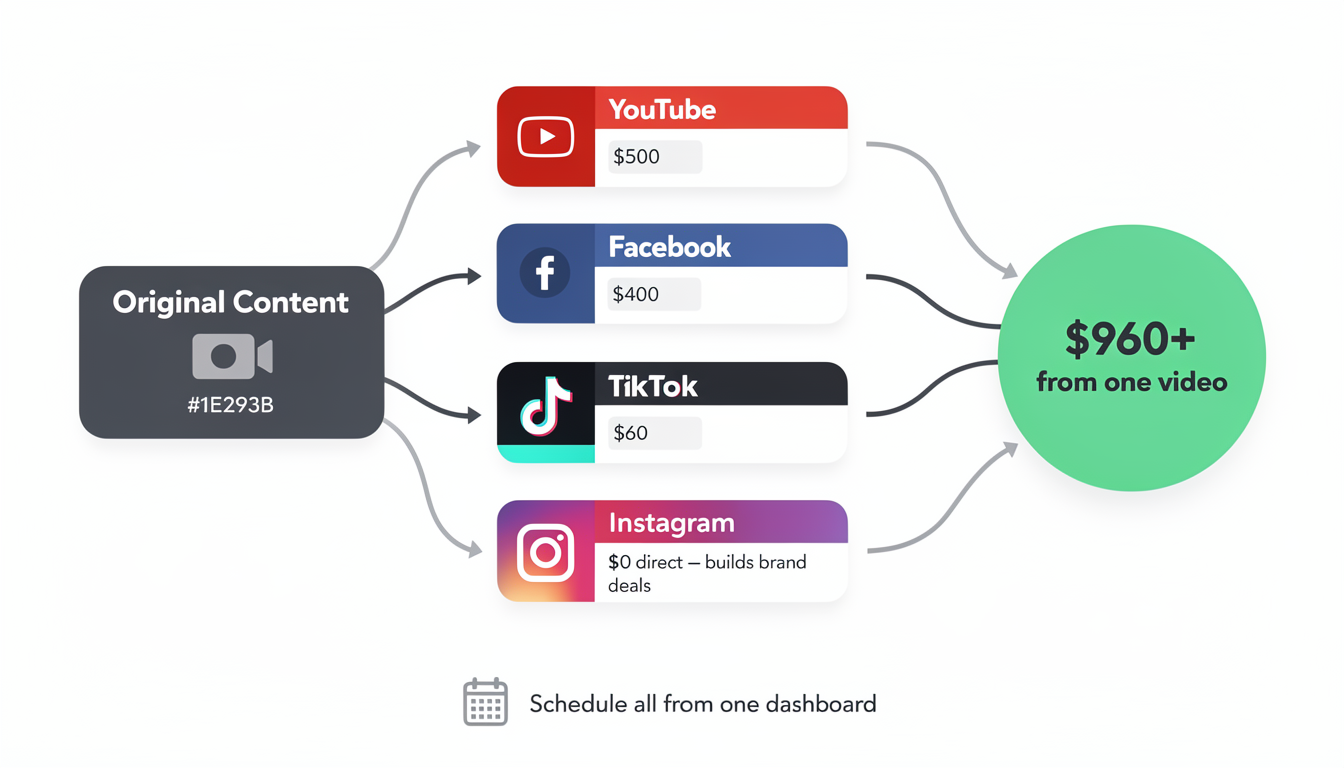
The math behind multi-platform: A creator with 100K views on a single video could earn:
- YouTube long-form: $500
- Repurposed to Facebook long-form: $400
- TikTok clip (3 min): $60
- Instagram Reel: $0 (but builds brand deal pipeline)
- Total: ~$960 from a single piece of content repurposed across platforms
Versus posting only on TikTok: $60.
That's a 16x difference from the same content. The extra effort is in formatting and uploading — the core content is identical. For a step-by-step system on turning one piece of content into multiple formats, see our content repurposing strategies guide and our breakdown of social media cross-posting.
How Scheduling Tools Make Multi-Platform Work
The biggest barrier to a multi-platform strategy isn't content creation — it's the manual labor of posting across 4-5 platforms every day. Each platform has different aspect ratios, caption limits, hashtag rules, and optimal posting times.
This is exactly what PostPlanify is built for. Instead of logging into each platform individually, you schedule all your posts from one dashboard:
- Upload once, customize captions per platform
- Schedule posts at each platform's optimal posting time
- Track which platforms generate the most engagement
- Get alerts when account connections need refreshing
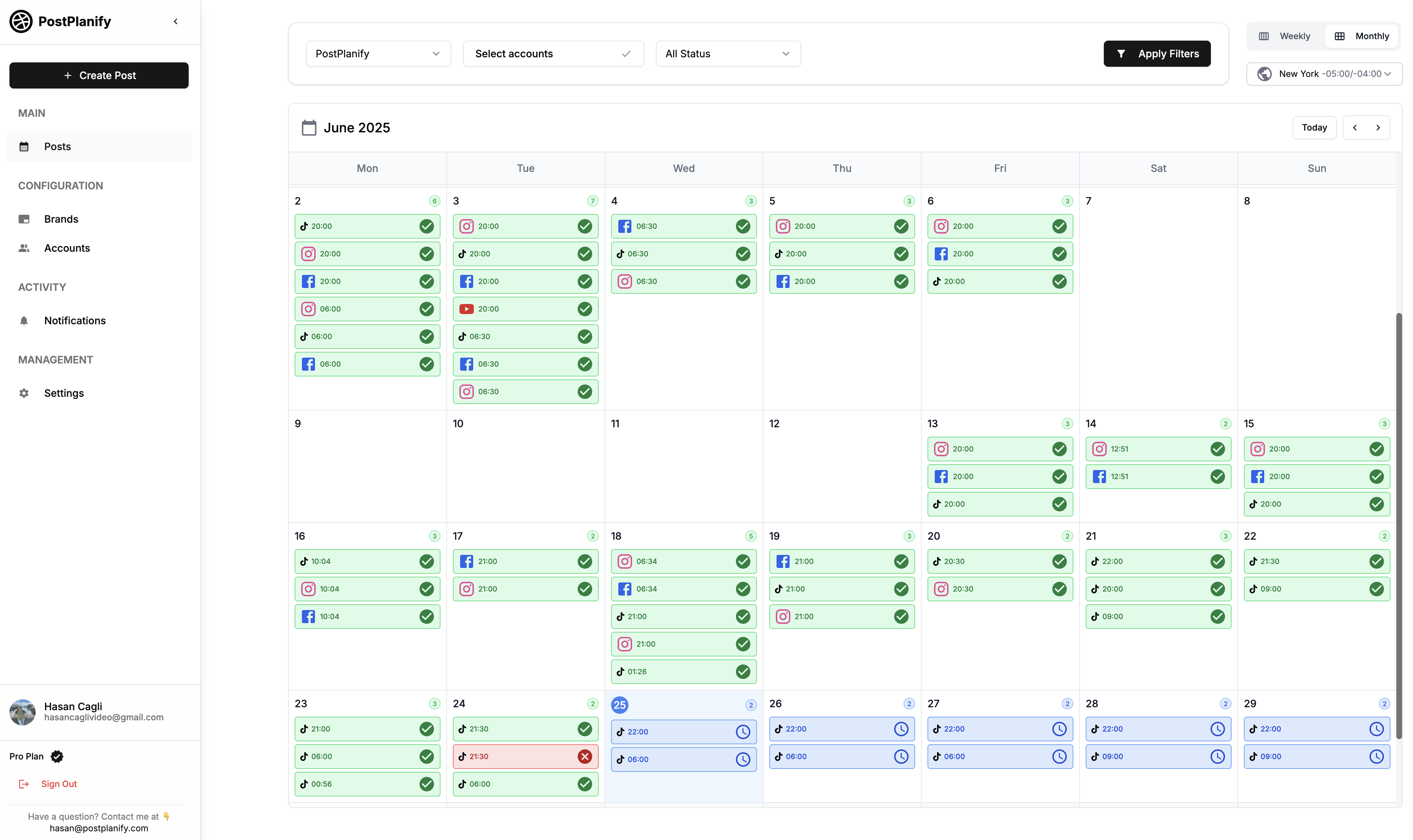
If you're serious about multi-platform monetization, a scheduler isn't optional — it's what makes the strategy sustainable. See our comparison of the best social media management tools for creators for more options.
👉 Try it free: PostPlanify — Schedule across all platforms
Should You Choose One Platform or Go Multi-Platform?
It depends on where you are in your creator journey:
| Your Situation | Recommended Strategy | Why |
|---|---|---|
| Brand new, no audience | Start with TikTok only | Fastest algorithm for discovery, lowest effort per video |
| Under 1K followers | TikTok + Instagram | Build audience on both while content style develops |
| 1K–10K followers | Add YouTube | Start building toward monetization threshold while TikTok grows your audience |
| 10K+ followers | Full multi-platform | You meet monetization thresholds on most platforms; repurpose everything |
| Full-time creator | All platforms + own website | Maximize every revenue stream, own your audience through email/website |
The critical mistake to avoid: Don't spread yourself thin across 5 platforms with mediocre content on each. Go deep on one platform first, build a real audience, then expand. Quality and consistency on one platform will always outperform sporadic posting across many. Our guide on how to build a social media presence covers the foundational steps, and our social media monetization guide walks through how to layer income streams as you grow.
Platform Payment Trends: What Changed in 2025–2026
Creator monetization is shifting fast. Here's what changed recently and where things are heading:
YouTube raised the Shorts RPM slightly in late 2025. Still low compared to long-form, but trending upward as more advertisers adapt to short-form. YouTube remains committed to the 55/45 revenue split on long-form video.
TikTok continued expanding Creator Rewards to new countries. The 1-minute minimum for eligible content hasn't changed, but RPMs stabilized in the $0.40–$1.00 range after an initial dip when the program launched. TikTok also introduced "Series" (paid content behind a paywall) as an additional revenue stream for established creators.
Facebook merged its separate creator payment programs into the unified Content Monetization system in mid-2025. This simplified things but also lowered Reels payouts for some creators who were earning more under the old bonus system. Long-form in-stream ads remain the highest-paying Facebook format.
Instagram still hasn't launched an ad revenue sharing program. Meta has hinted at it in developer conferences, but as of early 2026, Instagram creators earn $0 from the platform directly. Subscription badges remain in limited testing.
X (Twitter) cut the ad revenue sharing pool significantly in 2025. Multiple creators reported 50-80% drops in X payouts year-over-year. The platform is focusing on X Premium subscription revenue rather than creator payouts.
FAQ: Common Questions About Social Media Platform Earnings
Which social media platform pays the most per 1,000 views?
YouTube long-form video pays the most at $2–$12 per 1,000 views (RPM). Facebook in-stream ads on long-form video come second at $3–$6 per 1,000 views. TikTok Creator Rewards pays $0.40–$1.00 per 1,000 qualified views on videos over 1 minute.
Can you make a living from social media?
Yes, but it requires significant audience size and consistency. A YouTube creator with 500,000 monthly views in a mid-tier niche can earn $2,000–$5,000/month from ad revenue alone. Adding brand deals, affiliate income, and multi-platform posting can push that to $5,000–$15,000+. However, 71% of creators earn under $30,000 annually, so full-time income isn't guaranteed.
How many followers do you need to start earning?
It varies by platform. YouTube requires 1,000 subscribers for ad revenue. TikTok requires 10,000 followers for Creator Rewards. Twitch only requires 50 followers for Affiliate status. For brand deals on Instagram, some nano-influencers start earning with as few as 1,000–5,000 engaged followers. See the full requirements comparison table above.
Is TikTok or YouTube better for making money?
YouTube pays significantly more per view ($2–$12 vs $0.40–$1.00 per 1,000 views). However, TikTok's algorithm gives new creators far more reach, making it easier to build an audience. The best strategy for most creators is to grow on TikTok and monetize on YouTube by repurposing content into longer formats. See our full TikTok earnings breakdown for detailed numbers.
Does Instagram pay for Reels views?
Not through ad revenue sharing. Instagram does not have a creator ad revenue program. Creators earn money on Instagram through brand sponsorships, affiliate marketing, subscription badges (limited rollout), and virtual gifts. Despite paying $0 directly, Instagram remains the top platform for brand deal income because of its visual-first format and advertiser demand.
How long does it take to start earning money on social media?
For platform payments: 6–18 months for YouTube (reaching 1,000 subs + 4,000 watch hours), 3–12 months for TikTok (reaching 10,000 followers). For brand deals: some creators land their first paid partnership with as few as 1,000–5,000 followers, though significant brand deal income typically requires 10,000+. The first $100 is the hardest. After that, growth compounds.
Do you have to pay taxes on social media earnings?
Yes. In most countries, social media income is taxable — whether it comes from platform payments, brand deals, affiliate commissions, or product sales. In the US, platforms issue a 1099 form for earnings over $600. Keep records of all income and business expenses, and consult a tax professional, especially once your annual creator income exceeds a few thousand dollars.
What's the fastest way to start earning on social media?
Twitch Affiliate has the lowest requirements (50 followers + streaming for 7 days). For passive ad revenue, YouTube Shorts views (10M in 90 days) can qualify you for monetization faster than watch hours. For immediate income with no follower requirements, affiliate marketing through content on any platform can generate commissions from day one — though significant income requires an established audience.
How much does Instagram pay for 1 million views?
Instagram pays $0 for views — the platform has no ad revenue sharing program for creators. Unlike YouTube, TikTok, and Facebook, Instagram does not cut creators a check based on views. Every dollar earned on Instagram comes from brand sponsorships, affiliate marketing, subscription badges (limited rollout), or selling your own products. A creator with 1 million Reel views earns nothing from Instagram directly, but that level of reach makes them highly attractive to brands willing to pay $5,000–$25,000+ per sponsored post.
Which social media is best for making money in 2026?
For direct platform payments, YouTube is the clear winner at $2–$12 per 1,000 views on long-form video. For total creator income (including brand deals), Instagram generates the most sponsorship revenue despite paying $0 directly. For the best balance of growth potential and earnings, a multi-platform strategy using TikTok for audience building and YouTube for monetization outperforms any single-platform approach. See the full strategy breakdown above.
How much money can you make with 100K followers?
It depends heavily on the platform, your niche, and your engagement rate. On YouTube with 100K subscribers averaging 50K views per video, you could earn $2,000–$6,000/month from ad revenue alone in a mid-tier niche. On Instagram with 100K followers, expect $1,000–$5,000 per sponsored post from brand deals. On TikTok with 100K followers averaging 200K views per video, Creator Rewards would pay roughly $80–$200/month. The biggest variable isn't follower count — it's whether your audience is in high-CPM countries (US, UK, Canada) and high-value niches (finance, tech, health).
Does Snapchat pay creators?
Yes, but minimally. Snapchat pays creators through its Spotlight revenue sharing program ($0.01–$0.05 per 1,000 views) and through the Snapchat Stars program for Stories with ads ($1–$3 per 1,000 views). However, Spotlight requires 50,000+ followers, and the Stars program is invitation-only. Most creators earn significantly less on Snapchat than on YouTube, TikTok, or Facebook.
Final Thoughts
YouTube pays the most per view, and it's not close. For direct platform payments in 2026, YouTube long-form video at $2–$12 RPM dominates every other platform. Facebook in-stream ads are a strong second. TikTok pays modestly. Instagram pays nothing directly.
But the smartest creators don't pick one platform — they use each one for its strength:
- TikTok for growth and discovery
- YouTube for ad revenue
- Facebook for additional long-form video income
- Instagram for brand deals and visual presence
- A scheduling tool to make all of it manageable
If you're choosing where to focus first, start where your audience already lives and where your content format is the strongest. Then expand to capture revenue from multiple platforms as your audience grows.
The difference between posting on one platform versus four can be a 10–16x increase in income from the same content. The only cost is the time it takes to reformat and upload — and with a scheduling tool like PostPlanify, even that becomes automatic.
👉 Start multi-platform scheduling: PostPlanify — 7-day free trial
👉 Deep-dive platform guides:
- How Much Does YouTube Pay for 1,000 Views?
- How Much Does TikTok Pay for 1 Million Views?
- How Much Does Facebook Reels Pay Per 1,000 Views?
- When Does YouTube Start Paying You?
Related: Content Repurposing Strategies | Social Media Cross-Posting | How to Measure Social Media ROI | Best Social Media Management Tools for Creators | How to Build a Social Media Presence | Best Time to Post on Social Media | Social Media Analytics for Business
PostPlanifyAll your social media in one simple dashboard
Schedule posts, track analytics, and reply to comments/DMs without switching tabs.
Engagement
+18%
Views
52.8k
About the Author

Hasan Cagli
Founder of PostPlanify, a content and social media scheduling platform. He focuses on building systems that help businesses, agencies, and teams plan, publish, and manage content and social media more efficiently across platforms.


