


Posting on social media without a clear plan feels like shouting into the void. You create content, hit publish, and hope for the best, but the results are often minimal engagement and a growing sense of burnout. Many guides offer vague advice like "be authentic," but they don't give you a repeatable process to follow. This leaves you guessing, wasting time and resources on content that doesn't connect.
This guide is different. It's a collection of practical, step-by-step social media strategy examples designed to solve specific problems. Whether you're trying to generate leads, build a community, or drive sales, there's a blueprint here you can adapt. We'll break down the exact steps, platform-specific tactics, and common pitfalls for each strategy.
Think of these as playbooks, not just theories. They are frameworks you can implement immediately to bring structure and predictability to your social media efforts. If you need a broader overview before diving into these specific examples, our ultimate social media content strategy guide covers the fundamentals from A to Z. Let's get started.
1. The Content Pillars & Theme Days Strategy
This is a foundational strategy for bringing order to a chaotic content calendar. It organizes your content around 3-5 core topics, or "pillars," that reflect your brand's expertise. You then assign these themes to specific days of the week, creating a predictable posting rhythm.

Why This Problem Happens
Without a structure, content creation is reactive. You scramble to find something to post each day, leading to inconsistent messaging and a feed that lacks focus. Your audience doesn't know what to expect, and your team wastes time on last-minute decisions.
How to Fix It: Step-by-Step
-
Identify 3-5 Core Pillars: Brainstorm the main topics your audience cares about that also align with your business goals.
- Real-World Scenario: A financial advisor's pillars might be: 1) Retirement Planning, 2) Investment Tips, 3) Market News, and 4) Client Success Stories. A fitness coach might choose: 1) Workout Tutorials, 2) Nutrition Advice, 3) Mindset & Motivation, and 4) Client Transformations.
-
Assign Pillars to Theme Days: Map your pillars to days of the week to create a simple schedule.
- Example:
- Monday: Mindset & Motivation
- Tuesday: Workout Tutorials
- Wednesday: Nutrition Advice
- Thursday: Q&A / Ask Me Anything
- Friday: Client Transformations
- Example:
-
Create Content in Batches: Instead of creating one post at a time, dedicate a block of time to create all the content for a single pillar for the upcoming month. This is a core principle of content batching and dramatically improves efficiency.
-
Schedule Everything in Advance: Use a social media scheduler to load your content for the weeks ahead.
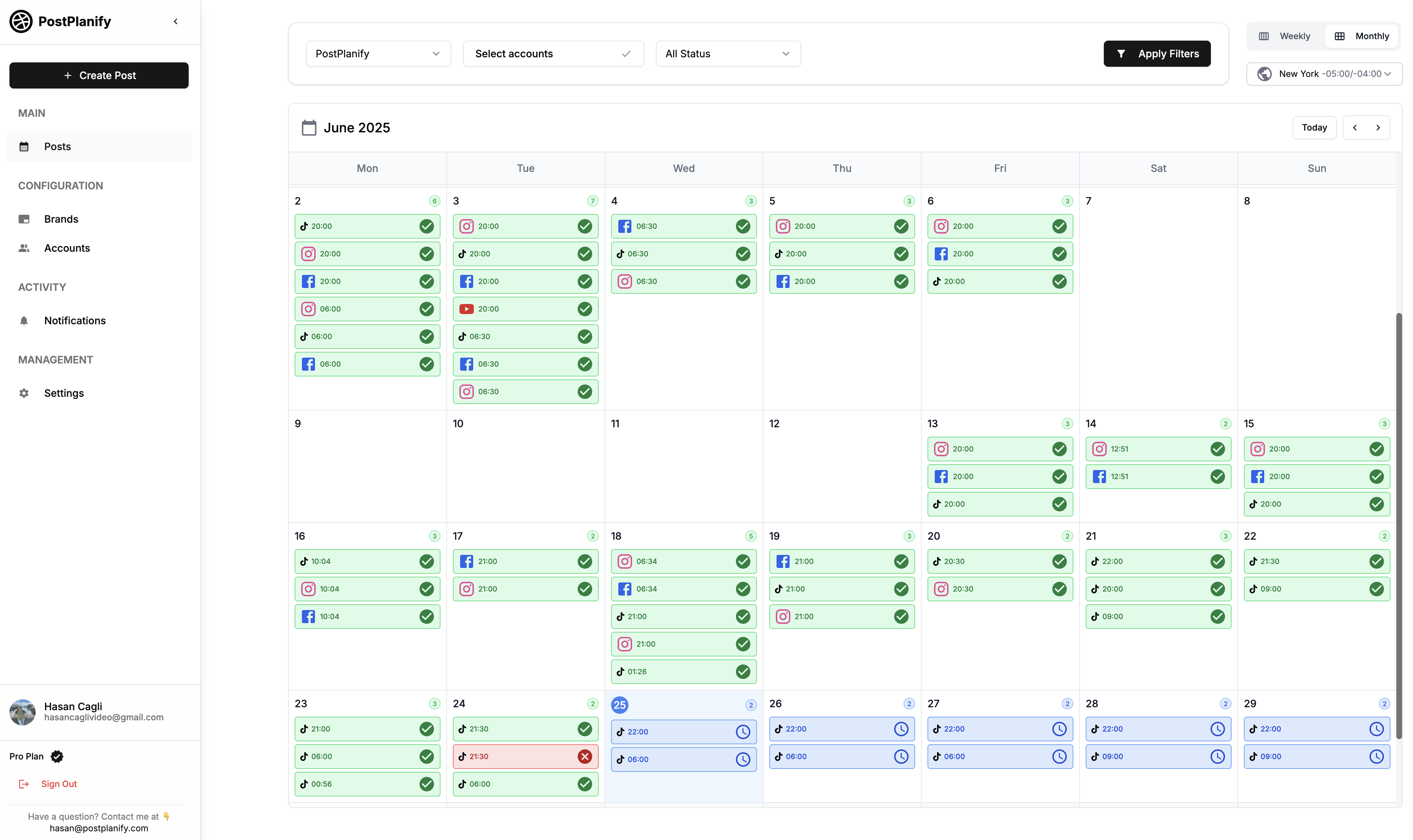
- Pro Tip: PostPlanify's content calendar is perfect for this. You can visually map out your theme days and use saved caption templates for recurring themes like #TransformationTuesday to speed up the process.
- Review Pillar Performance Monthly: Check your analytics to see which themes get the most engagement. If "Market News" posts consistently get low reach on Instagram, consider replacing that pillar with something more visual or interactive.
Limitations & Edge Cases
- Rigidity: Sticking too strictly to themes can make you miss out on timely, real-time marketing opportunities. Leave some room for flexibility.
- Platform Mismatch: A pillar that works well on LinkedIn (e.g., "Industry Analysis") might not translate well to a visual platform like TikTok without significant adaptation.
2. The User-Generated Content (UGC) Amplification Strategy
This strategy involves actively encouraging, collecting, and featuring content created by your customers and community. It shifts the spotlight from your brand to the people who use your product, turning them into your most powerful advocates.

Why This Problem Happens
Brands often struggle to build trust and generate authentic content at scale. Your own marketing messages can feel polished and biased. Potential customers are looking for real-world proof that your product delivers on its promises, which is something brand-created content can't always provide.
How to Fix It: Step-by-Step
-
Create and Promote a Branded Hashtag: Choose a simple, unique hashtag for your community to use. Promote it in your social media bios, on your website, and even on your product packaging.
- Real-World Scenario: A coffee shop could use
#[YourBrand]CoffeeMoment. A clothing brand could use#[YourBrand]Style.
- Real-World Scenario: A coffee shop could use
-
Actively Ask for Submissions: Don't just wait for people to use your hashtag. Run specific campaigns asking for content.
- Platform-Specific Ideas:
- Instagram: Run a contest for the "best photo of the month" featuring your product.
- TikTok: Create a sound or a challenge that encourages users to show how they use your product.
- Platform-Specific Ideas:
-
Get Permission and Give Credit: This is non-negotiable. Before you repost anything, send a direct message to the original creator asking for their permission. When you do share it, tag their account in both the photo/video and the caption. This builds goodwill and encourages more submissions.
-
Organize and Schedule UGC: Create a system for saving and using the content you collect.
- Pro Tip: In PostPlanify, you can create a dedicated media library folder called "Approved UGC." When you're planning your calendar, you can easily drag and drop high-quality community content into your schedule.
-
Repurpose UGC Across Channels: Don't just repost on your main feed. Use customer photos in your Instagram Stories, compile video testimonials into a TikTok Reel, or use a positive review as a quote graphic for LinkedIn.
 PostPlanify
Manage All Your Social Accounts Without the Chaos
Schedule posts, track performance, and collaborate with your team.


Limitations & Edge Cases
- Quality Control: Not all UGC will be high-quality or on-brand. You'll need to curate submissions carefully.
- Legal Rights: For major campaigns (like using UGC in paid ads), a simple DM permission may not be enough. You might need a more formal media release form.
- Initial Momentum: If you have a small audience, it can be difficult to get enough UGC submissions at first. You may need to incentivize early participants more heavily.
3. The Behind-the-Scenes (BTS) & Authenticity Strategy
This strategy focuses on showing the human side of your brand. It involves sharing unpolished, raw content about your team, your process, and your day-to-day operations. It pulls back the curtain and builds trust by being transparent.
Why This Problem Happens
Many brands get stuck in a cycle of posting polished, promotional content. This can make the brand feel corporate, distant, and unrelatable. Audiences on platforms like TikTok and Instagram crave genuine connection and are often turned off by content that feels like a traditional advertisement.
How to Fix It: Step-by-Step
-
Identify Your "BTS" Story Angles: What parts of your business are people curious about?
- Real-World Scenarios:
- SaaS Company: Show a developer working on a new feature, a clip from a team brainstorming session, or a "day in the life" of a customer support agent.
- E-commerce Brand: Film the process of packing an order, show how a new product is designed, or introduce the team members behind the brand.
- Real-World Scenarios:
-
Make Content Contribution Easy for Your Team: You can't be everywhere at once. Create a system for your team to share candid moments.
- Example: Set up a shared Google Drive folder or a dedicated Slack channel where employees can easily upload photos and short videos from their workday.
-
Prioritize Ephemeral Formats: This type of content is perfect for formats that don't live forever.
- Platform-Specific Ideas:
- Instagram/Facebook Stories: Use them for daily office tours, quick team member Q&As, or polls about new product ideas.
- TikTok/Reels: Create short videos showing the "making of" a product or a funny moment from a team meeting.
- Platform-Specific Ideas:
-
Schedule Your Core Content, Engage in Real Time: Use a tool like PostPlanify to schedule your main feed posts. This frees you up to post spontaneous BTS content to your Stories throughout the day without falling behind on your core schedule.
-
Tag Your Team: When you feature employees (with their permission), tag their accounts. This adds another layer of authenticity and encourages them to reshare the content, amplifying its reach to their personal networks.
Limitations & Edge Cases
- Privacy Concerns: Always get consent from team members before featuring them. Establish clear guidelines on what is and isn't okay to share.
- Maintaining Quality: "Authentic" doesn't mean "bad." Ensure your videos have clear audio and your photos are well-lit. The content should be raw, not sloppy.
- Boring Content: Not every part of a business is interesting. Curate the moments you share to ensure they provide value or entertainment to your audience.
4. The Strategic Repurposing & Content Recycling Strategy
This strategy is about working smarter, not harder. It involves taking one large piece of "cornerstone" content (like a blog post, webinar, or podcast) and breaking it down into dozens of smaller, platform-specific social media posts.

Why This Problem Happens
The demand for fresh content is relentless. Teams burn out trying to create something new for every platform, every day. This often leads to a drop in quality and a lack of strategic focus, as the goal becomes simply to "feed the machine."
How to Fix It: Step-by-Step
-
Identify Your Cornerstone Content: Look for your most valuable, long-form assets. These are typically educational and evergreen.
- Examples: An ultimate guide blog post, a customer case study, a webinar recording, or a podcast episode.
-
Deconstruct the Cornerstone Asset: Break the main piece down into its core components.
- Real-World Scenario: A 2,000-word blog post on "10 Tips for Better Time Management" can be repurposed into:
- Instagram: A 10-slide carousel post, with each slide detailing one tip.
- TikTok/Reels: A 30-second video where someone quickly explains their top 3 favorite tips.
- X (Twitter): A 10-post thread, with each post expanding on a single tip.
- LinkedIn: A text-only post summarizing the 3 most counter-intuitive tips from the article.
- Quote Graphics: 5-7 shareable images featuring the most powerful quotes from the post.
- Real-World Scenario: A 2,000-word blog post on "10 Tips for Better Time Management" can be repurposed into:
-
Use Templates to Speed Up Creation: Create branded templates in a tool like Canva for each format (e.g., carousel posts, quote graphics). This ensures visual consistency and saves a massive amount of time. If you need more ideas, check out this guide on how to repurpose content for social media.
-
Create a Multi-Week Campaign: Don't post all the repurposed assets at once. Schedule them out over several weeks to create a sustained campaign around your cornerstone topic.
- Pro Tip: Use PostPlanify's calendar to plan this out. You can use labels to tag all content related to a specific cornerstone piece, making it easy to track the campaign's performance.
-
Link Back to the Original Asset: In each repurposed post, include a call-to-action that drives traffic back to the full cornerstone piece for people who want to learn more.
Limitations & Edge Cases
- Format Adaptation: You can't just copy and paste. Content must be natively adapted for each platform's format and audience expectations.
- Audience Fatigue: If you don't space out the repurposed content, your audience might get tired of seeing the same topic repeatedly.
- Requires Strong Cornerstone Content: This strategy only works if your original long-form content is high-quality and genuinely valuable.
5. The Data-Driven Analytics & Performance Optimization Strategy
This strategy treats social media as a science, not an art. It involves methodically tracking key metrics, understanding what the data tells you, and using those insights to make informed decisions about your future content. It's about replacing "I think this will work" with "I know this will work."
Why This Problem Happens
Without data, you're flying blind. You might continue to invest time and money into content formats or platforms that aren't delivering results, simply because you have a "gut feeling" about them. This leads to wasted resources and an inability to prove the ROI of your social media efforts.
How to Fix It: Step-by-Step
-
Define Your "North Star" Metric: Choose the one metric that matters most for your current business goal. Don't get lost in vanity metrics.
- Goal: Brand Awareness → Metric: Reach & Engagement Rate
- Goal: Lead Generation → Metric: Link Clicks & Conversions
- Goal: Community Building → Metric: Comments & DMs
-
Schedule a Weekly or Monthly Data Review: Block out a recurring time on your calendar to dive into your analytics. Consistency is key.
- During the review, ask:
- What was our best-performing post? Why?
- What was our worst-performing post? Why?
- What patterns are emerging in the top-performing content (format, topic, time of day)?
- During the review, ask:
-
Run Simple A/B Tests: Test one variable at a time to get clean data.
- Test Idea: Post the same type of content at two different times (e.g., 9 AM vs. 5 PM) for a week. See which time slot consistently gets more engagement.
- Another Idea: Test two different caption styles (e.g., a short, punchy caption vs. a longer, storytelling caption) on similar visuals.
-
Use a Centralized Analytics Dashboard: Pulling reports from each platform individually is time-consuming.
- Pro Tip: PostPlanify's analytics dashboard brings all your data from connected channels into one place. This makes it much easier to spot cross-platform trends and generate reports quickly.
-
Create Actionable Insights: Don't just report the numbers. For every piece of data, write down one action you will take based on it.
- Data: "Video tutorials received 2x the engagement of static images."
- Action: "We will replace two static image posts with video tutorials in next month's content plan."
Limitations & Edge Cases
- Data Overload: It's easy to get lost in the numbers. Stick to tracking the few key metrics that align with your goals.
- Qualitative Blind Spots: Data tells you what happened, but not always why. Supplement your quantitative data with qualitative feedback from your community (comments, DMs, surveys).
- Platform Bugs & API Limits: Sometimes analytics can be delayed or inaccurate due to bugs or API limitations from the social platforms themselves. Always look for trends over time rather than obsessing over a single day's numbers.
6. The Strategic Partnership & Influencer Collaboration Strategy
This strategy is about borrowing trust and reach. It involves partnering with other brands, creators, or influencers in your niche to co-create content and cross-promote to each other's audiences. It's a way to get a warm introduction to a new, highly relevant group of people.
Why This Problem Happens
Building an audience from scratch is slow and difficult. Reaching new people through paid ads is becoming increasingly expensive and less effective. Your brand's own voice can only go so far.
How to Fix It: Step-by-Step
-
Identify Potential Partners: Create a list of 10-20 creators or complementary brands whose audience you want to reach. Look for partners who share your values and have a similar level of audience engagement. They should not be direct competitors.
- Real-World Scenario: A brand that sells sustainable yoga mats could partner with a yoga instructor, a meditation app, or a company that sells ethically made activewear.
-
Focus on Micro-Influencers (10k-100k followers): These creators often have more niche, dedicated communities and higher engagement rates than mega-influencers. They are also typically more affordable and open to creative collaborations.
-
Propose a "Value-First" Collaboration: Instead of just asking for a shoutout, propose a collaboration that provides value to both audiences.
- Collaboration Ideas:
- Instagram Live: Host a joint Q&A session on a topic you're both experts in.
- Content Swap: Create a guest post or video for their channel, and have them do the same for yours.
- Joint Giveaway: Co-host a giveaway where you both contribute prizes and require participants to follow both accounts.
- Collaboration Ideas:
-
Create a Clear Collaboration Brief: To avoid misunderstandings, outline the goals, key messages, deliverables (e.g., 1 Reel, 3 Stories), timeline, and any compensation in a simple document.
-
Track the Results: Use unique discount codes or UTM links for each partner to track how much traffic and sales they drive. This will help you identify which partnerships are most effective and worth investing in for the long term.
Limitations & Edge Cases
- Partner Vetting: A bad partnership can damage your brand's reputation. Thoroughly vet potential partners to ensure their values and audience are a good fit.
- FTC Guidelines: Paid partnerships must be clearly disclosed using hashtags like #ad or #sponsored.
- Time Investment: Finding and building relationships with the right partners takes time and effort. It's not a "set it and forget it" strategy.
7. The Community Engagement & Relationship Building Strategy
This strategy prioritizes conversation over broadcasting. It's about actively engaging in two-way dialogue with your followers, making them feel seen, heard, and valued. The goal is to build a loyal community, not just a large follower count.
Why This Problem Happens
Many brands use social media as a one-way megaphone to promote their products. They post content and then disappear, ignoring comments and DMs. This approach fails to build relationships, resulting in a passive audience with low loyalty and engagement.
How to Fix It: Step-by-Step
-
Set a "Response Time" Goal: Establish an internal rule for how quickly you respond to comments and DMs (e.g., within 4 business hours). This shows your audience you're listening and you care.
-
Ask Open-Ended Questions in Your Captions: Don't just state facts; spark conversation.
- Instead of: "Our new feature is here."
- Try: "Our new feature just dropped! What's the first thing you're excited to use it for?"
-
Dedicate Time for Proactive Engagement: Don't just wait for people to engage with you. Spend 15-30 minutes each day commenting on posts from your followers, industry peers, and people using relevant hashtags.
-
Create Community-Focused Content: Make your audience the hero.
- Content Ideas:
- Feature a "Fan of the Week."
- Run a weekly Q&A thread in your Stories.
- Create posts based on frequently asked questions from your DMs.
- Content Ideas:
-
Use Your Scheduling Tool to Free Up Time for Engagement: This is crucial. Automate your posting so you can dedicate your manual time to what matters most: real-time conversation. Use a tool like PostPlanify to schedule your core content, then use the time you save to be present in the comments and DMs. For more ideas, explore these tactics and best practices.
Limitations & Edge Cases
- Scalability: As your account grows, it becomes impossible to respond to every single comment. You may need to use community management tools or prioritize responding to the most thoughtful comments.
- Negative Feedback: Community engagement means dealing with both positive and negative comments. Have a clear plan for how to handle criticism professionally.
- Time-Intensive: This is not an automated strategy. It requires a consistent, manual effort from a real person.
8. The Micro-Moments & Real-Time Marketing Strategy
This is an agile strategy that involves jumping on trending topics, memes, and current events to inject your brand into the cultural conversation. It requires speed, wit, and a deep understanding of your brand's voice.
Why This Problem Happens
A pre-planned content calendar can sometimes feel stale and out of touch. If you're only ever talking about your own brand, you miss out on the massive wave of attention and engagement that surrounds trending cultural moments.
How to Fix It: Step-by-Step
-
Establish Brand Safety Guidelines: Before you start, define what topics are on-brand and which are off-limits. This is crucial for empowering your team to act fast without risking a PR crisis.
- Example Rule: "We can joke about pop culture and internet trends, but we never comment on politics or sensitive news events."
-
Actively Monitor Trends: You can't be reactive if you don't know what's happening.
- How to Monitor:
- X (Twitter): Keep an eye on the "Trending" tab.
- TikTok: Pay attention to the "For You" page and trending sounds/effects.
- Use Social Listening Tools: Set up alerts for keywords relevant to your industry.
- How to Monitor:
-
Create a "Fast Lane" Approval Process: A good real-time marketing idea dies in a slow approval chain. Designate one or two people who can approve a post within minutes.
-
Balance Planned vs. Reactive Content: Don't abandon your core strategy. A good rule is the 80/20 split: 80% of your content is planned (based on your pillars), and 20% is reserved for spontaneous, real-time posts.
-
Be Ready to Pause Your Schedule: When a big moment happens, you need to be able to act immediately.
- Pro Tip: With a tool like PostPlanify, you can quickly pause your entire queue of scheduled content to make room for a timely post, and then easily resume it afterward. Knowing the best time to post on social media is important, but for real-time content, the best time is right now.
Limitations & Edge Cases
- High Risk, High Reward: If a joke doesn't land or you misinterpret a trend, it can lead to negative backlash.
- Short Lifespan: The value of a real-time post is fleeting. It will generate a quick spike in engagement but has very little long-term value.
- Resource Intensive: Requires constant monitoring and a team that is creative and empowered to act quickly.
8-Point Social Media Strategy Comparison
| Strategy | Implementation Complexity 🔄 | Resources & Speed ⚡ | Expected Outcomes ⭐ / 📊 | Ideal Use Cases 💡 | Key Advantages |
|---|---|---|---|---|---|
| Content Pillars & Theme Days Strategy | Medium 🔄🔄 — upfront planning to define pillars | Moderate resources; scalable workflow; good batching efficiency ⚡⚡ | ⭐⭐ — consistent messaging; 📊 predictable cadence, improved content quality | Agencies, marketing teams, brands needing predictable posting | Reduces decision fatigue; easy delegation; batching enables scale |
| User-Generated Content (UGC) Amplification | Low–Medium 🔄🔄 — setup, moderation and rights management needed | Low production cost; requires moderation and rights work; rapid content supply ⚡⚡ | ⭐⭐⭐ — much higher engagement/trust; 📊 ~5x engagement vs branded content | E‑commerce, creator-focused brands, community-driven accounts | Authentic social proof; scalable content volume; lower production cost |
| Behind-the-Scenes (BTS) & Authenticity Strategy | Low–Medium 🔄🔄 — needs team participation and cadence | Low production resources; fast to produce and publish ⚡⚡⚡ | ⭐⭐–⭐⭐⭐ — stronger emotional connection; 📊 1.5–3x engagement on Stories/Reels | Startups, SaaS, brands on TikTok/Instagram looking for authenticity | Humanizes brand; low-cost content; builds trust and employer branding |
| Strategic Repurposing & Content Recycling | Medium–High 🔄🔄🔄 — requires planning and format adaptation | Efficient long-term ROI; tooling/design needed; saves production time ⚡⚡ | ⭐⭐⭐ — maximizes content ROI; 📊 broader reach and consistent messaging | Agencies, small teams needing presence across platforms | Reduces time/cost per asset; maintains consistent messaging; easy scaling |
| Data-Driven Analytics & Performance Optimization | Medium–High 🔄🔄🔄 — ongoing tracking and analysis processes | Requires analytics tools and time; iterative cycles moderate speed ⚡⚡ | ⭐⭐⭐ — measurable ROI; 📊 identifies top performers and optimizes spend | Data-driven teams, agencies, leadership-facing reporting needs | Removes guesswork; improves allocation; demonstrates impact to stakeholders |
| Strategic Partnership & Influencer Collaboration | Medium 🔄🔄 — partner selection and coordination effort | Moderate resources; relationship management overhead; can yield quick reach ⚡⚡ | ⭐⭐–⭐⭐⭐ — expanded reach and credibility; 📊 audience growth and conversions | Startups, SaaS, DTC brands seeking rapid audience expansion | Extends reach via trusted partners; shares production effort; credibility gains |
| Community Engagement & Relationship Building | Medium–High 🔄🔄🔄 — continuous, people-driven effort | High time/staffing needs; slower direct ROI but durable growth ⚡ (lower) | ⭐⭐⭐ — high loyalty and advocacy; 📊 reduced churn, organic referrals | Creators, SaaS, community-first brands and platforms | Builds fierce advocates; generates product insights; boosts organic growth |
| Micro-Moments & Real-Time Marketing Strategy | High 🔄🔄🔄 — demands rapid monitoring and approvals | Requires dedicated monitoring team; very fast execution for relevance ⚡⚡⚡ | ⭐⭐–⭐⭐⭐ — high viral potential and reach spikes; 📊 short-term visibility/PR gains | Consumer brands with nimble teams, meme-native accounts on TikTok/X | High visibility at low cost; timely relevance; potential for viral reach |
Your Quick-Start Strategy Checklist
Seeing a social media strategy example is helpful, but the real progress happens when you adapt these frameworks to your own brand and goals. The most successful strategies are not the most complex; they are the most focused and consistent. The goal is to build a sustainable system that delivers predictable results.
Don't try to implement all eight strategies at once. Instead, choose one primary strategy and one secondary strategy to focus on for the next 90 days.
- Primary Strategy: The one that best aligns with your most important business goal right now (e.g., UGC Amplification for an e-commerce brand wanting more sales).
- Secondary Strategy: A supporting strategy that complements your primary goal (e.g., Community Engagement to build relationships with the customers providing the UGC).
No matter which strategy you choose, successful implementation relies on four key actions.
Final Checklist for Success
- Define Your North Star Metric: What is the single most important number you are trying to move? (e.g., website clicks, new leads, engagement rate). Every post should serve this goal.
- Establish Your Content System: How will you create and schedule content consistently? Use the Content Pillars model as your foundation to eliminate the daily "what to post" panic.
- Create Your Engagement Workflow: When and how will you respond to your community? Block out specific time each day for engaging in comments and DMs. This is the human element that builds loyalty.
- Schedule a Monthly Review: Book a recurring meeting to review your analytics. What worked? What didn't? Use these data-driven insights to adjust your plan for the next month. A strategy that doesn't adapt is one that will fail.
Ready to put these plans into action? PostPlanify is built to help you execute any social media strategy example efficiently. Plan your content pillars on our visual calendar, schedule posts in batches across all your channels, and use our unified analytics to track what's working. Free up your time to focus on what really grows your brand: engaging with your community. Try PostPlanify today and build a social media presence that gets results.
PostPlanifyManage All Your Social Accounts Without the Chaos
Schedule posts, track performance, and collaborate with your team.
About the Author

Hasan Cagli
Founder of PostPlanify, a content and social media scheduling platform. He focuses on building systems that help businesses, agencies, and teams plan, publish, and manage content and social media more efficiently across platforms.


