


You're creating great content, but your engagement is flat. The problem often isn't what you post, but when. Facebook's algorithm prioritizes content that gets immediate traction, meaning a post at the wrong time can disappear before your audience ever sees it.
Facebook is a midday platform: PostPlanify's analysis of 11,000+ posts found engagement peaks around noon (12 PM Eastern, 29% above the daily average), with Tuesday the best day. Unlike Instagram and TikTok — which peak in the evening — Facebook's audience is most engaged at lunchtime, while mid-morning (9–10 AM) and mid-afternoon (3 PM) are the daytime lulls.
This isn't about vague theories; it's about the practical impact of timing on your reach.
Common causes for low visibility include posting based on generic advice that doesn't fit your niche, ignoring your audience's specific time zones, or battling high competition during peak hours without a clear strategy.
For instance, a B2B SaaS company posting at 9 PM on a Friday is broadcasting to an empty room, as its professional audience has already logged off for the weekend.
Similarly, an e-commerce brand targeting new mothers might miss them entirely by posting during school run hours instead of late-night scrolling sessions.
For a broader look at timing across all platforms, see our best time to post on social media guide. This guide moves beyond guesswork.
We will break down seven specific, data-backed strategies to find the best time to post on FB for your unique audience.
You'll learn how to identify peak engagement windows, schedule content across time zones, and use your own analytics to build a posting schedule that drives measurable results.
We Analyzed 11,000+ Facebook Posts: What the Data Says
Rather than recycle generic timing charts, we ran our own numbers. PostPlanify analyzed 11,000+ Facebook posts published through our platform, measuring engagement by the exact day and hour each one went live, in US Eastern time.
The headline: Facebook is a midday platform. Engagement peaks around noon (12 PM ET — 29% above the daily average), and the strongest slots are Tuesday and Wednesday around lunchtime (up to +68%). That sets Facebook apart from Instagram and TikTok, which both peak in the evening.
Best times to post on Facebook, by hour
| Time (ET) | Median engagement vs. daily average |
|---|---|
| 12 PM (noon) | +29% (best) |
| 7 PM | +15% |
| 2 PM | +10% |
Weakest daytime hours: 3 PM (−29%), 10 AM (−28%), 9 AM (−20%), and 5 PM (−16%).
Best days to post on Facebook
Tuesday leads (+15%), and — unusually for a social platform — weekends hold up well. Monday is the weakest day.
| Day | Engagement vs. weekly average |
|---|---|
| Tuesday | +15% (best) |
| Sunday | +13% |
| Saturday | +7% |
| Thursday | +4% |
| Wednesday | −2% |
| Friday | −6% |
| Monday | −19% (worst) |
An honest note on the data: Facebook's overnight hours (2–7 AM) appear to have high engagement rates, but that's a mirage — those posts get very few views, so a handful of interactions inflates the percentage. For real reach, midday is Facebook's dependable window. (It's also why Facebook's engagement rates run lower than Instagram's overall — Facebook serves posts to a broader, more passive audience.)
Methodology: 11,000+ Facebook posts (views ≥ 100 for rate calculations) published via PostPlanify over the trailing year; median engagement rate by day and hour, US Eastern. Median is used so viral outliers don't skew the results. Check your Page Insights ("When Your Fans Are Online") for your own audience.
1. Weekday Peak Hours (Tuesday-Thursday, 9 AM - 3 PM)
If you're looking for a reliable, data-backed starting point for finding the best time to post on FB, the weekday peak window is your answer. This widely researched timeframe consistently emerges as a high-engagement period across numerous industry studies. It’s considered the universal best bet because it aligns directly with the typical workday rhythm of a large segment of the Facebook user base. Timing is half the equation — how often to post is the other half, and for Facebook the data points to 1–2 posts a day.
The logic is simple: from Tuesday to Thursday, most professionals are at their desks and actively online. This window captures key moments of their day when they are most likely to take a quick social media break. This includes the morning ramp-up, the midday lunch break, and the afternoon slump when focus begins to wane.
Why This Window Is So Effective
This classic timeframe is popularized by major social media analytics platforms like HubSpot, Sprout Social, and Buffer for good reason. Their extensive research, often involving millions of posts, confirms its effectiveness.
- Morning Kickstart (9 AM - 11 AM): Many users start their workday by checking social media feeds for news and updates before diving into their main tasks. This is an ideal time for B2B content aimed at professionals.
- Lunchtime Scroll (12 PM - 1 PM): The lunch break is a prime opportunity for engagement, especially for B2C brands. Users are relaxed, actively browsing, and more receptive to entertaining or visually appealing content.
- Afternoon Dip (2 PM - 3 PM): As the workday winds down, users often turn to social media for a mental break. A Sprout Social study highlighted this period for achieving some of the highest click-through rates.
How to Implement This Strategy
- Prioritize Mid-Week Content: Allocate your most important posts, such as product announcements or major blog updates, for Tuesday, Wednesday, and Thursday.
- Segment by Audience: If you serve a B2B audience, schedule posts for the 9-10 AM slot. For B2C, focus on the 12-1 PM lunchtime window to catch casual browsers.
- Use a Scheduler: Manually posting at these exact times is impractical. Use a tool like PostPlanify to schedule your content in advance — see our full guide on how to schedule Facebook posts for the step-by-step process. For tool comparisons, see our best Facebook scheduling tools roundup.
- Analyze and Refine: Treat this window as a baseline. Use your analytics to track which specific hours and days within this range generate the most likes, comments, and shares for your unique audience.
 PostPlanify
All your social media in one simple dashboard
Schedule posts, track analytics, and reply to comments/DMs without switching tabs.

Engagement
+18%
Views
52.8k
2. Audience Timezone-Specific Scheduling
If your audience spans multiple regions, relying on a single "best time to post on FB" is a surefire way to miss a huge portion of your followers. Audience timezone-specific scheduling moves beyond a one-size-fits-all approach, tailoring your content delivery to the local peak hours of your most important geographic segments. It’s a crucial strategy for global brands, creators, and agencies aiming for maximum international reach.
This method recognizes that 9 AM EST is 6 AM PST, 2 PM in London, and 9 PM in Singapore. By posting only for your primary timezone, you risk your content being buried in the feeds of your international audience before they even wake up. Staggering posts across multiple key timezones ensures your message lands when each regional audience is most active and receptive.
Why This Window Is So Effective
This targeted approach is standard practice for global e-commerce brands, international SaaS companies like Slack, and multinational agencies managing diverse client portfolios. By meeting followers where they are, these brands see significantly higher engagement rates across their entire audience base, not just in one location.
- Global Reach, Local Impact: It allows you to engage your European audience during their lunch break (e.g., 1 PM CET) and your North American audience during theirs (e.g., 1 PM EST), all with coordinated content.
- Maximized Engagement: Brands like Nike and Shopify execute this flawlessly. They might post EU-focused content at 10 AM CET and later share US-centric content at 2 PM EST, capturing peak attention in both markets.
- Improved Ad Performance: For paid campaigns, aligning your post schedule with timezone-specific ad delivery windows ensures your organic and paid efforts are synchronized, boosting overall ROI.
How to Implement This Strategy
- Identify Your Key Regions: Use Facebook Insights to pinpoint the top countries and cities where your followers are located. Focus on the top 3-5 regions to start.
- Map Out Peak Times: Create a simple spreadsheet mapping out the weekday peak hours (e.g., 9 AM - 3 PM) for each of your key timezones. This becomes your global posting schedule.
- Use a Bulk Scheduler: Manually posting across timezones is a logistical nightmare. A tool with a bulk scheduling feature can help upload a CSV with your content and designate different posting times for each major timezone in a single workflow. PostPlanify offers this to streamline the process.
- Analyze and Optimize: Treat each timezone as a distinct audience segment. Dive into your analytics to see which regions drive the highest engagement. You may find your APAC audience is most active on weekends, while your EU audience prefers weekday mornings.
3. Sunday Evening Engagement Peak (6 PM - 9 PM)
While weekdays often get the spotlight, ignoring Sunday evenings means missing a significant and often untapped opportunity to find the best time to post on FB. This timeframe captures a secondary surge in engagement as users wind down their weekend, relax before the new week, and spend more quality time scrolling through their feeds. It’s a powerful slot because it’s typically less saturated with brand content, offering lower competition and a better chance for higher organic reach.
The logic behind this peak is rooted in user behavior. After a busy weekend, Sunday evening is when people are home, on their couches, and mentally preparing for the week ahead. They are more receptive to content that is entertaining, inspiring, or helps them plan. This creates a prime window for lifestyle, wellness, entertainment, and e-commerce brands to connect with a relaxed and engaged audience.

Why This Window Is So Effective
This evening slot is particularly championed by lifestyle influencers, personal brands, and B2C companies that have discovered its unique advantages. The audience mindset is fundamentally different from the distracted, work-oriented mindset of weekday scrollers.
- Relaxed Browsing (6 PM - 7 PM): Users are unwinding from weekend activities. This is an ideal time for e-commerce brands to post "Motivation Monday" sales or for lifestyle brands like Anthropologie to share weekly roundup content that inspires planning.
- Pre-Week Planning (7 PM - 8 PM): Engagement spikes as users look for inspiration for the week ahead. Fitness influencers see massive success posting Monday motivation workouts, and personal development creators schedule content that sets a positive tone for the coming days.
- Late-Night Catch-Up (8 PM - 9 PM): This is the final scroll before bed. Content that is visually compelling or entertaining, such as video recaps or meme-style posts, performs exceptionally well as users seek a final dose of lighthearted content.
How to Implement This Strategy
- Align Content with Mood: Reserve your motivational, lifestyle, entertainment, or planning-focused content for this Sunday evening slot. A hard-sell B2B post will likely fall flat.
- Use a "Weekly Kickstart" Hook: Frame your posts around the upcoming week. Use captions like "Ready to crush your goals this week?" or "Your Monday outfit inspiration is here" to tap into the user’s forward-thinking mindset.
- Leverage Rich Media: Sunday evenings are perfect for content that requires more attention, like carousels and videos. Users have more time to consume this content compared to a quick weekday break.
- Test and Analyze: Treat this window as a strategic experiment. Schedule a few Sunday evening posts using a tool like PostPlanify and compare their performance against your weekday content. Pay close attention to engagement rates and comments to see if this is a sweet spot for your brand.
4. Mid-Week Midday Sweet Spot (Wednesday 11 AM - 1 PM)
If there were a single "golden hour" for finding the best time to post on FB, Wednesday midday would be it. This specific two-hour window is consistently cited by major analytics platforms as the absolute peak for Facebook engagement across most industries. It represents a powerful convergence of user behavior and weekly momentum.
The logic behind Wednesday's success is rooted in workplace psychology. By mid-week, the initial rush of Monday and Tuesday has subsided, but the "end-of-week" disengagement hasn't set in yet. Users are settled into their routines and are highly active online, making them more receptive to brand content before and during their lunch breaks.
Why This Window Is So Effective
This precise timeframe is championed by social media authorities like Hootsuite and Later because their data consistently proves its superior performance. It’s not just a trend; it's a statistically significant peak in user activity.
- Peak Weekly Engagement: Hootsuite's comprehensive 2023 study named Wednesday at 11 AM as the single best time for Facebook engagement, highlighting its universal appeal.
- Lunchtime Crossover: This window perfectly captures both the pre-lunch work wind-down and the active lunchtime scroll. Users are seeking a break and are more likely to interact with compelling content.
- Proven ROI: Data analysis from Later showed that posts on Wednesday at 12 PM averaged 2.5 times more engagement than those on a Monday. For e-commerce brands, this often translates to significantly higher click-through rates.
How to Implement This Strategy
- Make Wednesday Your Anchor Day: Reserve your most valuable and engaging content for this time slot. This includes major announcements, viral-potential videos, or high-value promotional offers.
- Test Micro-Variations: Your audience might peak at 11:15 AM or 12:45 PM. Schedule posts at different times within this two-hour block and use your analytics to pinpoint your brand's specific sweet spot.
- Set It and Forget It: Manually posting at this exact time is unreliable. Use a scheduling tool like PostPlanify to create a recurring weekly slot for your Wednesday midday post, ensuring you never miss this prime opportunity.
- Educate Stakeholders: For marketing agencies, it's crucial to explain to clients why Wednesday midday is the default "go-to" time for their most important content. Use industry data to back up this strategic recommendation.
5. Early Morning Posting for Afternoon Engagement (7 AM - 9 AM)
While many strategies focus on posting during peak hours, this advanced technique leverages the Facebook algorithm to build momentum for those high-traffic periods. Posting early, between 7 AM and 9 AM, gives your content several hours to accumulate initial engagement signals like likes and comments. This early activity signals to the algorithm that your post is valuable, increasing its likelihood of being pushed into more feeds during the afternoon peak (12 PM - 3 PM).
This approach essentially "warms up" your post, ensuring it hits the ground running when user activity is at its highest. It’s a proactive strategy favored by news outlets and tech companies that need their content to have maximum visibility by midday. Instead of just showing up at the party, you’re sending an RSVP that gets everyone excited for your arrival.
Why This Window Is So Effective
This strategy is about playing the long game with the algorithm. By the time the lunchtime scrollers and afternoon browsers log on, your post has already proven its worth, giving it a distribution advantage over content that was just published.
- Algorithmic Head Start: Posting at 8 AM gives your content a 4-6 hour window to gather engagement. This initial traction is a powerful signal to Facebook, which then prioritizes your post for wider distribution later in the day.
- Time-Zone Advantage: An early morning post in an earlier time zone (like EST in the U.S.) can capture morning audiences there while simultaneously building momentum to be shown to users in later time zones (like PST) as they come online.
- Synchronized Campaigns: This timing is perfect for synchronizing with other morning marketing efforts, such as an 8 AM email newsletter. This creates a powerful, multi-platform engagement burst that amplifies your message.
How to Implement This Strategy
- Schedule for the Morning: Use a scheduler to consistently post your most important content between 7 AM and 9 AM. Tech companies often post product updates at 7:30 AM to build this algorithmic momentum.
- Focus on Immediate Value: Your early morning posts must be compelling enough to stop the "morning scrollers." Use strong visuals, intriguing questions, or newsworthy headlines to generate immediate interaction.
- Use a Scheduling Tool: Manually posting this early is difficult to maintain. A reliable social media scheduler allows you to set up weeks of early morning content efficiently, and PostPlanify is designed for this kind of forward planning. If your scheduled posts aren't going live as expected, check our troubleshooting guide on Facebook scheduled posts not working. If you're having trouble posting to Facebook entirely, see our guide on why you can't post on Facebook.
- Monitor Afternoon Performance: The success of this strategy is measured by afternoon engagement. Use your analytics to track posts published between 7-9 AM and confirm they are receiving a significant boost in reach and interaction during the 1-3 PM window. Test specific times like 7 AM vs. 8 AM to see what works best for your audience.
6. Algorithm-Timed Posting (Post When Your Audience is Most Active)
While general timeframes provide a solid starting point, the most powerful strategy for finding the best time to post on FB is to let your own audience data guide you. This data-driven approach involves using Facebook's native analytics to pinpoint the exact hours and days your specific followers are online and engaging. Every audience is unique, and your followers' peak activity times might defy industry averages.
This personalized method consistently outperforms generic recommendations because it's tailored to the actual behavior of the people who follow your page. Instead of guessing, you are making an informed decision based on hard data directly from the source. It’s the difference between using a generic map and using a GPS that knows your exact destination.
Why This Window Is So Effective
This approach is championed by Facebook Meta's official guidelines and data-driven marketing strategists. It acknowledges that user behavior is incredibly diverse and that a B2C fashion brand's audience might be most active at 10 PM for evening shopping, while a gaming community peaks at 8 PM when users are online for nightly sessions.
- Hyper-Personalization: You are aligning your content schedule directly with the daily digital habits of your followers, ensuring maximum visibility the moment you post.
- Increased Initial Engagement: Posting when most of your followers are active gives your content an immediate engagement boost. This signals to the Facebook algorithm that your post is valuable, potentially increasing its organic reach. For more tactics on boosting interaction, see our guide on how to improve social media engagement.
- Competitive Advantage: Many competitors rely on generalized advice. By analyzing your own data, you can capture attention during windows that others might overlook, like late-night or early-morning slots specific to your niche.
How to Implement This Strategy
- Analyze Your Facebook Insights: Navigate to your Page’s "Insights" tab (now within Meta Business Suite) and look for the section showing when your followers are online. Analyze this data over the last 28 days to identify consistent daily and weekly peaks.
- Test and Document: Schedule posts 15-30 minutes before these identified peak times. Document your engagement rates to see which specific slots drive the most likes, comments, and shares.
- Use Advanced Analytics: Use a tool like PostPlanify to track engagement rates by posting time automatically. The dashboard can help you visualize which hours deliver the best results, removing the manual guesswork. To take your data-driven approach even further, you can explore tools like the Meta Conversion API to gain deeper insights into user actions.
- Re-Analyze Quarterly: Audience behavior can shift due to seasonality, trends, or changes in your follower demographics. Make it a habit to re-evaluate your audience activity data every few months to ensure your schedule remains optimized.
7. Consistent Posting Schedule Over Single 'Perfect' Time
While chasing peak hours is a valid tactic, a more powerful and sustainable strategy focuses on consistency over timing. This approach prioritizes creating a predictable posting rhythm that trains both your audience and the Facebook algorithm to expect your content. Instead of searching for one perfect slot, you commit to a reliable schedule, building momentum that often outperforms sporadic, time-optimized posts.
The core principle is simple: algorithms reward activity and reliability. By posting consistently, you signal to Facebook that your page is an active, valuable source of content, increasing your organic reach over time. This method, championed by high-volume creators like Gary Vaynerchuk, shifts the focus from finding the best time to post on FB to becoming a dependable presence in your followers' feeds.
Why This Window Is So Effective
This strategy works by building audience habits and leveraging algorithmic favorability. A consistent schedule is a long-term investment in your brand's visibility and authority.
- Audience Expectation: When followers know to expect your content at a certain time (e.g., daily at 12 PM), they are more likely to engage with it. You become part of their daily routine.
- Algorithmic Preference: Facebook’s algorithm favors accounts that consistently produce content. Regular posting keeps your page active and relevant, which can lead to better placement in user feeds.
- Momentum Building: Each post builds on the last. A steady stream of content generates more data points for you to analyze, allowing for more informed adjustments than a few isolated posts ever could.
How to Implement This Strategy
- Establish a Cadence: Choose a sustainable posting frequency and stick to it. This could be once daily at 9 AM or three times a week on Monday, Wednesday, and Friday at 1 PM. The specific times are less important than the consistency.
- Batch and Schedule Content: Manually posting every day is a recipe for burnout. Use a tool like PostPlanify to bulk-schedule weeks or even months of content at once. This ensures your schedule remains uninterrupted, even during busy periods.
- Create Content Systems: Develop templates and themes to streamline content creation. To truly maintain a consistent posting schedule and maximize the longevity and impact of your valuable content, explore effective content repurposing strategies.
- Monitor Consistency, Not Just Engagement: In your analytics, track your posting frequency alongside likes and comments. The goal is to prove that a higher, more consistent output leads to overall growth. For a complete guide on setting this up, you can learn how to schedule Facebook posts efficiently.
Best Times to Post by Industry
General windows are a starting point, but your niche shapes when your audience actually scrolls. A retail brand catches shoppers at lunch, while a healthcare page reaches people before the workday starts.
| Industry | Best Days | Recommended Windows (Local Time) | Why It Works |
|---|---|---|---|
| Retail & E-commerce | Weekdays | 12 PM – 3 PM | Catches lunch-break and afternoon browsing |
| B2B & Technology | Weekdays | 8 AM – 10 AM & 4 PM – 6 PM | Aligns with the start and end of the business day |
| Healthcare & Wellness | Weekdays | 6 AM – 9 AM | Reaches people during morning health routines |
| Food & Beverage | Daily | 11 AM (pre-lunch) & 4 PM (pre-dinner) | Taps into mealtime planning |
Treat these as a launchpad, then confirm against your own data. Timing also differs by platform — see the best time to post on Instagram for how the two compare.
7-Point Comparison: Best Times to Post on Facebook
| Strategy | 🔄 Complexity | ⚡ Resource needs | ⭐📊 Expected outcomes | 💡 Ideal use cases & key advantages |
|---|---|---|---|---|
| Weekday Peak Hours (Tue–Thu, 9 AM–3 PM) | Medium 🔄; requires scheduling during business hours | Low–Moderate ⚡; standard scheduler + analytics | ⭐⭐⭐⭐; consistently high engagement, strong CTRs and conversions | Best for B2B/B2C during work hours; advantage: proven consistent performance; caveat: high competition |
| Audience Timezone-Specific Scheduling | High 🔄🔄; multi-window planning and coordination | High ⚡; multi-account scheduling, analytics, team coordination | ⭐⭐⭐⭐; maximizes global reach and region-specific engagement | Ideal for global brands/agencies; advantage: tailored reach per region; requires audience-location data |
| Sunday Evening Peak (6 PM–9 PM) | Low 🔄; single off-peak timing to target leisure users | Low ⚡; simple scheduling, low production overhead | ⭐⭐⭐; higher organic reach for leisure/lifestyle content due to lower competition | Best for lifestyle, entertainment, creators; advantage: less saturation and good for weekly-planning content |
| Mid-Week Midday Sweet Spot (Wed 11 AM–1 PM) | Low–Medium 🔄; one focused weekly slot | Low ⚡; routine scheduling suffices | ⭐⭐⭐⭐⭐; often the single highest-performing time across industries | Universal use—priority announcements/promotions; advantage: top single-slot engagement; drawback: heavy competition |
| Early Morning Posting (7 AM–9 AM) | Low–Medium 🔄; timing to build algorithm momentum | Low ⚡; bulk scheduling recommended | ⭐⭐⭐; builds early engagement that can amplify during afternoon peaks | Good for news, B2B, global teams; advantage: algorithm amplification and timezone flexibility |
| Algorithm-Timed Posting (Use Facebook Insights) | Medium–High 🔄🔄; requires data analysis and ongoing refinement | Moderate–High ⚡; analytics tools and historical data needed | ⭐⭐⭐⭐; personalized timing can outperform generic rules when sufficient data exists | Best for accounts with established followers; advantage: tailored, adaptive timing; needs time to collect data |
| Consistent Posting Schedule (Frequency over single time) | Medium 🔄; process-driven consistency and automation | Moderate ⚡; content creation pipeline + scheduling tools | ⭐⭐⭐⭐; strong long-term growth, improved algorithm favorability | Ideal for creators, agencies, brands building momentum; advantage: habit formation, scalable growth over time |
How PostPlanify Helps You Nail Facebook Timing
Instead of manually cross-referencing the strategies above with your analytics every week, PostPlanify automates the process:
- Best-time-to-post suggestions — PostPlanify's analytics dashboard analyzes your past Facebook performance and recommends the specific days and hours when your audience is most active. No spreadsheets needed.
- One-click scheduling at peak windows — When creating a post, click the suggested time slot and PostPlanify queues it automatically. This replaces the manual work in Strategies 1, 4, and 6 above.
- Timezone-aware scheduling — If you manage pages for audiences in multiple regions (Strategy 2), PostPlanify lets you set different timezones per brand and schedule accordingly from one calendar.
- Batch scheduling for consistency — Create a full week of Facebook posts in one session using content batching, then let PostPlanify publish them at the optimal times you've identified. This is Strategy 7 (consistency) on autopilot.
- Cross-platform timing — Schedule the same content to Facebook, Instagram, LinkedIn, TikTok, and more — each at its own platform-specific peak time — from a single dashboard.
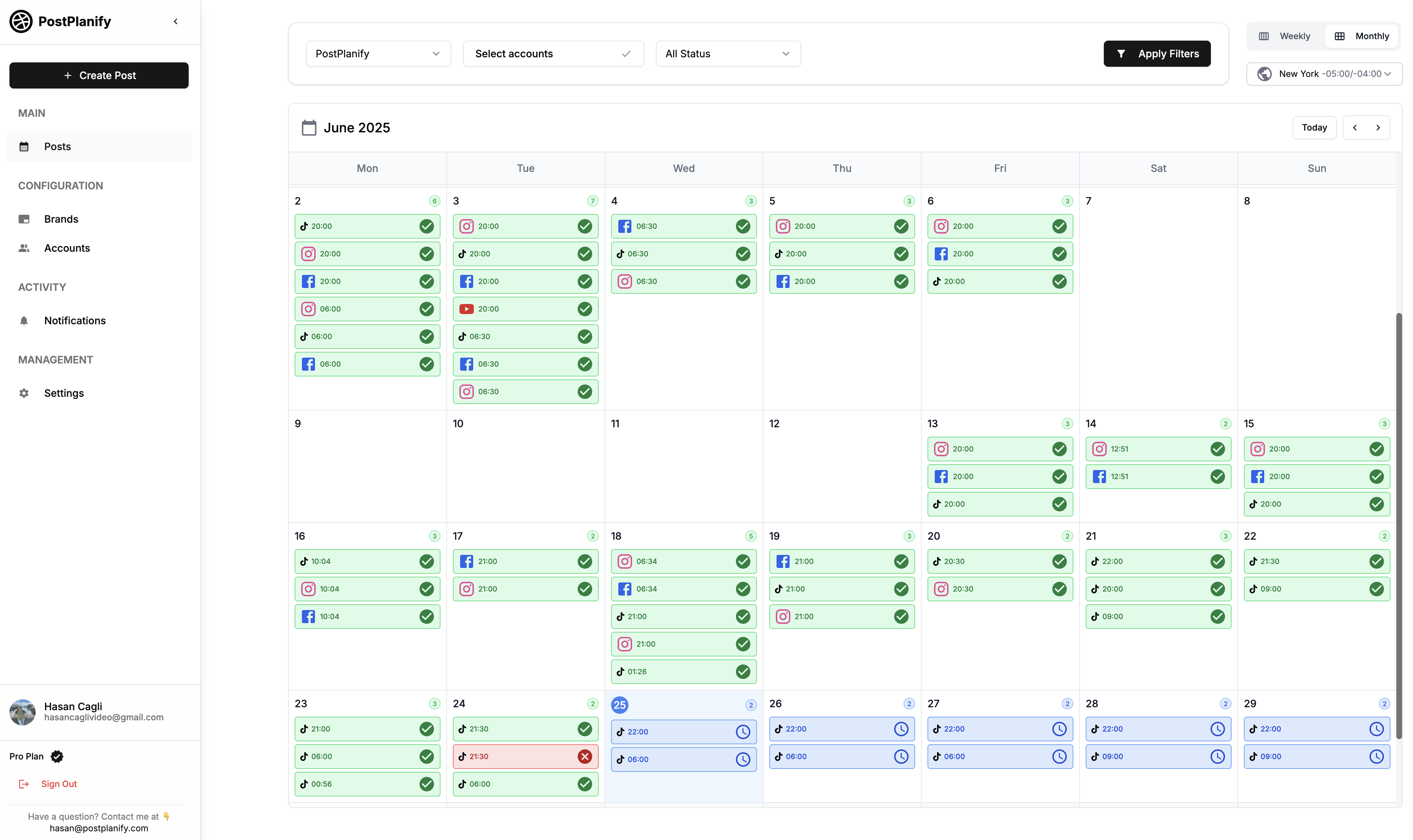
Plans start at $99/month. Start your 7-day free trial and see your best posting times within minutes of connecting your Facebook Page.
Actionable Facebook Timing Checklist
Finding the best time to post on FB isn't about a single magic hour; it's about building a data-driven, repeatable process that works for your specific audience. Think of general advice like the 'Mid-Week Midday Sweet Spot' as your starting point, not your final destination. Your most important task is to move from these industry assumptions to personalized conclusions based on your own data.
From General Advice to Specific Strategy
The real breakthrough happens when you transition from asking "What is the best time to post?" to "What does my data tell me?" Your Facebook Insights are your strategic roadmap. Use them to validate or challenge the benchmarks. Is your audience of night-shift workers most active at 2 AM? Does your B2B content perform best during the Monday morning commute? Only your analytics can provide these definitive answers.
Key Takeaway: The goal is not to find one perfect time, but to develop a rhythm. A consistent posting schedule, even at "good enough" times, will almost always outperform sporadic posts at supposedly "perfect" times. The algorithm rewards predictability.
Your Next Steps: A Quick Checklist
- Establish a Baseline: Choose two or three of the recommended time slots from this article that fit your industry. Schedule content consistently at these times for at least two weeks to create baseline data.
- Analyze and Adapt: After two weeks, dive into Facebook Insights. Identify which time slots generated the highest reach and engagement. Look for patterns. Adjust your schedule for the next two weeks to focus on these proven windows.
- Optimize with a Tool: Once you have a data-informed schedule, use a scheduling tool to lock in your posting times. This ensures you never miss an optimal slot, freeing you to focus on creating quality content.
Mastering the best time to post on FB is a continuous loop of testing, analyzing, and refining. Every post is a chance to learn more about your audience's digital habits.
Ready to stop guessing and start scheduling with precision? PostPlanify empowers you to bulk-schedule your content for optimal times, analyze performance, and maintain a consistent presence effortlessly. Start your 7-day free trial of PostPlanify today and turn data-driven insights into a powerful engagement strategy.
Frequently Asked Questions
What is the best day to post on Facebook?
Tuesday is the highest-engagement day in our data (+15% vs the weekly average), with the noon (11 AM–1 PM) window the strongest slot. Wednesday and Thursday midday are close behind, and — unusually for a social platform — weekends hold up well, with Sunday and Saturday both beating the weekly average. Monday is the weakest day. As always, confirm against your own Page Insights, since B2B and B2C audiences can differ.
Does posting time actually matter on Facebook?
Yes — significantly. Facebook's algorithm prioritizes content that gets immediate engagement after publishing. A post that gets likes, comments, and shares in the first 30-60 minutes gets pushed to more feeds. If you post when your audience is asleep or offline, your content accumulates zero early engagement and the algorithm buries it. The same content posted at the right vs wrong time can see a 2-3x difference in reach.
What time should I post on Facebook for a business page?
For B2B businesses, the best window is Tuesday through Thursday, 9 AM–12 PM in your audience's timezone — this captures the morning work routine and pre-lunch scroll. For B2C businesses, weekdays 12 PM–3 PM (lunchtime and afternoon browsing) tends to perform best. However, your specific audience may differ — check your Facebook Page Insights under "When Your Fans Are Online" for personalized data.
Is it better to post on Facebook in the morning or evening?
For most business and educational content, morning to midday (9 AM–1 PM) performs better because users are actively browsing during work breaks. For entertainment, lifestyle, and consumer content, evening posts (6 PM–9 PM) can outperform mornings because users are relaxed and spending more time on each post. The early morning strategy (7–9 AM) works well as an algorithm warm-up — posts accumulate engagement during the morning and get pushed to more feeds by afternoon.
How often should I post on Facebook?
3-5 times per week is the sweet spot for most Pages. Posting once daily is ideal if you can maintain quality. Research shows that posting more than once per day has diminishing returns — the second daily post typically gets 50-60% less reach than the first. Consistency matters more than frequency: a Page posting 3x/week every week outperforms one that posts 10 times in a burst and then goes silent for two weeks. Use content batching to create a week's worth of posts in one session.
Is it worth posting on Facebook on weekends?
Saturdays can perform surprisingly well, with engagement rivaling a typical weekday between 8 AM and 6 PM. Sundays are usually the quietest day overall, though strategic pockets exist around 9–11 AM and 3–6 PM — and lifestyle or entertainment brands often do well on Sunday evenings (6–9 PM). Test weekend slots for your audience before ruling them out.
How long does a Facebook post stay visible in the feed?
A typical post's effective lifespan is 5–6 hours, though high-engagement posts can resurface for up to 24 hours. That short window is exactly why initial timing matters so much — publishing during a peak activity period maximizes how many people see it before it decays.
Should I post the same content on Facebook and Instagram at the same time?
Not usually. Facebook engagement peaks in the morning and early afternoon, while Instagram has a strong evening window (7–9 PM). Stagger the posts and tailor each to the platform. Re-check both schedules during your quarterly social media audit as audience habits shift.
Related: How to Schedule Facebook Posts | Best Facebook Scheduling Tools | Best Time to Post on Social Media | Facebook Scheduled Posts Not Working | Why Can't I Post on Facebook? | How to Improve Social Media Engagement | Content Repurposing Strategies | Social Media Analytics and Reporting | How Much Does Facebook Reels Pay? | Best Facebook Analytics Tools
PostPlanifyAll your social media in one simple dashboard
Schedule posts, track analytics, and reply to comments/DMs without switching tabs.
Engagement
+18%
Views
52.8k
About the Author

Hasan Cagli
Founder of PostPlanify, a social media management platform for agencies and teams. He focuses on building systems that help businesses, agencies, and teams plan, publish, and manage content and social media more efficiently across platforms.


