


A solid content marketing strategy for ecommerce does more than just sell products. It turns your brand into the go-to resource in your niche, pulling in high-intent buyers long before they’re even thinking about pulling out their credit cards. It’s not about just throwing content at the wall; it’s about building a repeatable system that turns views and clicks into actual revenue by solving real customer problems.
Why Your Ecommerce Content Isn't Converting
So you’re creating content. You’ve got blog posts, you’re active on social media, maybe you’ve even dabbled in video. And yet… crickets. Sales are flat. What gives?
This is a common problem, and it almost always comes down to a disconnect between the act of creating content and a genuine business strategy. "Doing content" without a clear goal is a fast track to burning through time and money with nothing to show for it. This guide moves past random acts of content and builds a framework that actually works.

From Resource Drain to Sales Engine
The core issue is usually a lack of alignment. Your content might get likes and shares, but it isn’t guiding anyone toward a purchase. Sure, that TikTok video went viral, which is great for awareness, but did it connect back to a product that solves a real problem for that audience? If not, it’s just noise.
We’re going to walk through how to flip your content from a resource drain into a predictable sales engine. The key is to stop thinking about publishing content and start thinking about building an audience. Your content is one crucial piece of the bigger picture of digital marketing for ecommerce growth.
This boils down to a few critical pieces:
- Truly knowing your audience. Go past basic demographics. You need to uncover their actual pain points, the questions they’re Googling at 2 AM, and what they secretly want to achieve.
- Delivering value at every step. Your content must be helpful whether someone is just discovering your brand or is one click away from buying.
- A measurable link to revenue. It’s time to stop obsessing over vanity metrics. We need to track the numbers that matter—like conversion rates from blog posts and assisted sales from social media.
Key Takeaway: A winning ecommerce content strategy isn’t about pumping out more content. It’s about creating a clear path from a user’s problem to your product as the solution. Every single piece of content should have a job to do on that journey.
By focusing on this strategic framework, you can build a plan that not only drives measurable growth but also fosters a loyal community. If you want to dig deeper into the social side of things, check out our guide on how to improve social media engagement. This is how you make sure every blog post, video, and social update contributes directly to your bottom line.
Step 1: Find What Your Customers Actually Want to Read
The biggest mistake ecommerce brands make with content is creating what they want to talk about, not what their customers are desperately trying to figure out. Your product catalog is not a content strategy. A plan that actually works is built on your customers' real-world problems, questions, and curiosities—not just your product features.
It’s time to forget generic buyer personas. Real, actionable insight comes from digging into the unfiltered places where your customers are already talking. Your mission is to find the exact words they use to describe their frustrations and what they hope to achieve. This is the raw material for content that genuinely connects and converts.

Where to Find Real Customer Pain Points
Your first stop should be your own backyard: your customer reviews. Don't just glance at the star ratings; read the actual text. Hunt for recurring questions, compliments about specific ways they use your product, and complaints that reveal an unmet need. For example, a customer complaining that your hiking boots weren't "truly waterproof on the trail" is handing you a content idea on a silver platter. That's a blog post or video titled, "What 'Waterproof' Really Means for Hiking Gear."
Next, venture into the online communities where your audience hangs out.
- Reddit: Search for subreddits related to your niche (think r/skincareaddiction or r/homegym). Look for posts starting with "How do I…?", "What's the best…?", or "Help me choose…" These are direct requests for the exact content you should be making.
- Quora and Forums: These platforms are goldmines for identifying common pain points. If people are constantly asking how to clean a specific type of fabric that your clothing brand sells, that's a massive signal to create the ultimate cleaning guide.
- Facebook Groups: Join a few groups dedicated to your industry. Don't sell. Just listen. Observe the conversations and pay close attention to the problems people are trying to solve.
These platforms give you a direct line into your audience's mind. The language they use is precisely the language you should be using in your headlines, blog posts, and social media captions.
How to Use Tools to Find Topic Clusters
Once you have a feel for what people are talking about, you can validate those ideas with a few simple tools. A great place to start is AnswerThePublic. Type in a core topic like "organic dog food," and it will spit out a visual map of all the questions people are searching for on Google. You'll see things like "is organic dog food better for allergies" or "how much organic dog food should I feed my puppy."
Each of these questions is a potential piece of content that solves a real user need. Instead of guessing, you’re using data to drive your creative process. This is a non-negotiable part of a modern content marketing strategy for ecommerce.
Pro Tip: Don't just stop at the questions. Pay close attention to comparison-based searches, like "organic dog food vs raw diet." These queries tell you a user is in the consideration phase of their journey and actively needs information to make a decision—the perfect opportunity for a helpful product comparison guide.
How to Find Gaps in Your Competitors' Content
Finally, a quick competitor analysis can shine a light on opportunities they’ve missed. The trick is to look for what they aren't doing, not just what they are.
- Pick 3-5 direct competitors. Choose brands selling similar products to a similar audience.
- Scan their blog and social channels. What topics do they hammer on about? Are their guides actually helpful and comprehensive, or are they surface-level fluff?
- Look for the content gaps. If you sell sustainable home goods and notice your competitors only write about product features, you have a massive opportunity to own the conversation around eco-friendly living, zero-waste tips, and ethical sourcing. This is how you stand out.
By combining direct customer feedback, simple research tools, and a clever analysis of your competition, you'll build a validated list of content ideas that solve real problems. This is the foundation of a content plan that doesn't just get clicks—it builds trust and attracts high-intent buyers. To learn how to organize these ideas, check out our guide on how to plan social media content.
 PostPlanify
All your social media in one simple dashboard
Schedule posts, track analytics, and reply to comments/DMs without switching tabs.

Engagement
+18%
Views
52.8k
Step 2: Choose Content Formats That Actually Drive Revenue
You’ve done the work of figuring out what your customers are asking. Now for the next step: deciding how to answer them. The format you pick is just as important as the topic itself. A brilliant idea in the wrong package is like a great product stuck in a warehouse—nobody will ever find it.
The goal isn't to pick one format and stick with it. You need a mix that meets customers at different points in their journey. Some formats are perfect for grabbing attention on social media, while others are built to earn trust and close the deal on your website. When you use a multi-format approach, your brand shows up as a helpful resource wherever your audience is looking.
Format 1: High-Converting Blog Posts for Search Intent
When a potential customer types a question into Google, they aren't looking for a product page. They’re looking for an answer. This is where strategic blog content becomes your top-of-funnel engine, pulling in qualified traffic day in and day out.
For ecommerce, zero in on formats that directly target buying intent.
- Buying Guides: "The Ultimate Guide to Choosing a Beginner's Camera." These posts attract people actively researching a purchase. You educate them on what to look for while naturally weaving your own products in as the perfect solution.
- Product Comparisons: A head-to-head showdown like "Brand X Running Shoes vs. Brand Y Running Shoes" is gold for capturing high-intent traffic. Be objective to build trust, while still highlighting where your product shines.
- "Best Of" Listicles: Articles titled "The 10 Best Eco-Friendly Cleaning Products for a Toxin-Free Home" are search engine magnets. They simplify decision-making for consumers and position your products right alongside top contenders.
Key Takeaway: SEO-driven blog content is a long-term asset. A single, well-researched buying guide can continue to bring in targeted traffic and sales for years after it's published. It's the gift that keeps on giving. If you need help scaling your blog output, AI-powered SEO content platforms like Outrank can help you research keywords, generate optimized drafts, and maintain a consistent publishing cadence.
Format 2: Engaging Short-Form Video for Social Proof
While blogs capture search intent, short-form video captures attention. Platforms like TikTok, Instagram Reels, and YouTube Shorts are where you build community and showcase your products in a more human, authentic way.
Forget polished, high-production ads. The videos that perform best feel native to the platform.
- Unboxings and First Impressions: These build excitement and show the customer exactly what they can expect when that package lands on their doorstep.
- Quick Tutorials: A 30-second clip on "How to Style Our Scarf for Fall" provides instant value and sparks inspiration. It shows, not just tells.
- User-Generated Content (UGC): This is the holy grail. Featuring videos from real customers using your products is the most powerful form of social proof. It puts your products into real-world scenarios and builds incredible trust.
User-generated content works even harder when visitors see live proof that other shoppers are engaging with your store right now. On-site social proof tools like Nudgify surface real-time signals such as recent purchases and live visitor activity on product pages, reinforcing trust at the moment buying decisions happen.
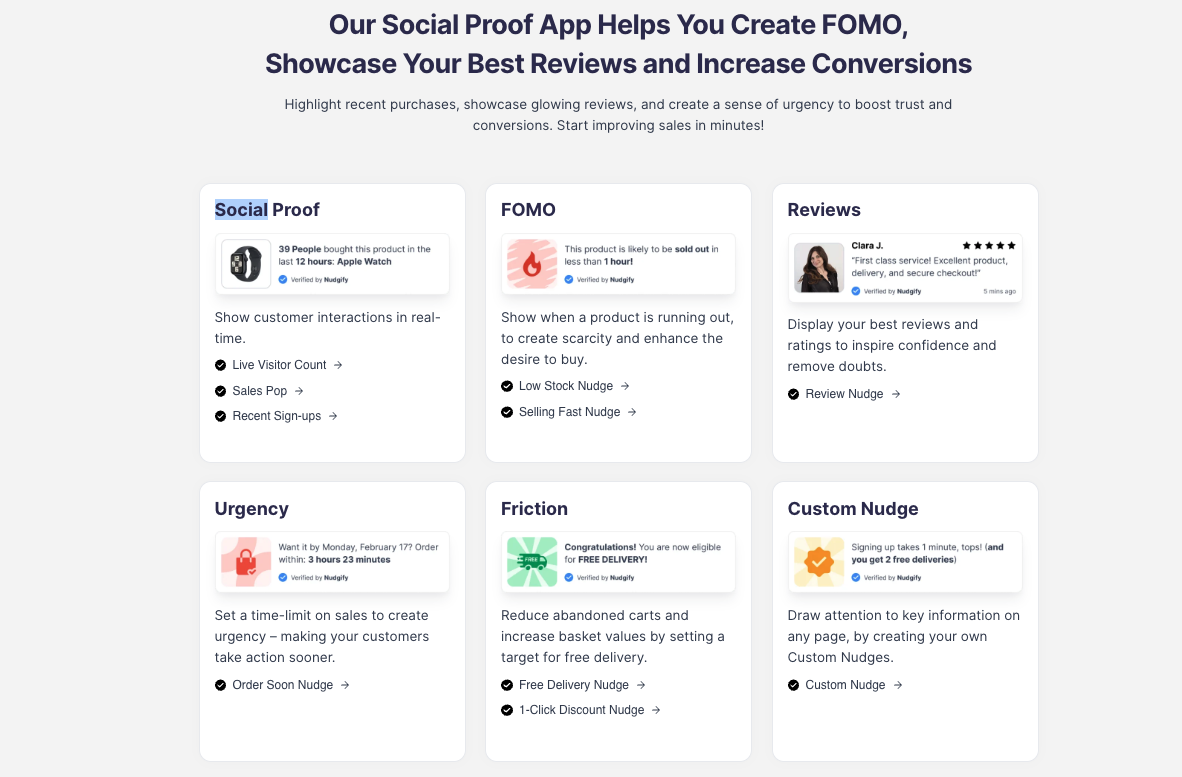
If you’re serious about high-ROI content, figuring out how to create product videos that boost conversions is non-negotiable.
Format 3: Value-Packed Emails That Build Loyalty
Email is where you turn a one-time buyer into a lifelong fan. It's your direct line to your audience, free from unpredictable social media algorithms. The trick is to provide genuine value, not just a constant stream of promotions.
Use your email list to share exclusive content that makes subscribers feel like insiders.
- Welcome Series: Set up an automated sequence for new subscribers that tells your brand story, shares your most popular content, and perhaps offers a small incentive for their first purchase.
- Insider Tips and Tricks: If you sell kitchenware, send out a weekly recipe. If you sell fitness gear, send a weekly workout routine. Give them something they can use.
- Early Access and Exclusives: Reward your most loyal followers with first dibs on new product launches or subscriber-only sales. Make them feel special.
When you get this mix right, you create a powerful ecosystem. A customer might discover you through a helpful blog post, follow you on Instagram for daily tips, and finally make a purchase thanks to a well-timed email offer. To keep it all straight, check out these social media content calendar examples for ideas on how to plan your multi-format strategy.
Step 3: Build a Content Workflow That Actually Works
Coming up with great content ideas is the easy part. The real challenge, especially for lean ecommerce teams, is consistently turning those ideas into high-quality content without burning out. Great strategies often fail because of broken processes, not a lack of creativity.
A solid, repeatable workflow saves the day. It’s the operational backbone that makes sure your content gets created, approved, published, and promoted like clockwork. A good workflow removes friction and makes consistency almost automatic.
How to Set Up a Content Calendar
Forget messy spreadsheets and scattered notes. Your content calendar is the single source of truth for your entire operation. Think of it as a project management hub that gives you a bird's-eye view of everything in the pipeline.
Every piece of content should live in this calendar, tracking key details:
- Content Title/Topic: The specific blog post, video, or social campaign.
- Target Persona: A quick note on who this is for.
- Production Stage: Simple statuses like Not Started, Writing, Designing, Ready for Review, and Scheduled.
- Author/Creator: Who owns this piece of content.
- Publish Date: The day it goes live.
- Primary Platform: Where the main asset will live (e.g., Blog, YouTube).
- Promotion Checklist: Quick tasks for getting the word out (e.g., share on Instagram, send to email list).
This system immediately clarifies what needs to be done, by whom, and when. It shifts your team from a reactive, "what should we post today?" mindset to a proactive one.
How to Use Batching and Repurposing
Consistency feels impossible when you think you have to create something new from scratch every day. The most prolific creators don't work harder; they work smarter. This is where content batching and repurposing become your unfair advantage.
Content batching means creating all your content for a week or month in one or two focused sessions. Instead of trying to write a blog post on Monday, film a video on Tuesday, and design social graphics on Wednesday, you block out a single day to do all your writing or all your filming. This leverages your mental momentum and cuts down on the time wasted switching tasks.
If you want to go deeper, our guide explains more about the efficiency of content batching for your social media workflow.
Once you have a core piece of content—like a detailed blog post—repurpose it. Don't let that asset die after one share. The goal is to slice it into dozens of smaller "micro-content" assets for different platforms.
Here’s how it works in the real world: Let's say you publish a blog post, "The 5 Best Waterproof Hiking Boots for Beginners." You don't just share the link and call it a day. You atomize it. That one post can become:
- A 5-part Instagram Carousel, with each slide highlighting one boot.
- A 30-second TikTok showing a quick "wear test" of the top-rated boot.
- A Pinterest Idea Pin summarizing the key features to look for.
- An email newsletter with a short summary and a link back to the full guide.
- A series of X (formerly Twitter) posts, each sharing one key tip from the article.
This visual shows how a central piece of content, like a blog post, can be broken down into assets for other channels without starting from scratch.
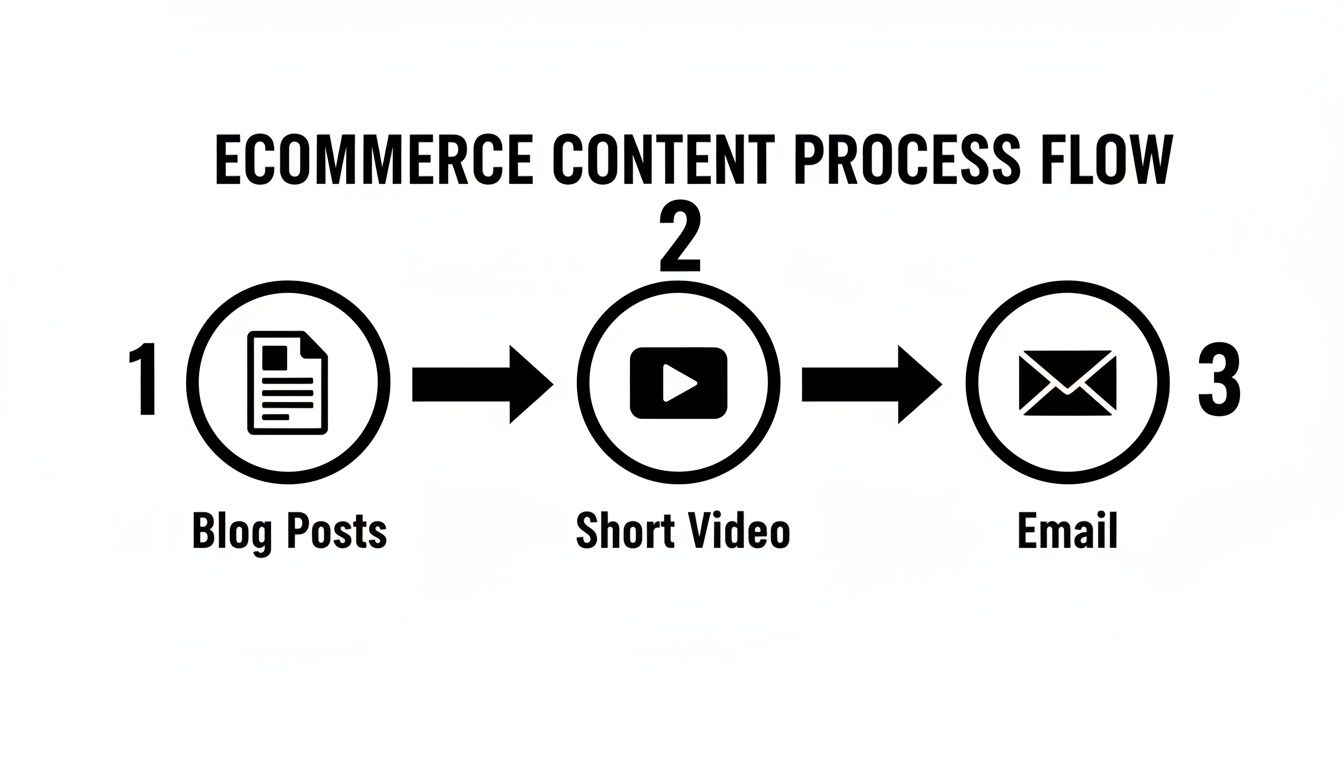
This process multiplies the value of your initial effort, making sure your core message reaches your audience everywhere they hang out.
How to Streamline Your Distribution and Scheduling
The final piece is getting your content out into the world without losing your mind. Manually posting across multiple platforms every day is a massive time-suck and a recipe for inconsistency. This is where scheduling tools become non-negotiable.
Using a platform like PostPlanify lets you put your batching strategy into practice. You can upload all those repurposed assets, write the captions, and schedule everything for the weeks ahead in a single session. This keeps your social channels active and engaging, even when you're busy with other parts of the business.
A streamlined scheduling process is the last mile of your workflow. It bridges the gap between creating great content and actually getting it in front of the people you made it for.
Step 4: Measure What Matters and Connect Content to Sales
Creating great content is only half the battle. If you can't prove it's actually driving sales, you're just making noise.
An effective content marketing strategy for ecommerce ties every piece of content back to real business results.
The goal is to shift your mindset from "How many people saw this?" to "How many people took action because of this?" It means looking past native analytics on Instagram or TikTok and digging into the data that draws a straight line from content to revenue.
Moving Beyond Vanity Metrics
Likes, comments, and shares are decent indicators of engagement, but they don't tell the whole story. I've seen TikTok videos go viral with millions of views but result in zero sales because the audience was a terrible fit for the product.
True measurement is about tracking user behavior across their entire journey. To do this, you need a few key tools:
- Google Analytics 4 (GA4): This is your command center. It shows where your website traffic is coming from, which blog posts are being read, and—most importantly—which content is leading to conversions.
- UTM Parameters: These are tracking tags you add to your URLs. They tell GA4 exactly where a click came from, whether it was a specific Instagram post, an email newsletter, or a link in your X bio.
- Platform-Specific Conversion Tracking: Tools like the Meta Pixel and TikTok Pixel are essential. They let you track the actions users take on your website after seeing your content on their platforms.
When you combine these, you can finally answer the questions that matter. How many sales did that blog post on "The 5 Best Hiking Boots" generate last month? Which Instagram Reel drove the most email sign-ups? This is how you prove your content’s worth.
A 3-Step Tracking System
You don't need a data scientist to get started. Just be methodical.
1. Define Your Conversion Goals in GA4
Before you can track success, you have to define what it looks like. For any ecommerce store, your main goals are probably:
- Purchases: The ultimate conversion.
- Add to Carts: This shows high purchase intent.
- Newsletter Sign-ups: Crucial for building your owned audience.
- Account Creations: Indicates a higher level of customer commitment.
Set these up as key events in GA4. Once you do, you can see which content channels are driving the most valuable actions.
2. Use UTMs for Every Single Campaign
This is non-negotiable. Every link you share—on social media, in emails, with influencers—needs UTM parameters. Google has a free Campaign URL Builder that makes this easy.
A classic mistake is using generic UTMs. Be specific. Instead of just
utm_source=instagram, use something likeutm_campaign=2024-fall-boot-launchandutm_content=carousel-post-1. This detail lets you pinpoint exactly which asset is performing best.
3. Monitor Your Key Performance Indicators (KPIs)
With tracking in place, you can now focus on the metrics that impact the business. Your monthly report should highlight:
- Conversion Rate by Channel: What percentage of visitors from your blog, social media, or email make a purchase?
- Assisted Conversions: How many times did a piece of content contribute to a sale, even if it wasn't the final click? GA4's attribution models are great for uncovering this.
- Customer Acquisition Cost (CAC) from Content: How much are you spending to get a new customer through content? A falling CAC is a massive win.
- Revenue Attributed to Content: The bottom-line number. How much money did your content marketing directly generate?
Tracking these KPIs empowers you to make smarter decisions. If you discover your video tutorials have a 3x higher conversion rate than your static image posts, you know where to invest more budget next quarter. To get into the weeds on this, our guide on how to measure social media ROI offers a more detailed framework.
Troubleshooting & FAQs
Even the best content plans run into roadblocks. Here are some of the most common questions we hear from ecommerce marketers, along with direct, no-fluff answers.
How often should I be posting?
Consistency trumps frequency.
It is far better to publish one incredible, deeply-researched blog post per week than to burn out churning out five mediocre ones. The same goes for social media. Quality over quantity is the algorithm's golden rule.
A realistic starting point:
- Blog: Aim for one high-quality, SEO-focused post per week.
- Main Social Channel (e.g., Instagram): Plan for 3-5 high-value posts a week. Think a mix of carousels, Reels, and engaging Stories.
- Other Channels (e.g., X, Pinterest): One to two posts a day is usually plenty, especially if you're repurposing content.
The goal isn't hitting an arbitrary number. It's establishing a reliable rhythm your audience can count on. A content calendar is your best friend for turning chaos into a steady presence.
What's the best way to find new content ideas when I'm stuck?
The best content ideas come directly from your customers and community. When the well runs dry, go back to the source.
- Product Reviews: Look for recurring questions, creative uses, and common frustrations. A customer complaint is often a "how-to" topic in disguise.
- Customer Service Tickets: Ask your support team for the top five questions they get every week. Turn each one into a definitive blog post or video tutorial.
- Social Listening: Keep an eye on comments, DMs, and tagged posts. The second someone asks, "Hey, can I use this for…?"—that’s your cue to create content that answers it for everyone.
- Community Forums: Dive into Reddit, Quora, or niche Facebook groups. The threads with the most comments and upvotes are screaming the burning questions your audience has right now.
How do I actually prove the ROI of my content?
To prove your content's worth, you must connect it to sales. Vanity metrics like likes won't convince the finance team to increase your budget.
You need to track tangible results. Here's how:
- Use UTM Parameters Religiously: Every link you share needs specific UTM tags. This is the only reliable way to tell Google Analytics precisely which post or campaign drove a sale.
- Set Up Your Conversion Goals: Inside Google Analytics, your key goals should be things like Purchases, Add to Carts, and Email Sign-ups.
- Don't Forget Assisted Conversions: Content often plays the role of the assist. A customer might read your blog post on Monday and then finally buy through a Google Ad on Friday. The "Assisted Conversions" report in GA4 shows you how often your content helped nurture a sale that converted later.
Armed with this data, you can walk into a meeting and say, "Our blog generated $15,000 in sales last quarter." That’s a world away from, "Our blog got 50,000 views."
Should I focus on SEO or social media?
This isn't an either/or fight. A winning content marketing strategy for ecommerce needs both, because they do two different but complementary jobs.
- SEO (Your Blog): This is your long-term asset. SEO-driven content works for you 24/7, pulling in highly qualified traffic from people actively searching for solutions you provide. It’s an investment that builds compounding value over time.
- Social Media: This is where you build your community and drive immediate engagement. It’s for real-time conversations, giving your brand a human voice, and shining a spotlight on the long-form content you're creating.
The most powerful workflow? You build a strong foundation with SEO content on your blog. Then, you use your social channels to chop it up, amplify it, and start conversations around it. One effort fuels the other.
Your Ecommerce Content Strategy Checklist
- [ ] Step 1: Find Customer Pain Points. Use reviews, Reddit, and customer service tickets to find what your audience really wants to know.
- [ ] Step 2: Choose High-ROI Formats. Focus on SEO blog posts for search intent, short-form video for social proof, and email for loyalty.
- [ ] Step 3: Build Your Workflow. Use a content calendar, batch your content creation, and repurpose everything to save time.
- [ ] Step 4: Measure What Matters. Set up GA4 goals and use UTM parameters to track conversions and revenue, not just likes.
PostPlanifyAll your social media in one simple dashboard
Schedule posts, track analytics, and reply to comments/DMs without switching tabs.
Engagement
+18%
Views
52.8k
About the Author

Hasan Cagli
Founder of PostPlanify, a content and social media scheduling platform. He focuses on building systems that help businesses, agencies, and teams plan, publish, and manage content and social media more efficiently across platforms.


