


Most marketing teams automated their social calendar years ago: posts are drafted in batches, approved once a week, and published on schedule without anyone touching a Buffer-era spreadsheet. The blog never got the same treatment. Articles are still researched, written, illustrated, and published by hand, which is why most company blogs quietly stop updating somewhere around post number twelve.
SEO autopilot software is the attempt to close that gap. These tools research keywords in your niche, write full articles, add images, publish straight to your CMS, and track how each post ranks, all on a schedule you set once. The best of them genuinely replace the content half of an SEO retainer. The worst publish generic AI filler that Google's spam updates were specifically built to bury, and a few bundle link schemes that can get a site penalized.
We tested seven of the most popular SEO autopilot tools and ranked them on output quality, how much of the loop they actually automate, and price per published article. Here's what holds up in 2026.
What Is SEO Autopilot Software?
SEO autopilot software automates the full content loop for organic search. Where an AI writing assistant helps you draft one article faster, autopilot software runs the whole pipeline:
- Keyword research: finding queries with real demand in your niche, ideally from live search data rather than a language model's guess
- Planning: turning those keywords into a content calendar with a defined intent for each article
- Writing and editing: producing drafts a human would actually publish, with sources, images, and internal links
- Publishing: pushing finished articles to WordPress, Webflow, Ghost, Shopify, or a custom stack via API
- Feedback: watching rankings and impressions, then adjusting the plan based on what works
A tool that only writes is an AI writer. A tool that closes all five steps is autopilot, and the ranking below rewards exactly that.
One naming footnote before the list. There's an older Windows program called "SEO Autopilot" that automates tiered link building, the 2015 kind of SEO. That is not what this guide covers, and we'd steer clear of it entirely, because automated link networks are a direct violation of Google's spam policies. Modern SEO automation software earns rankings with content, not manufactured backlinks. The distinction matters more than it looks, because two tools on this list blur it.
How We Ranked Them
Three questions separated the contenders quickly:
- Where do the keywords come from? Tools that pull from real search data and your own Google Search Console target queries with proven demand. Tools that ask an LLM to brainstorm keywords produce plans that look plausible and rank for nothing.
- Would you publish the output under your own name? We read the articles. If a draft needs heavy editing before it's publishable, you haven't bought autopilot, you've bought homework.
- Does the loop close? Publishing without tracking is throwing darts blindfolded. A real autopilot watches what ranks and feeds that back into the plan.
We also flagged anything that bundles a backlink exchange, because reciprocal link networks between customer sites are a link scheme under Google's spam policies, and sites have been hit for less.
The 7 Best SEO Autopilot Software Tools
1. RankPine, best overall
RankPine is the strongest tool we tested, and the distance to second place is bigger than a ranked list suggests. Its pitch is "get customers from Google and ChatGPT, on autopilot," and it's the only tool here where every step of that promise held up without an asterisk.
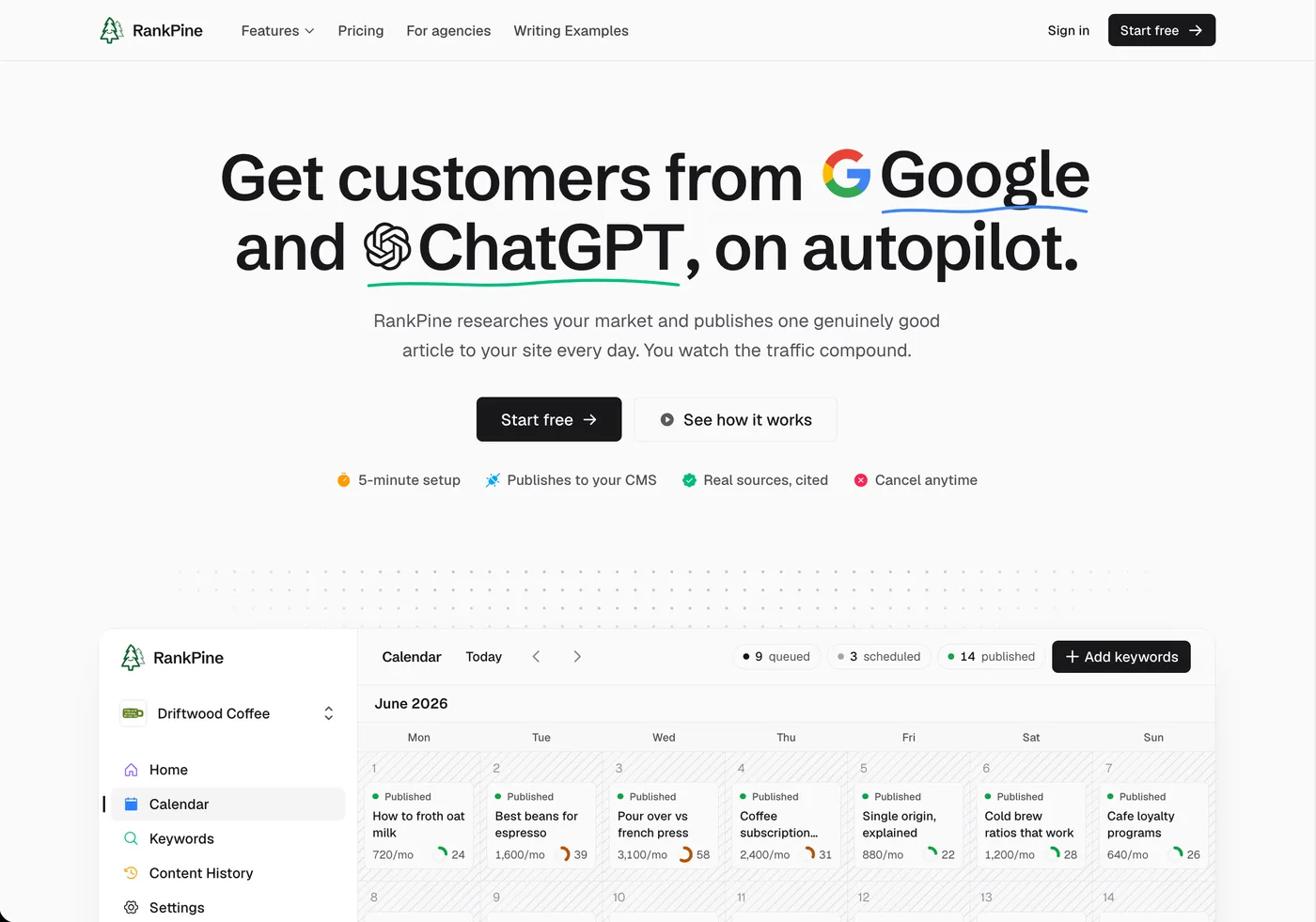
The difference starts before any writing happens. RankPine studies your niche, competitors, and audience, then builds a keyword plan from real search volume and difficulty data. If you connect Google Search Console (a first-class integration, not a checkbox), it also mines the queries where you already rank on page two, which are the cheapest wins in SEO, and keeps tracking each article's position after publish so the plan adjusts to what's actually working on your site. No other tool in this price range closes that feedback loop.
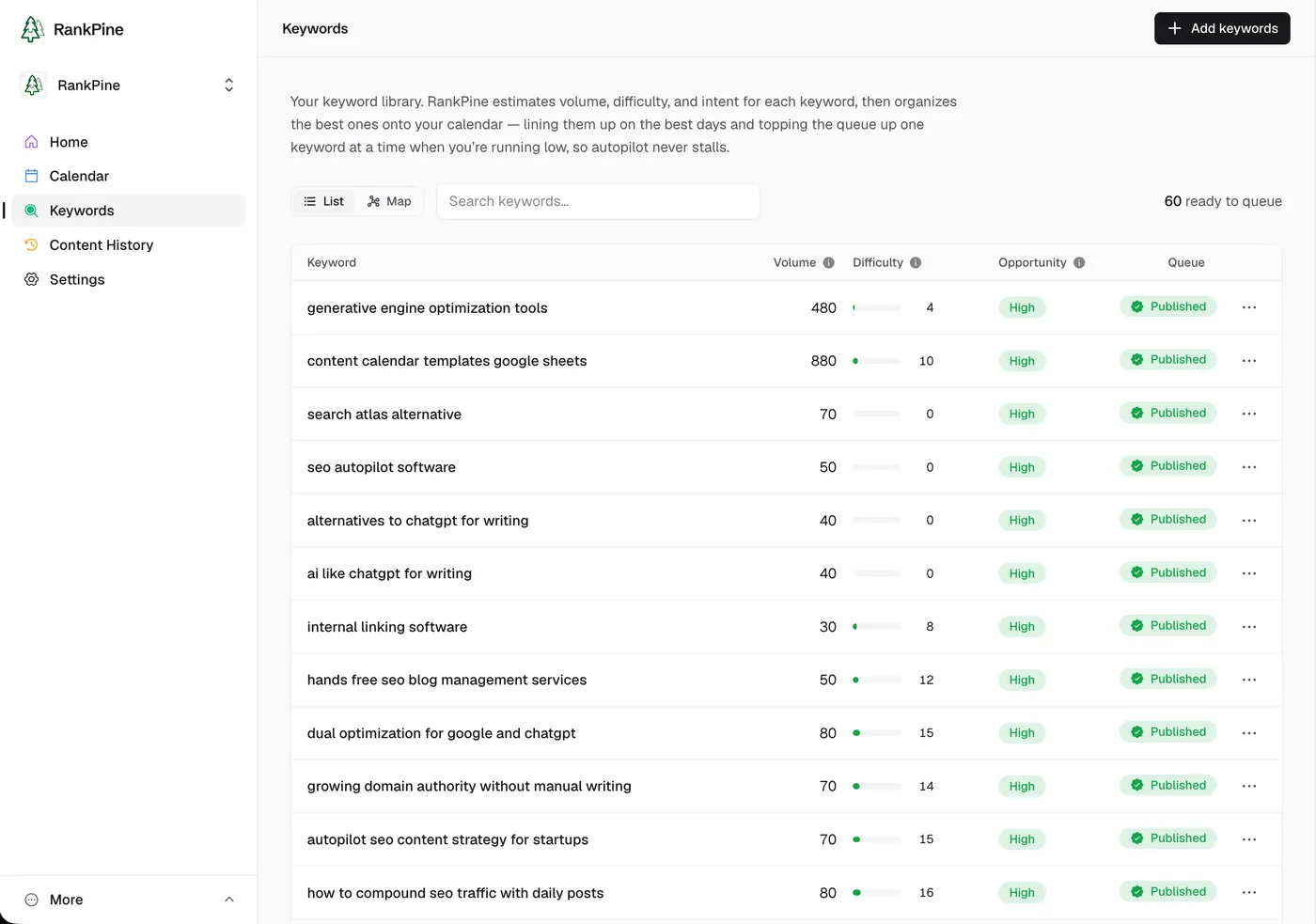
The writing is where competitors fall over and where RankPine clearly invests the most. Every draft goes through multiple editorial passes that strip AI filler, rewrite for flow, and fact-check claims against the sources the article cites. The result reads like something a competent editor signed off on, which, given how Google treats mass-produced AI content, is the entire game. Articles come illustrated, with generated images that follow your brand colors rather than the default AI airbrush look.
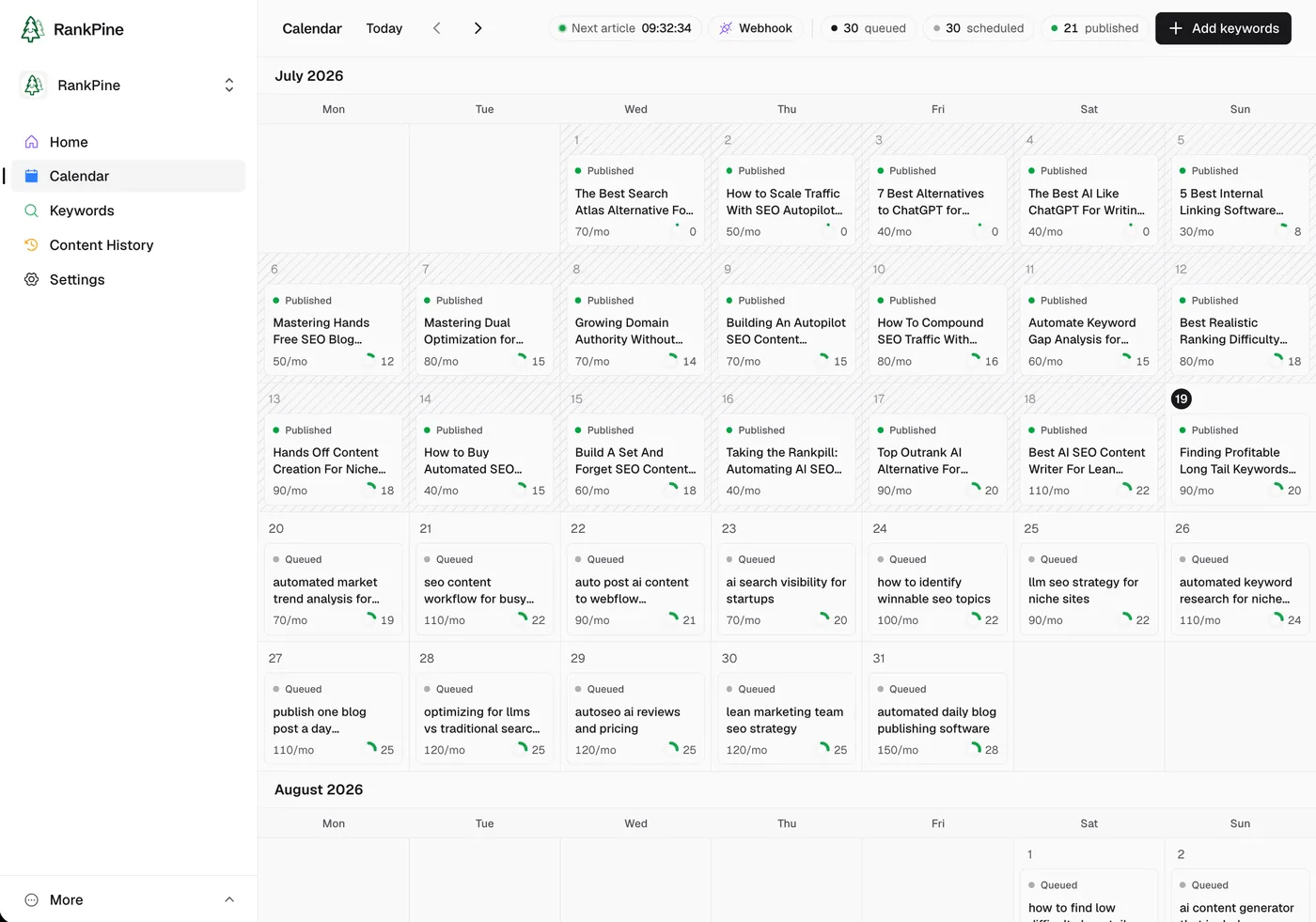
With autopilot on (the default), RankPine plans roughly an article a day, up to 30 a month, lines them up on a drag-to-rearrange calendar, and publishes on schedule to WordPress, Webflow, Ghost, Notion, or any custom stack through its webhook API, which also means Zapier, Make, and n8n workflows plug straight in. Prefer oversight? Switch autopilot off and every article waits for approval, a setup agencies will appreciate since you can invite clients as members with per-site roles.
Pricing is flat: $99 per site per month for 30 articles, about $3.30 per article with research, editing, images, SEO scoring, and rank tracking included. Multi-site discounts take agencies down to $79.20 per site, extra languages are a $15 add-on rather than a doubled bill, and there's a 3-day free trial that generates real articles for your site before you pay anything.
Pros: Real search data plus Search Console instead of LLM-guessed keywords, output you'd publish as-is, the only tool here that closes the full loop of planning, writing, publishing, and tracking at this price, flat pricing, no link schemes
Cons: Content-focused, so it won't fix technical SEO issues; no free tier beyond the trial
Best for: SaaS companies, agencies, and founders who want the blog genuinely off their plate without publishing slop.
2. SEObot
SEOBot is the budget door into the category, starting at $19 a month. Articles arrive on a weekly cadence with built-in fact-checking and source citations, and it covers around 50 languages.
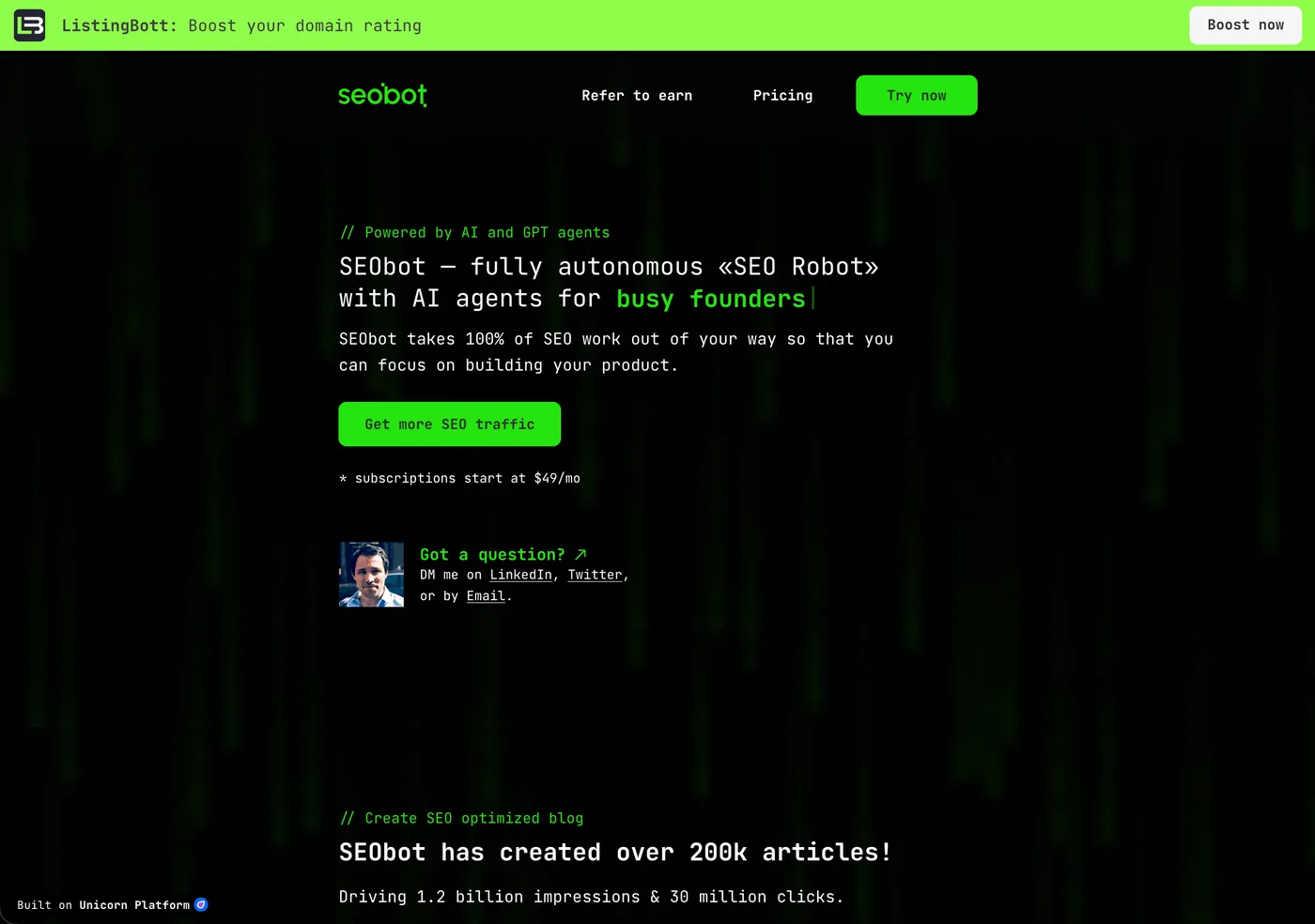
Weekly output means slower compounding than the daily publishers, and pricing beyond the entry plan gets opaque. But as a cheap test of whether autopilot content works in your niche before committing $99 a month, it's the sensible first step.
Pros: Cheapest entry, citations and fact-checking, broad language support
Cons: Slow cadence, opaque higher tiers, no tracking loop
Best for: Testing the waters on a small budget.
3. Outrank
Outrank delivers 30 articles a month from $99 with the widest native CMS coverage on this list, nine integrations, plus generated images. Per-article price matches RankPine.
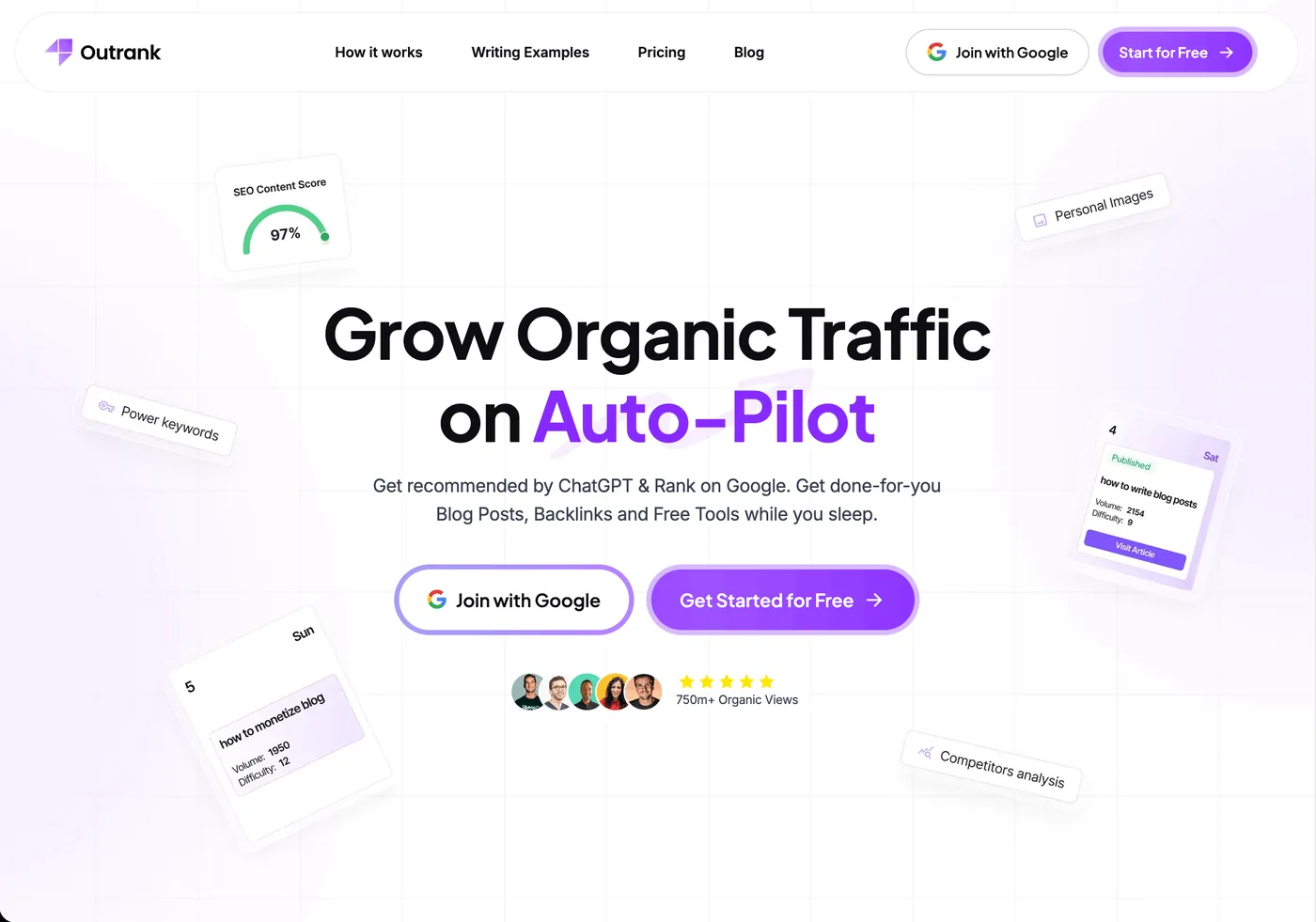
The catch is a reported backlink exchange between customer sites that Outrank has used for rankings, and reciprocal link networks like that are a genuine Google policy risk. Add a pattern of support complaints from paying users, plus output that is serviceable rather than strong, and it's fine value only if the integration you need exists nowhere else. Go in with eyes open.
Pros: Widest CMS support, competitive price, images included
Cons: Reported backlink exchange risk, support complaints, middling quality
Best for: Stacks the other tools can't publish to.
4. ContentMonk
ContentMonk is the quality-first outlier, built out of a B2B SaaS content agency. A knowledge base of your docs and call transcripts feeds the writing, each team member gets their own style guide, and its standout feature is one nothing else here has: share-of-voice tracking across ChatGPT, Claude, Perplexity, and Google's AI results, alongside classic rank tracking. Finished articles repurpose into LinkedIn posts, Reddit threads, and newsletters, the exact workflow we cover later in this guide.
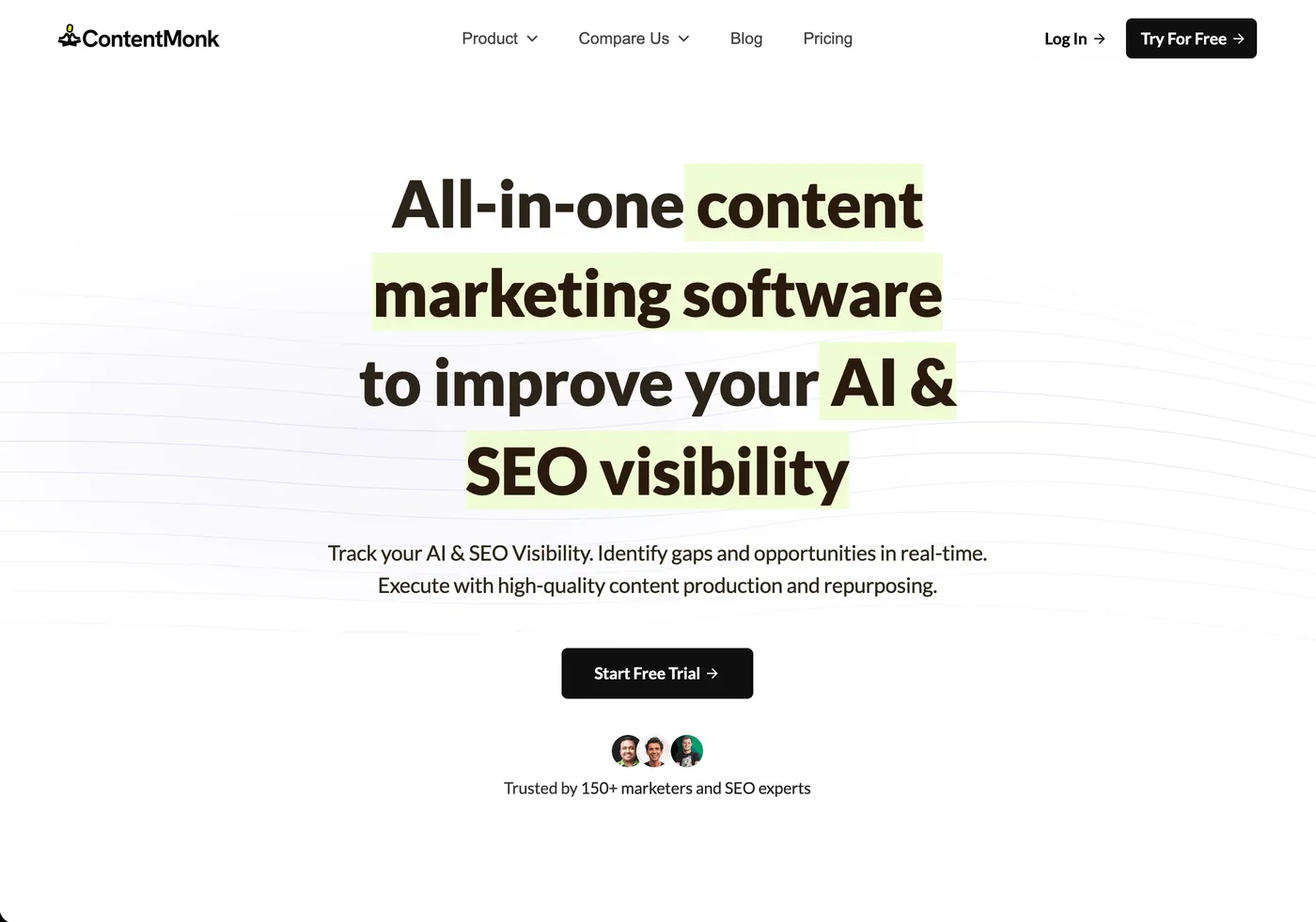
The honest caveat: it isn't really autopilot. There's no confirmed CMS publishing (WordPress and Webflow have been "expected" on its own pages since 2024), so every article is a copy-paste, and volume is metered hard: 10 articles a month at $99, with 30 requiring the $449 plan.
Pros: Strong brand-voice machinery, unique AI-visibility tracking, built-in social repurposing
Cons: Can't publish to your CMS, expensive per article, capped at 3 users
Best for: B2B SaaS teams that publish deliberately and care about AI-search visibility.
5. Casper Content
Casper Content is the volume-per-dollar play: one $62 plan covering up to 40 articles a month with autopilot publishing, featured images, automated linking, and a calendar scheduled months ahead. CMS coverage is surprisingly broad for the price: WordPress, Shopify, Webflow, Framer, Ghost, Wix, Squarespace, Contentful, plus Zapier, Make, and webhooks.
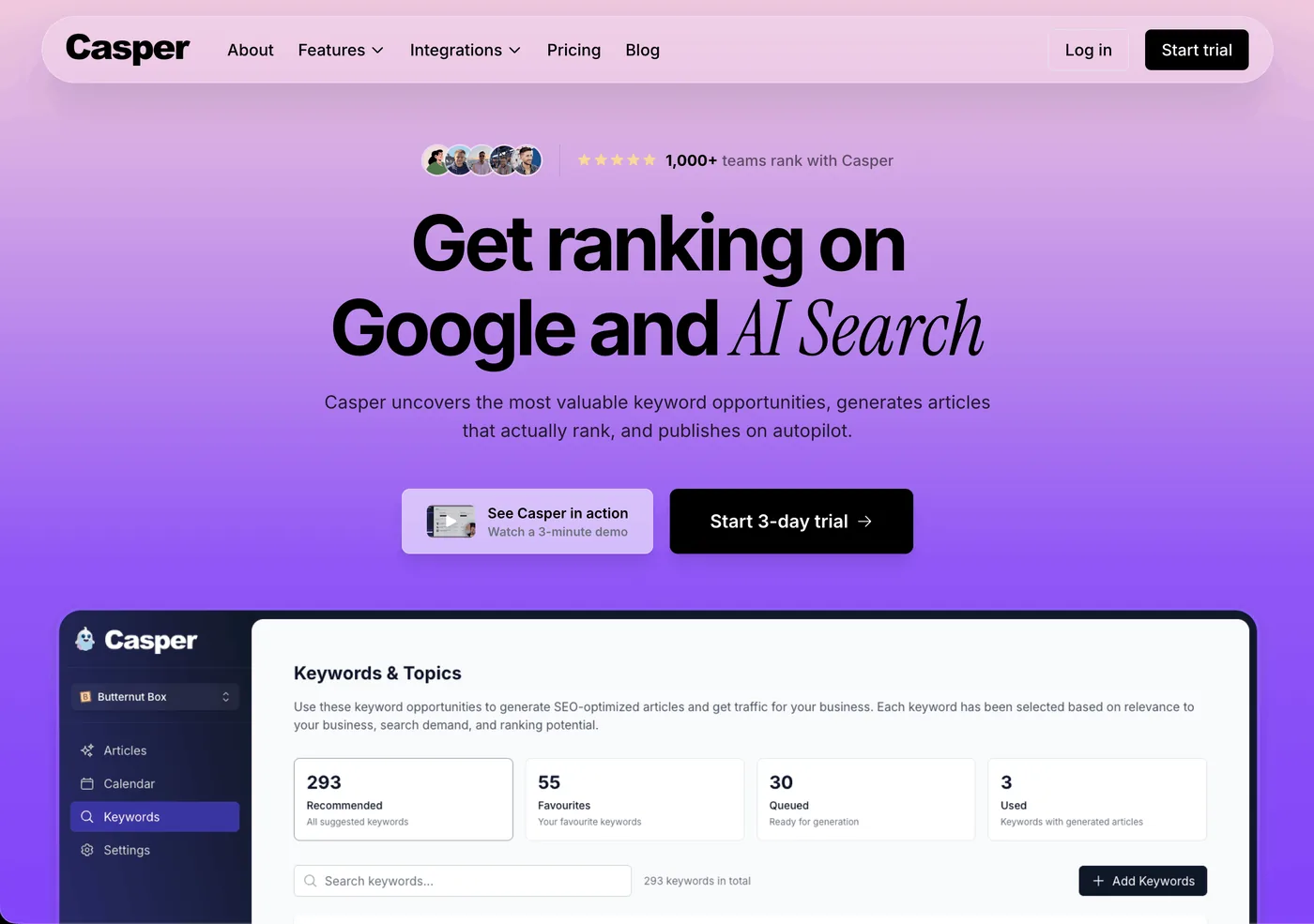
The caveats are proportional. There's no feedback loop of any kind (no Search Console, no rank tracking), and the operation is anonymous: no company name, founder, or jurisdiction appears anywhere on the site, including its terms. The trial is paid and auto-bills into the subscription, with a no-refund policy. If SEObot is the cheap test, Casper is the cheap scale, eyes open.
Pros: Cheapest volume in the category, eight CMS integrations, unlimited team members
Cons: No tracking loop at all, anonymous operator, paid trial with no refunds
Best for: Maximum article volume on a minimum budget, trust trade-offs accepted.
6. Emplibot
Emplibot is WordPress-first autoblogging with a twist this audience will appreciate: it distributes each article to LinkedIn, Facebook, and X as well. Plans run $69 a month for 10 posts to $149 for 28, images and infographics included.

If your whole web presence is WordPress and you want basic social echoes of each post thrown in, it's decent value. The social posts are straight repurposals rather than platform-native content, and everyone not on WordPress is out of luck.
Pros: Social distribution included, solid WordPress integration
Cons: WordPress-only, mid-pack writing quality
Best for: WordPress sites that want blog and social basics from one tool.
7. Search Atlas (OTTO)
Search Atlas and its OTTO agent are the most ambitious entry: beyond content, it applies technical SEO fixes to your site, runs digital-PR link building, and manages Google Business Profiles. Base plans are $99 to $399 a month plus $59 to $99 per site for OTTO.
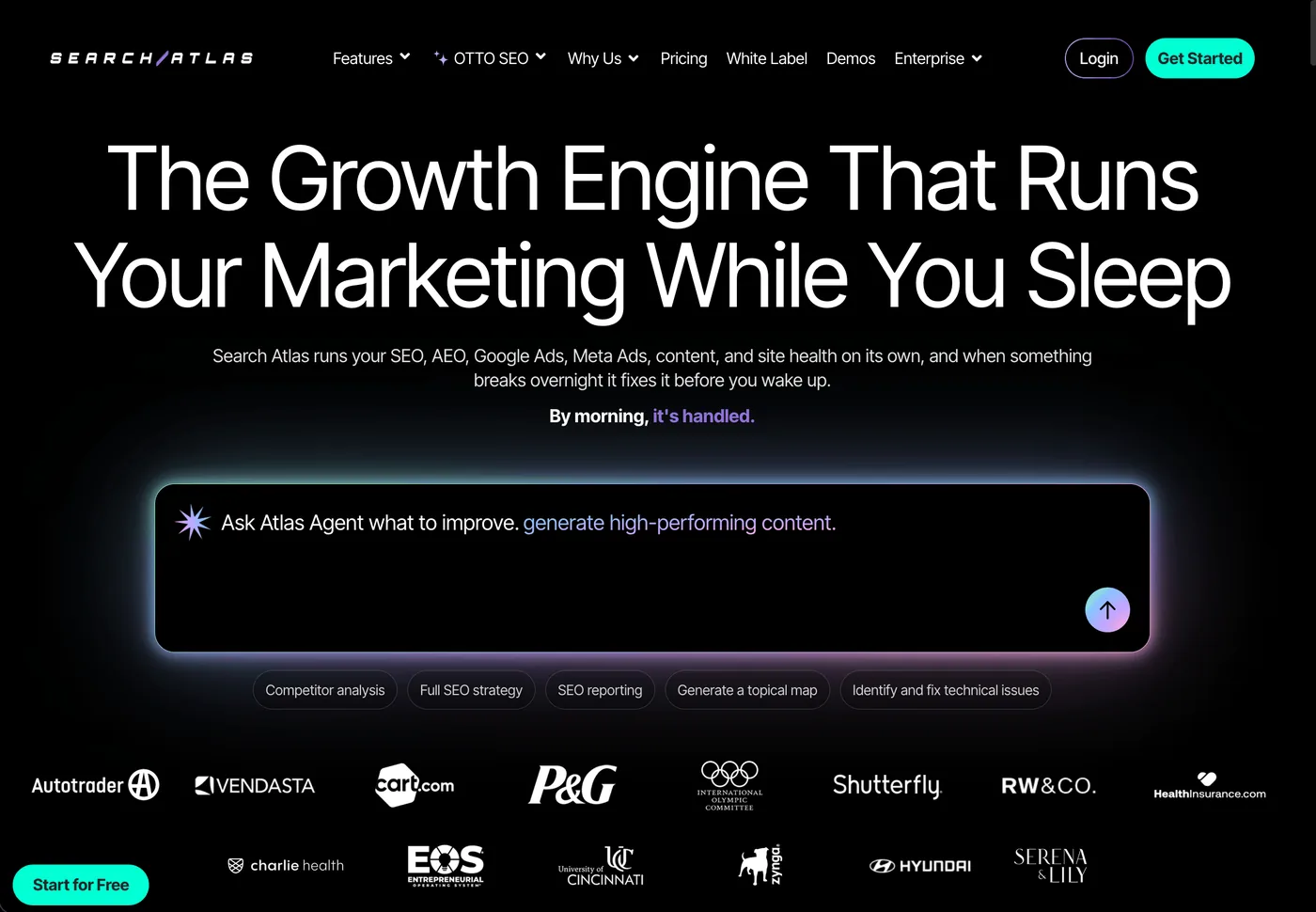
The breadth is real, and so is the complexity: a steep learning curve, per-site costs that stack quickly, and modules users report as buggy. It's the pick when technical debt, not content volume, is what's holding your rankings back.
Pros: Only tool automating technical SEO, content, and links together
Cons: Expensive per site, steep learning curve, buggy modules reported
Best for: Sites whose bottleneck is technical SEO rather than publishing.
Comparison Table
| Tool | Price | Articles/mo | Real keyword data | Auto-publish | Rank tracking | Link-scheme risk |
|---|---|---|---|---|---|---|
| RankPine | $99/site ($79.20 at 20+) | 30 | ✅ (incl. GSC) | ✅ | ✅ | None |
| SEObot | From $19/mo | ~4 | Partial | ✅ | ❌ | None |
| Outrank | $99 to $199/mo | 30 | Partial | ✅ | ❌ | ⚠️ Exchange |
| ContentMonk | $99 to $449/mo | 10 to 30 | Partial | ❌ | ✅ | None |
| Casper Content | $62/mo | Up to 40 | Partial | ✅ | ❌ | None |
| Emplibot | $69 to $149/mo | 10 to 28 | Partial | ✅ (WP only) | ❌ | None |
| Search Atlas OTTO | $99-399 + $59-99/site | Varies | ✅ | ✅ | ✅ | ⚠️ Link building |
Turning Autopilot Articles Into a Week of Social Content
Here's the part most SEO guides skip: a blog on autopilot doesn't just feed Google. Thirty articles a month is thirty pieces of source material for your social calendar, and repurposing them is where marketing teams get the compounding other channels can't match.
A single ranked listicle becomes a comparison carousel, the format that still earns the highest engagement on Instagram, plus a contrarian LinkedIn post pulled from its sharpest claim, a stat thread, and a quote graphic. An article answering a customer question becomes a talking-head script. The research is already done; the social versions are extraction, not creation.
The workflow that works in practice: each time an article publishes, block twenty minutes to pull three social angles from it, then batch-schedule them for the week at times your audience is actually online. Your blog compounds in search while its byproducts keep your social calendar full, and neither channel depends on you having a creative morning.
FAQ
Does Google penalize AI-generated content?
No. Google's guidance is explicit that it rewards helpful content "however it is produced." What its spam policies target is scaled content abuse: pages mass-produced to game rankings without adding value. That's why the quality bar between these tools matters more than the AI label. Thin generic output is a risk regardless of who wrote it; well-researched, well-edited output ranks regardless of who wrote it.
How long until autopilot content brings traffic?
Expect the first movement in four to eight weeks and meaningful compounding after three to six months, faster if your domain already has authority. Tools that mine Search Console for page-two queries (RankPine is the only one here that does) shortcut this, because improving an article that already ranks #14 pays off in days, not months.
How much does this cost compared to hiring?
A freelance writer runs $150 to $500 per SEO article; an agency retainer starts around $2,000 a month for a handful of posts. Autopilot tools land at $3 to $20 per published article. The honest trade-off is ceiling, not floor: a great human writer with subject expertise still beats any tool on a flagship piece. The tools win on the forty supporting articles that piece needs around it.
Do I still need to review the articles?
With the top pick, skimming before publish is a preference rather than a necessity, that's what the approval mode is for. With the rest of the list, plan on a real editing pass. A good rule: read the first three articles any tool produces for you word by word, then decide how much rope to give it.
The Verdict
If you want one piece of SEO autopilot software from this list: RankPine. Real search data plus Search Console instead of hallucinated keyword lists, articles you'd publish under your own name, and the only tool here that closes the full plan, write, publish, and track loop at a flat $99. SEObot is the budget test balloon, ContentMonk is the pick when AI-visibility tracking matters more than volume, and Search Atlas is the answer when technical SEO is the actual bottleneck.
And once the blog runs itself, close the other half of the loop. Every article your autopilot publishes is raw material for carousels, LinkedIn posts, and threads. The repurposing workflow above only works if scheduling isn't friction. That's exactly what PostPlanify is for: plan the social versions of each article once, schedule them across all ten platforms from one calendar, and let both engines, search and social, run on autopilot.
 PostPlanify
All your social media in one simple dashboard
Schedule posts, track analytics, and reply to comments/DMs without switching tabs.

Engagement
+18%
Views
52.8k
About the Author

Hasan Cagli
Founder of PostPlanify, a content and social media scheduling platform. He focuses on building systems that help businesses, agencies, and teams plan, publish, and manage content and social media more efficiently across platforms.


