


You just spent two hours creating the perfect video. It's polished, on-brand, and ready to go. So you post it on Instagram — and then what? It sits on one platform reaching one audience while your followers on TikTok, LinkedIn, YouTube, and X never see it.
That's the problem social media cross-posting solves. Instead of creating entirely new content for every platform, you take what's already working and strategically distribute it across multiple channels — adapted for each one.
But here's where most people get it wrong: they copy-paste the same post everywhere, complete with the wrong aspect ratio, irrelevant hashtags, and a caption that doesn't fit. The result? Lower reach, worse engagement, and algorithms that quietly bury their content.
This guide covers how to cross-post on social media the right way — with platform-specific specs, a proven workflow, the mistakes to avoid, and the tools that make the whole process take minutes instead of hours.
TL;DR: Cross-posting means sharing adapted versions of the same content across multiple platforms. The key is adjusting format, copy, and timing per platform — not copy-pasting. Use a tool like PostPlanify to schedule cross-platform content from one dashboard, saving 10+ hours per week.
What Is Social Media Cross-Posting?
Cross-posting is the practice of publishing the same core content across multiple social media platforms. The important word there is core — effective cross-posting isn't about duplicating a post verbatim. It's about taking one idea, one video, or one message and tailoring it to fit the format, audience, and norms of each platform you publish on.
For example, you might shoot a 60-second product demo and post it as:
- An Instagram Reel (9:16, trending audio, 5-8 hashtags)
- A TikTok video (9:16, native captions, trend-aware caption)
- A YouTube Short (9:16, keyword-rich title and description)
- A LinkedIn post (1:1 or 4:5, professional caption, 3-5 hashtags)
- An X post (16:9 or 1:1, punchy 280-char take)
Same message. Five different executions. That's cross-posting done right.
Cross-Posting vs. Content Repurposing vs. Content Syndication
These terms get confused constantly. Here's the difference:
| Strategy | What It Means | Example |
|---|---|---|
| Cross-posting | Same content, adapted per platform and posted on your own accounts | A Reel resized and re-captioned for TikTok and YouTube Shorts |
| Content repurposing | Transforming content into a completely different format | A blog post turned into an infographic, a carousel, and a podcast episode |
| Content syndication | Republishing identical content on third-party sites | A blog post republished on Medium or LinkedIn Articles |
Cross-posting is the fastest of the three. Repurposing takes more creative effort but extends content lifespan further. Syndication is about distribution reach, not platform optimization. For a deeper dive into repurposing, see our guide on content repurposing strategies.
Why Cross-Post? 5 Strategic Benefits
Cross-posting isn't just about saving time (though it does that too). Here's why it matters strategically:
1. Reach More People Without Creating More Content
Your Instagram audience and your LinkedIn audience are rarely the same people. According to Pew Research, the average person uses 6-7 social media platforms. But they don't follow the same accounts on every one. Cross-posting lets you meet them wherever they are — without doubling your content workload.
2. Save 10-15 Hours Per Week
Creating original content for each platform is unsustainable. Teams that cross-post with a scheduling tool spend a fraction of the time on content distribution, freeing up hours for strategy, community engagement, and creative work. If you're managing multiple social media accounts, this time savings compounds fast.
3. Test New Platforms With Low Effort
Want to try Threads or Bluesky without committing to a full content strategy? Cross-posting your existing content there is the lowest-risk way to test whether a platform works for your audience. If engagement picks up, you can invest more. If not, you haven't wasted production time.
4. Reinforce Brand Messaging Across Channels
Repetition builds recognition. When your audience sees a consistent message across Instagram, LinkedIn, and X, it reinforces your brand positioning. The key is consistency of message, not format — each post should feel native to the platform it's on.
5. Maximize ROI From High-Performing Content
If a Reel gets 50K views on Instagram, why wouldn't you share it on TikTok and YouTube Shorts? Cross-posting lets you squeeze maximum value from your best content instead of leaving performance on the table. This matters even more when you factor in how differently each platform compensates creators — see our guide on which social media platform pays the most to understand where your content generates the most revenue.
The Cross-Posting Compatibility Matrix
Not every platform pairs well for cross-posting. Some share similar formats, audiences, and content norms. Others are so different that cross-posting between them requires significant adaptation.
| Platform Pair | Compatibility | Why |
|---|---|---|
| Instagram ↔ Facebook | Very High | Same parent company (Meta), native cross-posting built in, similar media specs |
| Instagram Reels ↔ TikTok | Very High | Both 9:16 short-form video, similar audiences, overlapping trends |
| TikTok ↔ YouTube Shorts | High | Same vertical video format, similar discovery algorithms |
| Instagram ↔ Threads | High | Native Meta cross-posting, Instagram audience carries over |
| X ↔ Bluesky | High | Both microblogging platforms, similar character limits, text-first |
| X ↔ Threads | Medium | Both text-first, but different tones (X is edgier, Threads is conversational) |
| LinkedIn ↔ X | Medium | Professional vs. casual tone requires significant caption rewriting |
| Instagram ↔ Pinterest | Medium | Visual platforms but very different aspect ratios (4:5 vs. 2:3) and intent (social vs. search/save) |
| TikTok ↔ LinkedIn | Low | Completely different audiences, formats, and content expectations |
| YouTube Shorts ↔ Pinterest | Low | Different video orientations, audiences, and content discovery models |
Pro tip: Start with high-compatibility pairs. Instagram ↔ Facebook ↔ Threads is the easiest cluster because Meta lets you cross-post natively. TikTok ↔ Instagram Reels ↔ YouTube Shorts is the next best group for video content.
 PostPlanify
All your social media in one simple dashboard
Schedule posts, track analytics, and reply to comments/DMs without switching tabs.

Engagement
+18%
Views
52.8k
Platform-by-Platform Specs Reference
This is the table you'll want to bookmark. When cross-posting, these specs determine what you need to adjust per platform.
| Platform | Image Size | Video Length | Character Limit | Hashtag Sweet Spot | Best Content Types |
|---|---|---|---|---|---|
| 1080×1350 (4:5) or 1080×1920 (9:16) | Up to 15 min (Reels: 3 sec–15 min) | 2,200 | 5–10 | Reels, carousels, Stories | |
| TikTok | 1080×1920 (9:16) | Up to 60 min (in-app: 10 min) | 4,000 | 3–8 | Short-form video, Photo Mode |
| 1200×630 or 1080×1080 | Up to 240 min (Reels: 3 sec–3 min) | 63,206 | 2–5 | Video, link posts, Reels | |
| 1080×1080 (1:1) or 1080×1350 (4:5) | Up to 10 min (mobile: 15 min) | 3,000 | 3–5 | Text posts, carousels, video | |
| X (Twitter) | 1200×675 (16:9) | 2 min 20 sec (Premium: up to 4 hrs) | 280 (Premium: 25,000) | 1–3 | Text, images, short video |
| YouTube Shorts | 1080×1920 (9:16) | Up to 3 min | 5,000 (description) | 3–5 | Vertical video |
| Threads | 1080×1920 (9:16) or 1080×1350 (4:5) | Up to 5 min | 500 (+10,000 text attachment) | 0–3 | Text, images, carousels |
| 1000×1500 (2:3) | 4 sec–15 min | Title: 100 / Desc: 800 | 2–5 | Static pins, Idea Pins, video | |
| Bluesky | 1000px max, 1MB per image | Up to 60 sec | 300 | 0–2 | Text, images |
Key takeaway: If you're cross-posting video, 1080×1920 (9:16) works on Instagram, TikTok, YouTube Shorts, Threads, and Pinterest. That's 5 platforms from one export. LinkedIn and X prefer landscape or square, so you'll need a second crop.
File Size Limits Quick Reference
| Platform | Image Max | Video Max |
|---|---|---|
| 30MB | 650MB (under 10 min) / 3.6GB (up to 60 min) | |
| TikTok | 20MB | 4GB (upload) / 287MB (in-app) |
| 30MB | 4GB | |
| 10MB | 5GB | |
| X (Twitter) | 5MB | 512MB (free) / 16GB (Premium+) |
| YouTube Shorts | N/A | 256GB (standard YouTube limit) |
| Threads | 10MB | 500MB |
| 20MB | 2GB | |
| Bluesky | 1MB per image | 100MB |
How to Cross-Post: Step-by-Step Workflow
Here's the exact workflow for cross-posting efficiently. This is what separates creators who spend 2 hours per week on distribution from those who spend 15.
Step 1: Create Your Core Content Asset
Start with one strong piece of content built around a single idea. This is your source asset — the version you'll adapt for other platforms.
Choose a format that's easy to adapt:
- Vertical video (9:16) is the most versatile — it works on TikTok, Instagram Reels, YouTube Shorts, Threads, and Pinterest with minimal changes
- Square images/carousels (1:1) work well on Instagram, Facebook, LinkedIn, and X
- Text-first posts adapt easily between X, Threads, Bluesky, and LinkedIn
Write your core caption alongside the content. This will be your starting point for platform-specific rewrites.
Step 2: Identify Your Target Platforms
Don't cross-post to every platform. Choose 3-5 where:
- Your target audience is actively engaged
- The content format fits naturally (don't force a 3-minute video onto Bluesky)
- You can actually monitor engagement and respond to comments
Use the compatibility matrix above to pick platform pairs that require the least adaptation.
Step 3: Adapt Format, Copy, and Hashtags Per Platform
This is the step most people skip — and it's the most important one.
Format adjustments:
- Resize video/images to match platform specs (see the reference table above)
- Remove watermarks from other platforms — Instagram's algorithm penalizes content with TikTok watermarks
- Add platform-native elements (text overlays for TikTok, alt text for X, keyword-rich descriptions for YouTube)
Caption adjustments:
| Platform | Tone | Length | Notes |
|---|---|---|---|
| Casual, visual storytelling | 100-300 chars visible (2,200 max) | Use line breaks, CTAs | |
| TikTok | Trend-aware, punchy | 100-200 chars ideal | Hashtags matter for discovery |
| Conversational, question-driven | 40-80 chars get most engagement | Ask questions to drive comments | |
| Professional, value-driven | 150-300 chars visible (3,000 max) | Lead with insight, end with question | |
| X | Sharp, concise | Under 280 chars | Hot takes perform well |
| YouTube Shorts | Keyword-rich | Title matters most | SEO-focused description |
| Threads | Conversational, authentic | Under 500 chars | Less polished, more real |
| Descriptive, search-optimized | Keyword-rich title + description | Think SEO, not social | |
| Bluesky | Casual, witty | Under 300 chars | Similar to early Twitter |
Hashtag adjustments:
- Instagram: 5-10 relevant hashtags (mix of niche and broad)
- TikTok: 3-8 hashtags (trend-focused)
- LinkedIn: 3-5 professional hashtags
- X: 1-3 hashtags (more looks spammy)
- Pinterest: Embed keywords in description rather than using hashtags
- Threads/Bluesky: 0-3 hashtags (still early ecosystems)
Step 4: Schedule Everything From One Dashboard
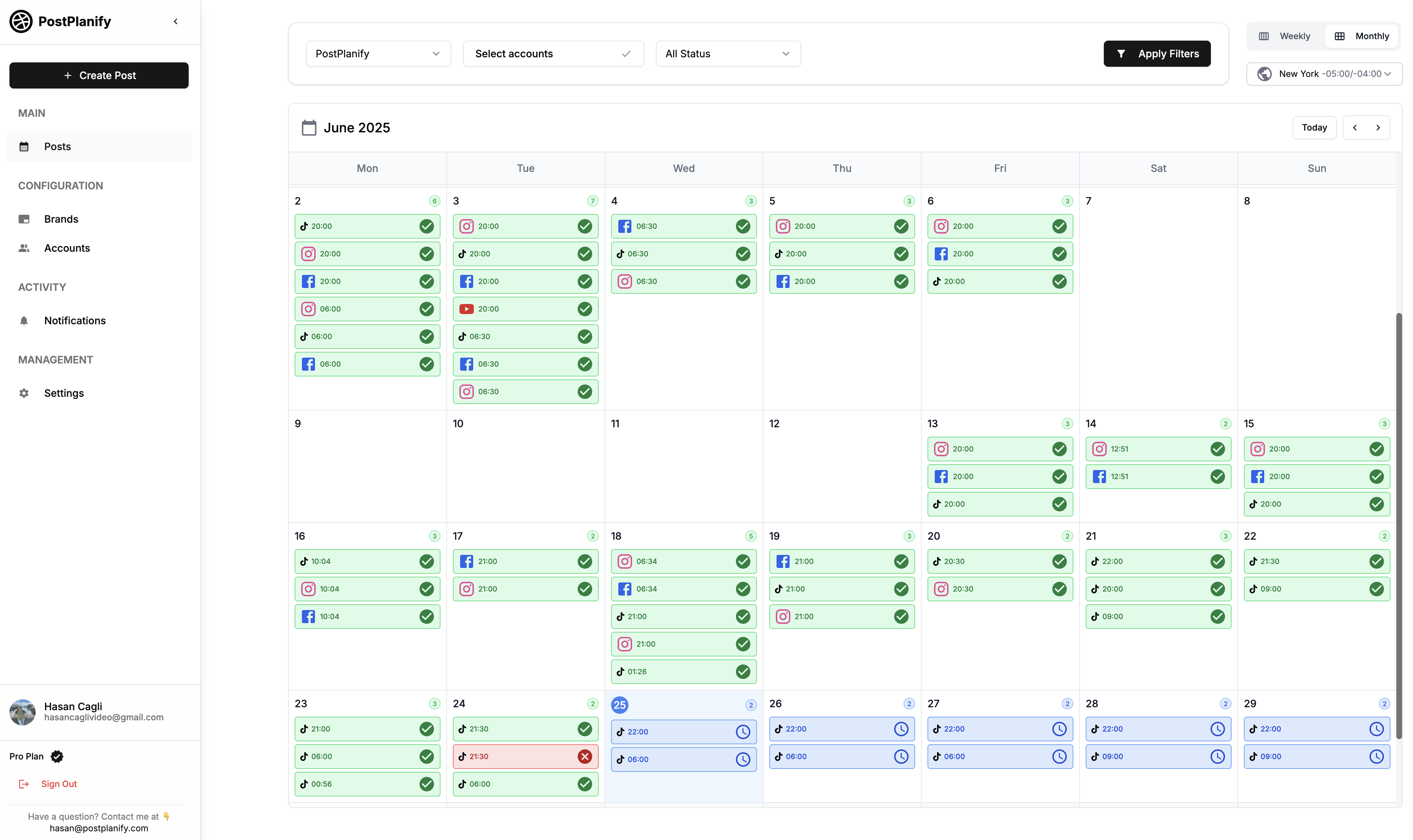
This is where a scheduling tool pays for itself. Instead of logging into 5 platforms, uploading 5 times, and writing 5 captions in 5 different interfaces, you do it all from one place.
With PostPlanify, you can:
- Upload your content once and customize it per platform
- Write platform-specific captions side by side
- Schedule each post for the best time to post on that specific platform
- Preview exactly how each post will look before publishing
- Manage all 10 platforms (TikTok, Instagram, Facebook, LinkedIn, X, YouTube, Threads, Pinterest, Bluesky) from a single dashboard
The alternative is manually posting across platforms — which is what we covered in our full guide on how to schedule social media posts.
Step 5: Monitor Performance and Iterate
Cross-posting isn't "set and forget." After publishing, track:
- Which platforms drive the most engagement for each content type
- Which caption styles work best per platform
- Which posting times generate the most reach
Use your analytics to refine. If TikTok consistently outperforms YouTube Shorts for your content, allocate more effort there. If LinkedIn carousels get 3x the engagement of LinkedIn videos, adjust your format.
PostPlanify's analytics dashboard lets you compare performance across all connected platforms in one view, so you can see what's working without switching between 10 different native analytics tools.
PostPlanifyAll your social media in one simple dashboard
Schedule posts, track analytics, and reply to comments/DMs without switching tabs.
Engagement
+18%
Views
52.8k
7 Cross-Posting Best Practices
These aren't optional "nice-to-haves" — they're the difference between cross-posting that grows your audience and cross-posting that tanks your reach.
1. Never Copy-Paste Identical Content
Every platform's algorithm can detect lazy cross-posting. Instagram has explicitly stated they deprioritize content that's "visibly recycled from other apps." Unique captions, native formatting, and removed watermarks signal to algorithms that your content belongs on their platform.
2. Respect Each Platform's Native Format
A 16:9 landscape video posted to TikTok will have massive black bars and look terrible. A vertical 9:16 video on LinkedIn takes up too much feed space and feels out of place. Always match the platform's preferred aspect ratio — even if it means cropping.
3. Adjust Tone Per Platform
The same person writes differently on LinkedIn than they do on TikTok. Your cross-posted content should reflect this:
- LinkedIn: "Here's what 6 months of testing taught us about short-form video ROI..."
- TikTok: "POV: You finally figured out why your videos weren't getting views"
- X: "Most people cross-post wrong. Here's the fix (thread):"
4. Stagger Your Posting Times
Don't blast the same content on every platform at the same time. Each platform has different peak hours, and your followers who follow you on multiple platforms will see duplicate content in rapid succession. Space your posts at least 1-2 hours apart — or better, schedule for each platform's optimal time window.
5. Remove Watermarks and Platform Specific Artifacts
TikTok watermarks on Instagram Reels. LinkedIn formatting on X posts. These are instant signals to both the algorithm and your audience that the content wasn't made for them. Always upload clean source files.
6. Use Platform-Native Features Where Possible
Polls on X, stickers on Instagram Stories, text overlays on TikTok, document carousels on LinkedIn — these features increase engagement because the platform rewards content that uses its own tools. Where possible, add native touches to your cross-posted content.
7. Track Performance Per Platform Separately
A post that gets 10K views on TikTok and 200 views on LinkedIn isn't failing — it's telling you something about where that content type resonates. Track each platform's metrics independently so you can make informed decisions about where to double down.
What NOT to Cross-Post
Not everything should be cross-posted. Here's what to keep platform-specific:
Platform-specific interactive features:
- Instagram Story polls, quizzes, and question stickers don't translate to other platforms
- X polls have different mechanics than Instagram or LinkedIn polls
- LinkedIn document carousels don't exist on TikTok or Instagram
Time-sensitive content without time zone adjustment:
- "Join us in 30 minutes!" posted across platforms in different time zones confuses your audience
- Event promotions need platform-specific scheduling based on where your audience is
Content with platform watermarks or broken formatting:
- TikTok videos with the TikTok watermark posted on Instagram Reels
- Screenshots of tweets posted to LinkedIn (use native text instead)
- Instagram carousels with dimension mismatches on Pinterest (2:3 vs. 4:5)
Highly platform-specific trends:
- TikTok sounds and trending audio don't carry context to LinkedIn
- LinkedIn "I'm humbled to announce" posts would feel bizarre on TikTok
- X/Twitter "ratio" culture doesn't translate to Threads or Bluesky
Content that violates platform-specific rules:
- Instagram doesn't allow external links in captions (use Stories or bio link)
- Pinterest requires destination URLs for commercial pins — and may silently block your link if the domain is new or flagged
- YouTube Shorts with copyrighted music may get flagged even if TikTok allows it
Built-In Cross-Posting Features by Platform
Some platforms offer native cross-posting. Here's what's available:
Meta (Instagram ↔ Facebook ↔ Threads)
Meta makes cross-posting between its platforms the easiest of any ecosystem:
- Instagram → Facebook: Toggle "Share to Facebook" when publishing any post, Reel, or Story. This works for both personal profiles and Facebook Pages connected to your Instagram Professional account.
- Instagram → Threads: When posting on Instagram, you can toggle "Share to Threads" for feed posts. Your Threads profile is linked to your Instagram account.
- Facebook → Instagram: Meta Business Suite lets you create posts for both platforms simultaneously, with separate caption fields for each.
- Reels: Instagram Reels can be automatically shared to Facebook Reels — use this for scheduling carousel posts on Instagram and Facebook and Reels.
The limitation: Meta's native cross-posting only works within the Meta ecosystem. For cross-posting to TikTok, LinkedIn, X, YouTube, Pinterest, or Bluesky, you need a third-party tool.
TikTok ↔ YouTube Shorts (Manual)
There's no native cross-posting between TikTok and YouTube. But since both use 9:16 vertical video, the workflow is simple (and a dedicated YouTube scheduling tool can automate the YouTube side):
- Export your video from TikTok without the watermark (use the "Save video" option before posting, or use the HD download feature)
- Upload to YouTube Shorts with a keyword-optimized title and description — see YouTube's Shorts guidelines for current specs
- Adjust hashtags for YouTube's search-driven discovery
Our guides on scheduling Instagram Reels vs. TikTok videos and the best TikTok scheduling tools cover format differences and tool support in detail.
X ↔ Bluesky (Emerging)
There's no native cross-posting between X and Bluesky. However, because both are text-first microblogging platforms with similar character limits (280 vs. 300), the adaptation required is minimal. Some key differences:
- Bluesky doesn't support GIFs natively (use static images or video)
- Bluesky images max out at 1MB per image (much lower than X's 5MB limit)
- Bluesky's algorithm and hashtag ecosystem is still developing
6 Best Cross-Posting Tools (2026)
A good cross-posting tool should let you upload once, customize per platform, and schedule everything from one interface. For a comprehensive roundup, see our best apps to post to all social media at once guide. Here are the best options available right now.
1. PostPlanify
Platforms: 9 — TikTok, Instagram, Facebook, LinkedIn, X, YouTube, Threads, Pinterest, Bluesky
PostPlanify is built specifically for cross-posting efficiency. You upload your content once, then customize captions, hashtags, and scheduling per platform — all from a single dashboard. The AI assistant can generate platform-adapted captions from a single prompt, saving you from rewriting the same message 5 different ways.
Key cross-posting features:
- AI-powered caption generation — write one caption and the AI adapts it for each platform's tone and character limits
- Per-platform preview — see exactly how your post will look on each platform before publishing
- Analytics across all 10 platforms — compare cross-platform performance with best time to post suggestions
- Bulk scheduling — schedule up to 20 posts at once (Premium plan)
- Social inbox — manage comments and DMs across platforms from one inbox
- Team collaboration — unlimited team members (Premium plan) with approval workflows (Team plan and above)
Pricing: Starter $29/mo (5 accounts) · Growth $49/mo (10 accounts) · Premium $99/mo (25 accounts) · Enterprise (custom pricing)
2. Buffer
Platforms: 11 — Instagram, Facebook, LinkedIn, X, TikTok, YouTube, Pinterest, Threads, Google Business, Mastodon, and more
Buffer is a straightforward scheduling tool with a clean interface. It handles basic cross-posting well — you can write separate captions per platform and schedule posts in advance. The per-channel pricing model keeps entry costs low, but adds up quickly as you connect more accounts.
Key cross-posting features:
- Per-platform caption editing
- AI Assistant for post ideas and rewriting
- Community inbox
- Start Page (link in bio)
- Hashtag manager and first comment scheduling
Pricing: Free (3 channels, 10 posts each) · Essentials $6/mo per channel · Team $12/mo per channel
How it compares: Buffer supports more platforms than most tools but charges per channel, so 10 channels = $60-$120/mo. It also lacks advanced analytics and team approval workflows on lower plans. For a deeper comparison, see Buffer vs PostPlanify.
3. Hootsuite
Platforms: 8+ — Instagram, Facebook, LinkedIn, X, TikTok, YouTube, Pinterest, and more
Hootsuite is an enterprise-grade platform with a wide feature set including social listening, sentiment analysis, and team collaboration. It's powerful but comes with a steep learning curve and significantly higher pricing that puts it out of reach for most creators and small teams.
Key cross-posting features:
- Bulk scheduling (up to 350 posts at once on Advanced)
- Brand and competitor monitoring with sentiment analysis
- Customizable analytics reports and benchmarking
- DM automations, auto-routing, and team approval workflows
Pricing: Standard $249/user/mo (10 accounts) · Advanced $499/user/mo (unlimited accounts) · Enterprise Custom
How it compares: Hootsuite offers enterprise features like social listening and competitor benchmarking that most cross-posting tools don't. But at $249/mo for a single user, it's 13x the cost of PostPlanify's Starter plan. See our Hootsuite vs PostPlanify comparison for the full breakdown.
4. Sprout Social
Platforms: 10+ — Instagram, Facebook, LinkedIn, X, TikTok, YouTube, Pinterest, Google Business, WhatsApp, and more
Sprout Social targets agencies and enterprise teams with robust reporting, a unified social inbox, and CRM-style contact management. If you're managing cross-posting for multiple clients and need presentation-ready reports, Sprout delivers — but the per-seat pricing adds up fast.
Key cross-posting features:
- Unified smart inbox across platforms
- Comprehensive analytics with competitor insights
- AI-generated text and optimal send times
- Review management and message spike alerts
Pricing: Standard $199/seat/mo (5 profiles) · Professional $299/seat/mo (unlimited) · Advanced $399/seat/mo · Enterprise Custom
How it compares: Sprout Social's reporting is among the best in the industry, but the per-seat pricing makes it impractical for small teams. A 3-person team would pay $597-$1,197/mo. For alternatives, see Best Sprout Social Alternatives.
5. Later
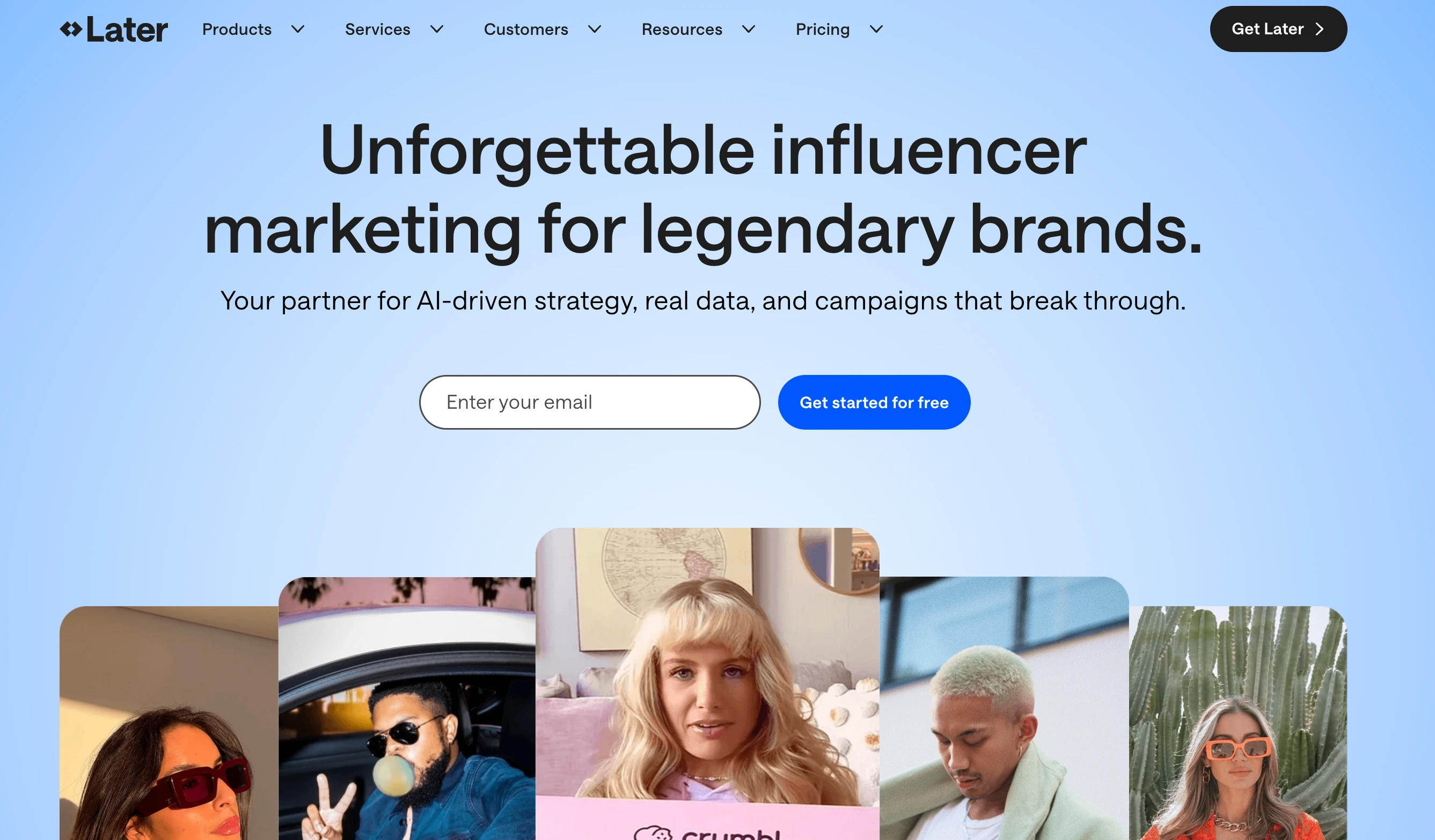
Platforms: 8 — Instagram, Facebook, LinkedIn, TikTok, YouTube, Pinterest, Threads, and more (note: Later dropped X/Twitter support)
Later started as an Instagram-first visual planner and has expanded to support more platforms. It's particularly strong for visual-first brands that want to plan their Instagram grid alongside cross-posting to other channels. The Linkin.bio feature is also popular for driving traffic from Instagram.
Key cross-posting features:
- Visual content calendar and grid planner
- Linkin.bio (link in bio tool)
- AI content tools with monthly AI credits
- Smart Scheduling with future trends (Growth+)
- Social inbox and UGC collection (Growth+)
Pricing: Starter $25/mo (1 social set, 20 posts/profile) · Growth $50/mo (2 social sets, 180 posts/profile) · Scale $110/mo (6 social sets, unlimited posts)
How it compares: Later excels at visual planning for Instagram but dropped X/Twitter support, leaving a gap for cross-platform publishers. Analytics are limited on lower plans. For a broader feature set, see Best Later Alternatives.
6. SocialBee
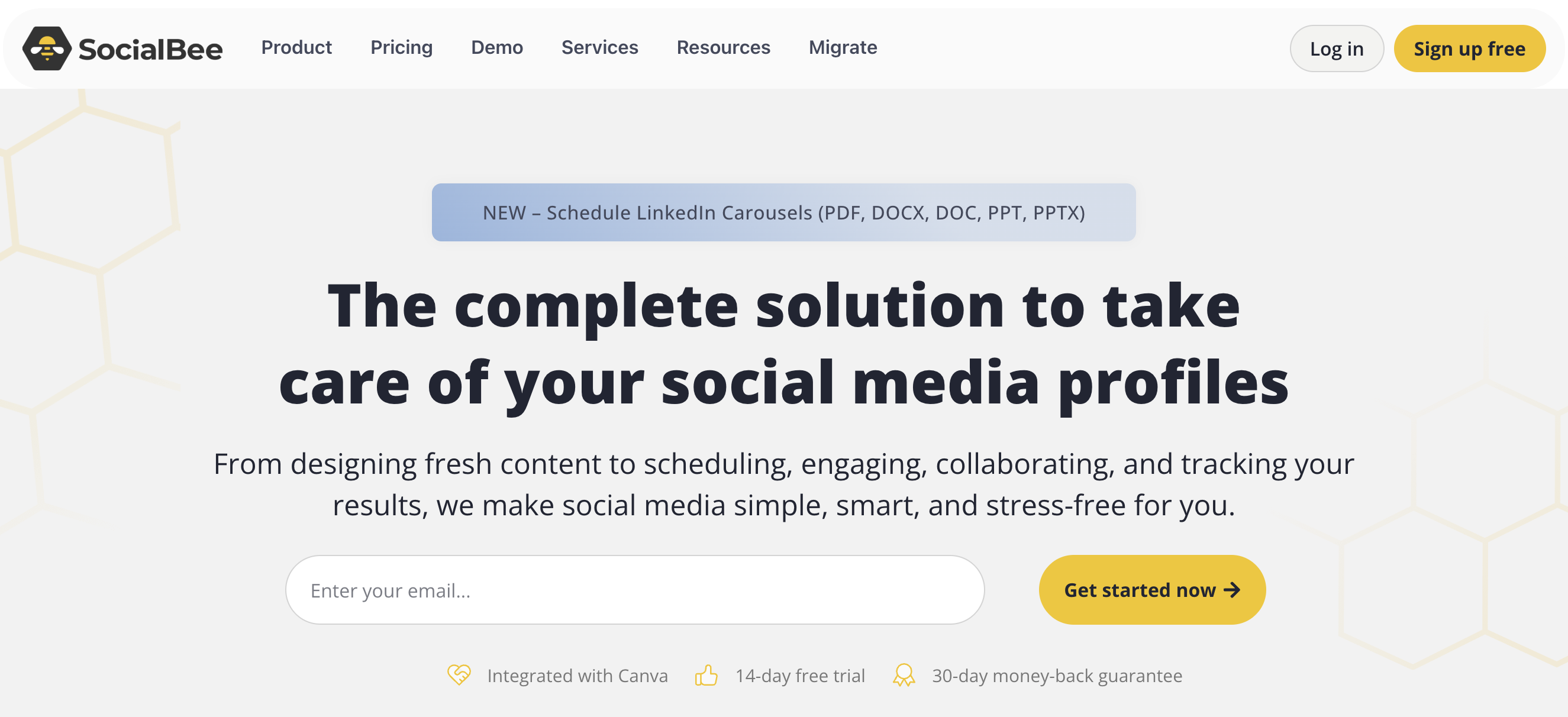
Platforms: 10 — Instagram, Facebook, LinkedIn, X, TikTok, YouTube, Pinterest, Threads, Bluesky, Google Business
SocialBee uses a category-based scheduling system where you organize content into "buckets" (e.g., promotional, educational, behind-the-scenes) and the tool automatically rotates through them. This is useful for maintaining a balanced content mix when cross-posting across platforms.
Key cross-posting features:
- Category-based content scheduling
- AI text assistance
- Content recycling for evergreen posts
- Multiple workspaces for agencies (Pro plan)
Pricing: Bootstrap $29/mo (5 profiles, 1 workspace) · Accelerate $49/mo (10 profiles, 1 workspace) · Pro $99/mo (25 profiles, 5 workspaces)
How it compares: SocialBee's category system is unique and great for content variety, but it lacks a social inbox, has no real-time post previews, and collaboration is locked behind the $99/mo Pro plan. See Best SocialBee Alternatives for more.
Quick Comparison
| Tool | Platforms | AI Captions | Social Inbox | Analytics | Starting Price |
|---|---|---|---|---|---|
| PostPlanify | 10 | Yes | Yes | All platforms | $29/mo |
| Buffer | 11 | Yes | Community inbox | Basic–Advanced | $6/mo/channel |
| Hootsuite | 8+ | Yes | Yes | Advanced | $249/user/mo |
| Sprout Social | 10+ | Yes | Yes | Advanced | $199/seat/mo |
| Later | 8 (no X) | Yes (credits) | Yes (Growth+) | Basic–Custom | $25/mo |
| SocialBee | 10 | Yes | No | Basic | $29/mo |
PostPlanifyAll your social media in one simple dashboard
Schedule posts, track analytics, and reply to comments/DMs without switching tabs.
Engagement
+18%
Views
52.8k
Common Cross-Posting Mistakes (and How to Fix Them)
Even experienced social media managers make these mistakes. Here's how to avoid them:
Posting TikTok-Watermarked Videos on Instagram Reels
The problem: Instagram's algorithm deprioritizes content with visible TikTok watermarks. Your reach gets throttled before anyone even sees the content.
The fix: Always save your original video file before posting to TikTok, or use TikTok's HD download option. Upload the clean source file to each platform separately.
Using the Same Hashtags Everywhere
The problem: Hashtags that drive discovery on TikTok (#fyp, #foryou) are useless on LinkedIn. Instagram hashtag strategies don't apply to X, where 1-2 hashtags is the norm.
The fix: Create a hashtag set for each platform. Research what's working on each channel independently. Tools like PostPlanify's AI assistant can suggest platform-appropriate hashtags automatically.
Ignoring Aspect Ratio Differences
The problem: A 9:16 TikTok video posted to LinkedIn looks jarring. A 1:1 Instagram carousel uploaded to Pinterest gets cropped awkwardly because Pinterest favors 2:3.
The fix: Create 2-3 crops of your source asset:
- 9:16 for TikTok, Instagram Reels, YouTube Shorts, Threads
- 1:1 or 4:5 for Instagram feed, LinkedIn, Facebook
- 2:3 for Pinterest
Not Checking Character Limits
The problem: Your 2,000-character Instagram caption gets silently truncated to 300 characters on Bluesky or 280 on X. The most important part of your message might be cut off.
The fix: Write your shortest caption first (for X or Bluesky), then expand it for platforms with higher limits. This forces you to lead with the hook — which is good practice everywhere.
Posting at the Same Time on All Platforms
The problem: Your followers who follow you on multiple platforms see the same content in rapid succession. It feels spammy and reduces engagement across the board.
The fix: Stagger posts by 1-4 hours. Schedule each platform for its own peak engagement window.
Not Adapting CTAs Per Platform
The problem: "Link in bio" makes sense on Instagram but is meaningless on LinkedIn (where you can just add a link). "Click the link below" doesn't work on TikTok (where link placement varies by account type).
The fix: Customize your call-to-action for each platform:
- Instagram: "Link in bio" or swipe-up (Stories)
- TikTok: "Check the link in my profile"
- LinkedIn: Include the direct URL in your post
- X: Add the link directly in the tweet
- Pinterest: The pin itself is the link — optimize the destination URL
- YouTube Shorts: "Full video on my channel" or pinned comment link
Uploading the Exact Same File to Multiple Platforms
The problem: When you upload the identical video or image file to multiple platforms, their content detection systems can identify it as duplicate content. Instagram in particular uses visual fingerprinting to detect files that have been uploaded to other accounts or platforms — and may suppress the duplicates in Explore and Reels recommendations. TikTok's algorithm similarly deprioritizes content it recognizes as existing elsewhere.
The fix: Make small but meaningful changes to each version before uploading:
- Re-export with slightly different encoding settings (different bitrate or a 1-second trim) — this changes the file fingerprint
- Add a platform-specific text overlay (your TikTok handle on TikTok, your Instagram handle on Instagram) — this makes each version visually distinct
- Use different cover images or thumbnails per platform
- Ideally, upload the original source file to each platform separately rather than downloading from one platform and re-uploading to another (which also preserves quality)
The goal isn't to create entirely different content — it's to ensure each platform's detection system treats your upload as a unique file rather than a duplicate.
Frequently Asked Questions About Cross-Posting
What is cross-posting on social media?
Cross-posting is the practice of sharing the same core content across multiple social media platforms — like posting a video to Instagram Reels, TikTok, and YouTube Shorts. The key difference between cross-posting and simply copy-pasting is that effective cross-posting involves adapting your captions, hashtags, aspect ratios, and tone to fit each platform's format and audience expectations.
Is cross-posting bad for engagement?
No — lazy cross-posting is bad for engagement. If you copy-paste the same post verbatim with wrong aspect ratios, irrelevant hashtags, and another platform's watermark, your reach will suffer. But strategically adapted cross-posting consistently outperforms single-platform posting because it multiplies your distribution without multiplying your production time.
Does cross-posting hurt SEO?
Social media cross-posting has no negative impact on SEO. Search engines treat each social media platform as a separate domain, so posting similar content across Instagram, LinkedIn, and X is not considered "duplicate content" in the way that publishing the same blog post on your site and Medium would be.
How often should I cross-post?
There's no magic number. A good starting point: cross-post your best 60-80% of content, and keep 20-40% platform-exclusive. Exclusive content gives followers a reason to follow you on multiple platforms and lets you experiment with platform-specific formats.
Can I automate cross-posting completely?
You can automate the scheduling and publishing part, but you shouldn't automate the adaptation part. Tools like PostPlanify let you schedule one piece of content across 10 platforms with per-platform customization — but you still need to write different captions, choose appropriate hashtags, and ensure the format fits. Fully automated "post the exact same thing everywhere" approaches consistently underperform.
Which platforms allow native cross-posting?
Meta offers the most robust native cross-posting: Instagram ↔ Facebook ↔ Threads. Beyond that, most platforms don't offer built-in cross-posting to competitors' platforms. For cross-posting across different ecosystems (e.g., TikTok to YouTube, or LinkedIn to X), you need a third-party scheduling tool.
Should I post at the same time on all platforms?
No. Each platform has different peak engagement hours, and your audience composition varies by platform. Stagger your cross-posted content by at least 1-2 hours, and ideally schedule each post for its platform's optimal time. Check our best time to post guide for platform-specific recommendations.
What's the difference between cross-posting and multi-platform scheduling?
Cross-posting refers to the strategy of sharing adapted content across platforms. Multi-platform scheduling is the tool capability that makes it efficient. You can cross-post manually (posting on each platform individually), but scheduling tools like PostPlanify make the process 10x faster by letting you manage everything from one dashboard.
How do I cross-post without getting shadowbanned?
The main triggers for reduced reach when cross-posting are: watermarks from other platforms, identical uncustomized content, and posting volumes that look like bot behavior. Avoid these by uploading clean source files, adapting captions per platform, and keeping your posting frequency within normal ranges (2-5 posts per day per platform maximum for most accounts). TikTok is especially strict about this — if your reach tanks, see our guide on fixing a TikTok shadowban.
Cross-Posting Workflow Checklist
Before you hit "schedule," run through this checklist:
- Source file is clean — no watermarks, no platform-specific overlays
- Aspect ratio matches each platform — 9:16 for vertical, 1:1 or 4:5 for feed, 2:3 for Pinterest
- Captions are platform-specific — different tone, length, and CTA per platform
- Hashtags are adjusted — right count and relevance for each platform
- Character limits are respected — especially for X (280), Bluesky (300), and Threads (500)
- File sizes are under platform limits — especially Bluesky (1MB images, 100MB video) and X (5MB images free)
- Posting times are staggered — not all platforms at once
- CTAs match the platform — "link in bio" vs. direct URL vs. pinned comment
- Preview looks correct — no awkward cropping, text cutoffs, or broken links
- Analytics tracking is set up — so you can measure per-platform performance
Start Cross-Posting Smarter
Cross-posting doesn't have to mean more work — it means getting more out of the work you've already done. Pick 3-5 platforms, adapt your content to fit each one, and use a scheduling tool to handle the distribution. The creators and teams who grow the fastest aren't creating 10x more content — they're distributing it 10x better.
Other Platform Guides
If you're looking for platform-specific scheduling guides, we've got you covered:
- How to Schedule Instagram Posts — feed posts, Reels, Stories, and carousels
- How to Schedule TikTok Posts — videos and Photo Mode
- How to Schedule Facebook Posts — Pages, Groups, and Reels
- How to Schedule LinkedIn Posts — articles, carousels, and video
- How to Schedule Posts on X — tweets, threads, and media
- How to Schedule YouTube Shorts — vertical video for YouTube
- How to Schedule Threads Posts — text and carousel posts
- How to Schedule Bluesky Posts — text and image posts
Related Reading
-
8 Best Threads Scheduling Tools: Threads has its own API mechanics, so cross-posting from Instagram strips topic tags and reply targeting
-
How to Schedule Social Media Posts: Full Guide (2026) — the complete scheduling workflow
-
10 Actionable Content Repurposing Strategies (2026) — go beyond cross-posting
-
How to Manage Multiple Social Media Accounts (2026) — multi-account workflows
-
Best Time to Post on Social Media (2026) — platform-specific timing data
-
8 Ways to Save 10+ Hours a Week on Social Media — productivity tips
-
12 Best Social Media Scheduling Tools (2026) — tool comparisons
-
Best YouTube Scheduling Tools (2026) — top tools for scheduling YouTube videos and Shorts
-
Content Batching: Complete Guide — batch creation workflows
-
Scheduling Instagram Reels vs. TikTok Videos — format comparison
-
How to Link Instagram to TikTok — cross-platform profile linking
-
Pinterest Pins Not Publishing? 12 Fixes — troubleshoot Pinterest posting failures
-
What Social Media Platform Pays the Most? — platform earnings comparison for creators
-
Shadowbanned on TikTok? How to Fix It — diagnose and recover from TikTok shadowbans
-
10 Best Social Media APIs for Developers: cross-post programmatically from your own code
-
14 Best LinkedIn Scheduling Tools: LinkedIn needs different handling from the rest
PostPlanifyAll your social media in one simple dashboard
Schedule posts, track analytics, and reply to comments/DMs without switching tabs.
Engagement
+18%
Views
52.8k
About the Author

Hasan Cagli
Founder of PostPlanify, a content and social media scheduling platform. He focuses on building systems that help businesses, agencies, and teams plan, publish, and manage content and social media more efficiently across platforms.


