


Car buying barely resembles what it did a decade ago. Around 92% of shoppers research vehicles online, and more than 75% say online video has shaped what they buy (Think with Google) — and 60%+ of shoppers who watch a vehicle video go on to visit a dealership or its website afterward. By the time someone walks onto your lot, they've done most of their shopping on a screen: the average buyer now visits just about two dealerships before purchasing (Cox Automotive). Your Facebook inventory, your walkaround videos, and your Google reviews are the first test drive.
That shift makes social media a sales channel, not a billboard — and a demanding one. A dealership's content is perishable: every new arrival needs photos and video, and sold units have to come down before someone messages about a car that's already gone. Reputation is scattered across Google, DealerRater, Cars.com, Facebook, and Yelp, each needing eyes on it. And leads are ruthless about speed — an "is this still available?" message on Marketplace goes to whoever answers first. Add multi-rooftop groups juggling consistent branding across stores, plus heavy reliance on paid social to move metal, and it's a lot for one marketing person to run.
A good social media management tool turns that chaos into a routine: it lets you batch inventory and evergreen content, centralizes Google Business and reviews, and puts Facebook and Instagram messages in one inbox your team can answer fast. This guide compares the 10 best social media management tools for car dealerships in 2026 — scored on what a store actually uses: Google Business and review management, video and inventory scheduling, a fast lead inbox, paid-social and analytics tools, AI content help, multi-rooftop support, and pricing that fits a dealership.
Quick Answer: The Best Social Media Tool for Car Dealerships
For most dealerships, the best tool is PostPlanify — flat pricing from $99/month (no per-seat fees), publishing and analytics for all 10 platforms including Google Business, Google review replies from a unified inbox, AI captions and images for inventory posts, video and Reels scheduling, and one inbox for fast lead response. For large dealer groups that need enterprise listening and reporting, Sprout Social is the premium pick; for review and reputation management across Google, Yelp, and Facebook, Vista Social is the highest-rated option; for paid social and analytics, Metricool leads on ad management; and single stores can start free with Buffer.
Quick Picks: Best Social Media Tools for Car Dealerships
| Tool | Best for | Starting price | Standout for dealerships |
|---|---|---|---|
| PostPlanify | Best overall for car dealerships | $99/mo (flat) | Google Business + reviews, AI inventory posts, fast lead inbox |
| Sprout Social | Large dealer groups | $199/seat/mo | Enterprise analytics + social listening |
| Hootsuite | Enterprise auto groups & paid social | $249/user/mo | Social advertising + breadth of integrations |
| Agorapulse | Lead response & comment moderation | $99/user/mo | Strongest inbox + ad-comment moderation |
| Vista Social | Review & reputation management | $79/mo | Google, Yelp & Facebook reviews in one place |
| Metricool | Paid social & analytics | Free / $25/mo | Native ad management + deep analytics |
| Later | Inventory video & visual content | $25/mo | Grid planning + Reels scheduling |
| Sendible | Agencies serving dealerships | $29/mo | White-label client dashboards |
| SocialPilot | Budget multi-rooftop management | $30/mo | Bulk scheduling + Facebook boosting |
| Buffer | Single-store dealerships getting started | Free / $6/channel | Simplest free start |
What Matters in a Social Media Management Tool for a Dealership
Not every social media tool is built for automotive retail. These are the criteria that actually matter when you're running a store, not a marketing agency:
- Google Business Profile + review/reputation management. New shoppers find you on Google Business and judge you by your rating — car dealerships rank #1 among local businesses for search-driven calls and clicks. The right tool lets you post to Google Business and reply to reviews in one place.
- Video and inventory scheduling. Walkaround Reels and short vertical inventory clips are your highest-converting content, so you want a visual calendar, easy video scheduling, and bulk uploads for a lot that changes daily.
- A fast lead and DM inbox. In automotive, whoever answers "is this still available?" first usually wins. One inbox for Facebook and Instagram messages — with team assignment and saved replies — is what makes real-time response possible.
- Paid-social and analytics tools. Organic reach is limited; dealers lean on lead ads, boosting, and Marketplace. Tools that manage or report on ad spend keep it accountable.
- AI content help. Turning a new arrival into an on-brand post is where most stores stall; AI captions and images remove the blank-page problem for inventory and sales events.
- Multi-rooftop support. Auto groups need location-specific calendars, unified analytics, role-based access, and a shared media library that keeps branding consistent across stores.
- Pricing that fits a dealership. Most tools charge per user or per channel, which punishes a sales team. Flat-rate plans that bundle users and accounts are far more predictable.
I evaluated the 10 tools below against these criteria — cross-referencing current pricing from each vendor's page and verified user reviews on G2, Capterra, and Trustpilot — and weighted what a store actually uses (Google Business, reviews, video, lead response, paid social) over the enterprise depth most dealerships never touch.
1. PostPlanify — Best Overall for Car Dealerships
PostPlanify is built for how a dealership actually operates: inventory that turns over constantly, a reputation spread across Google and review sites, and leads that go cold in minutes. It bundles scheduling, analytics, a unified inbox, and AI content tools on one flat monthly plan — no per-seat fees as you add salespeople, a BDC, or a second rooftop.
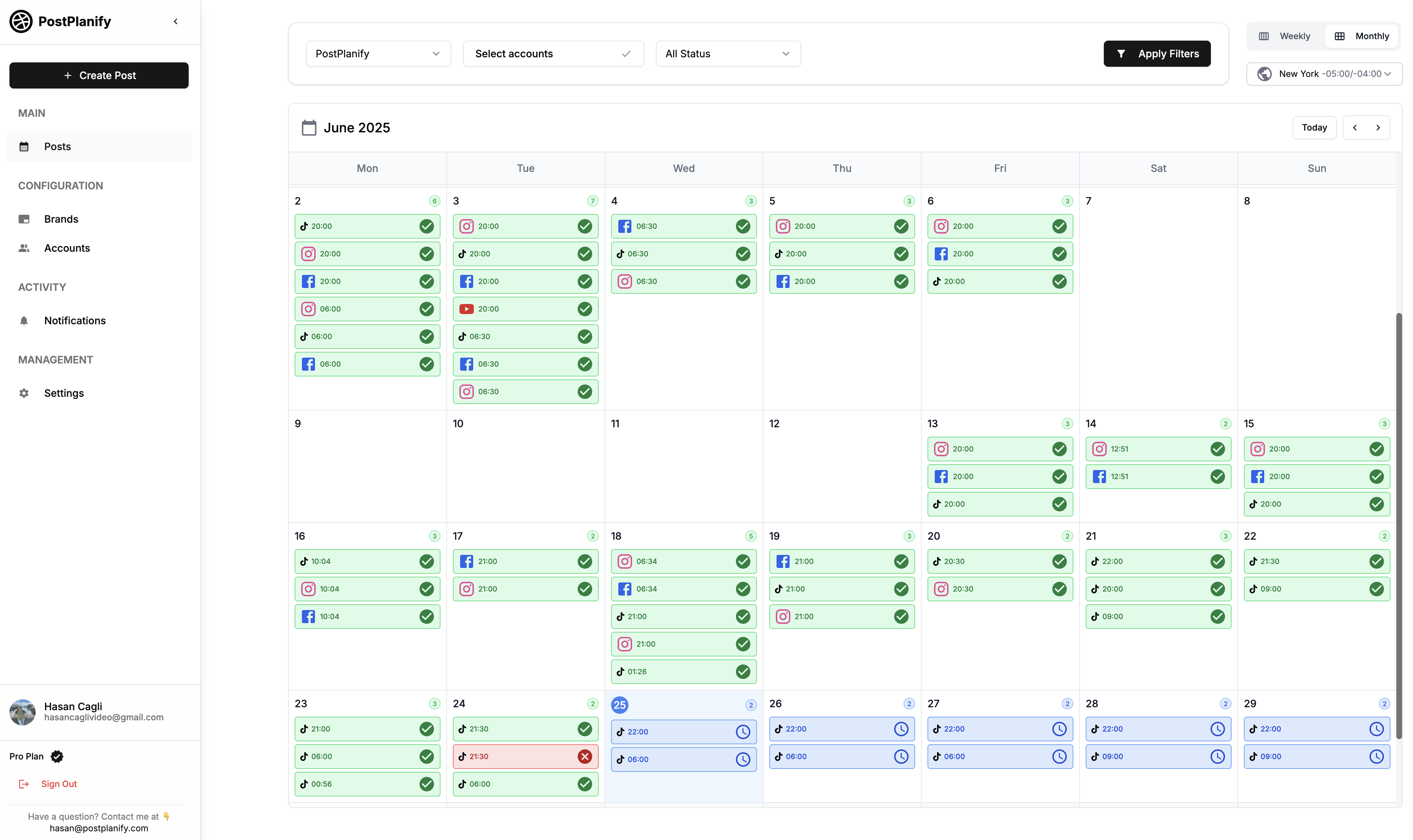
For a dealership, three things stand out. It publishes to Google Business alongside Facebook, Instagram, TikTok, and YouTube, and lets you reply to Google reviews from the social inbox — which matters when dealerships rank #1 among local businesses for search-driven calls and clicks. Its AI assistant writes captions and generates images, so a new arrival goes from photos to a posted, on-brand listing in minutes. And its unified inbox pulls Facebook and Instagram DMs into one queue your team can answer fast — the difference between catching an "is this still available?" message and losing it to the dealer down the road.
At a glance
- Pricing: Growth $99/mo (or $79/mo billed yearly) for 15 accounts and 3 users → Premium $199/mo → Scale $299/mo; custom Enterprise
- Platforms: 10, including Google Business, Facebook, Instagram, TikTok, YouTube, and LinkedIn
- Free trial: 7 days (14-day money-back guarantee)
- Best for dealerships: Single stores through multi-rooftop groups that want Google Business, reviews, AI inventory posts, and a fast lead inbox in one flat-priced tool
Key features for a dealership
- Publish to Google Business + reply to Google reviews from the social inbox (Instagram, Facebook, LinkedIn, Google Business, YouTube)
- AI-powered captions and image generation for new arrivals, features, and sales events
- Unified social inbox for fast lead and DM response across Facebook and Instagram
- Visual content calendar with platform previews and bulk scheduling for inventory photos and Reels
- Approval workflows to keep pricing and disclaimer compliance consistent across salespeople
- Analytics and reporting across all 10 platforms, including Google Business search impressions and customer actions
- Link-in-bio to route followers to inventory or a finance application
How it fits a dealership: It runs a single store's entire local presence — posts, Google reviews, Facebook and Instagram leads, and reporting — from one $99/mo plan, and because pricing is flat it scales to a multi-rooftop group without per-seat costs piling up as you add stores and salespeople. The trade-off: a very large auto group that needs deep social listening and enterprise ad management may want a dedicated suite for that specific layer alongside it.
Verdict: The best all-round fit for most dealerships — strong on the things stores actually need (Google Business, reviews, AI inventory content, fast lead response) without enterprise pricing.
Learn more: See the full PostPlanify pricing breakdown, the scheduler for car dealerships, or start a free trial.
 PostPlanify
All your social media in one simple dashboard
Schedule posts, track analytics, and reply to comments/DMs without switching tabs.

Engagement
+18%
Views
52.8k
2. Sprout Social — Best for Large Dealer Groups
Sprout Social is the enterprise choice, and auto retail has plenty of enterprises — dealer groups running dozens of rooftops under one umbrella. Sprout's analytics, social listening, and reporting are the deepest here, a fit for a group that needs to track reputation and performance across every store and brand it owns.
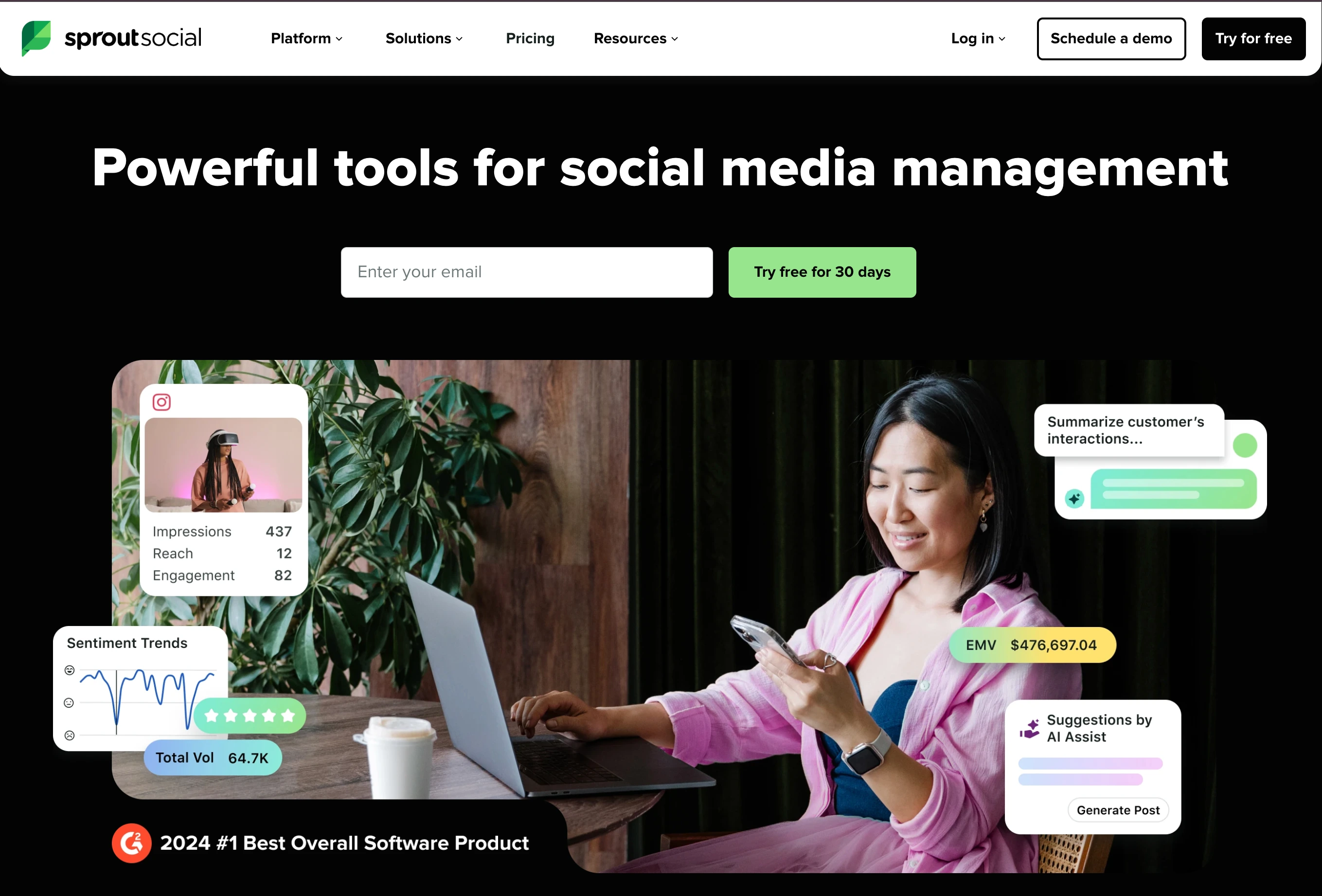
The wall is price. Sprout starts at $199 per seat per month, listening is a paid add-on, and every user pays the full seat cost — steep for a single store. But review management is included across plans, and for a group monitoring Google and reputation at scale across many locations, that centralized reporting can justify the spend.
At a glance
- Pricing: $199/$299/$399 per seat/mo; 30-day trial, no free plan
- Best for dealerships: Multi-rooftop groups needing enterprise reporting and listening
- Ratings: 4.4/5 on G2 (5,731 reviews), 2.2/5 on Trustpilot (75)
How it fits: Ideal for a dealer group's in-house marketing team; overkill and costly for a single store that mainly needs to post and manage reviews.
Verdict: Best-in-class analytics for large dealer groups — but the per-seat cost is hard to justify below the group level.
Learn more: Sprout Social pricing, Sprout Social reviews, and the best Sprout Social alternatives.
3. Hootsuite — Best for Enterprise Auto Groups & Paid Social
Hootsuite competes at the enterprise tier on breadth — a huge app directory, social advertising and post boosting, employee advocacy, and listening via a Talkwalker add-on. For an auto group that leans heavily on paid social to move inventory, its ad and boosting tools alongside organic scheduling are a genuine draw.
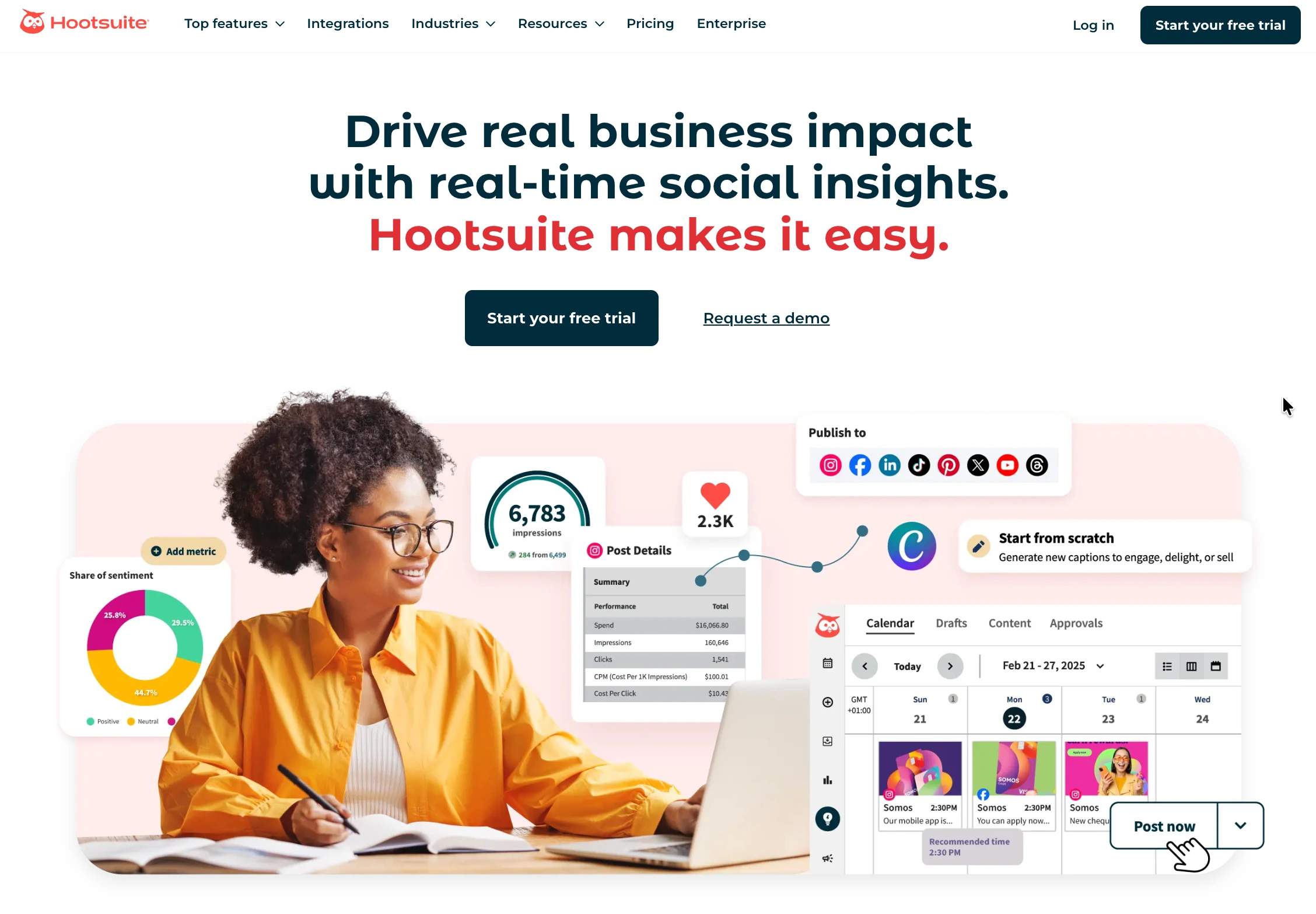
It's priced for enterprises: $249 per user per month on Standard, no free plan since 2023, and review management only as an Enterprise add-on. A single dealership will feel the cost and complexity — but a group standardizing organic and paid across many rooftops gets a lot of surface area. Note the Trustpilot score (1.8/5 from 511 reviews, mostly billing complaints) before an annual commitment.
At a glance
- Pricing: $249 (Standard) / $499 (Advanced) per user/mo; 30-day trial
- Best for dealerships: Enterprise auto groups needing paid social, integrations, and governance at scale
- Ratings: 4.3/5 on G2 (6,615 reviews), 1.8/5 on Trustpilot (511)
How it fits: A fit for large organizations running paid at scale; single stores will feel the complexity and cost.
Verdict: Powerful and broad with strong paid-social tools — but built for enterprises, so most single stores pay for capability they won't touch.
Learn more: Hootsuite pricing, Hootsuite reviews, and the best Hootsuite alternatives.
4. Agorapulse — Best for Lead Response & Comment Moderation
Agorapulse is built around the inbox, which maps neatly onto a dealership's biggest social job: answering leads fast. Comments, DMs, and reviews land in one queue your BDC can triage and assign, automated moderation rules can hide spam or trolling on your ads, and a social CRM remembers each shopper's history — so a follow-up never starts from zero.
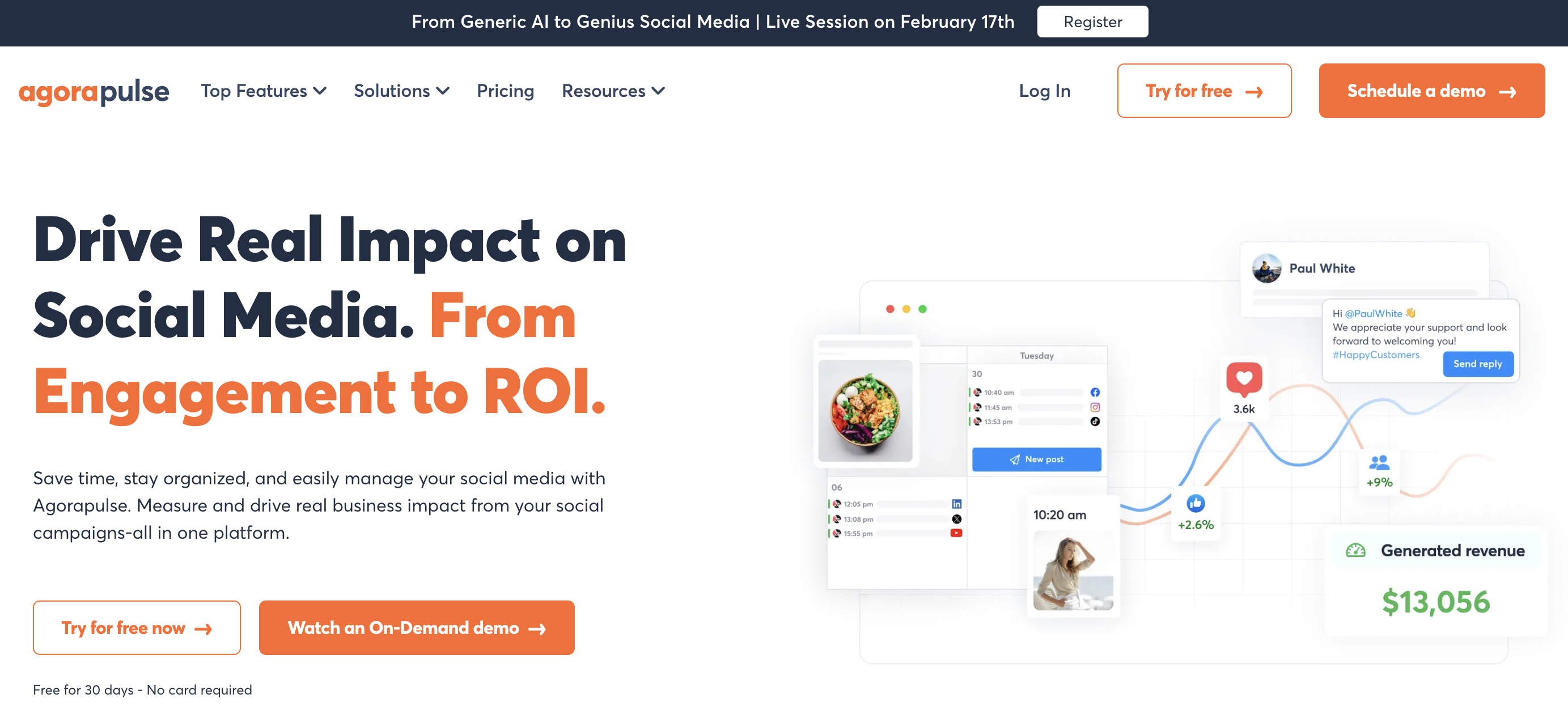
When speed-to-lead decides who sells the car, a shared inbox with assignment and saved replies is the point — and Agorapulse also moderates the comments on your paid ads, which get noisy fast. It publishes to Google Business too. The catch is the meter: at $99–$199 per user, a sales team of several costs many times a flat plan, and profiles cap at 10 below the custom tier.
At a glance
- Pricing: $99/$149/$199 per user/mo ($79/user annual); 30-day trial, no free plan
- Best for dealerships: Stores where fast lead response and ad-comment control are the priority
- Ratings: 4.5/5 on G2 (967 reviews), 4.0/5 on Trustpilot
How it fits: Excellent if lead response and engagement are your focus; per-user pricing adds up for larger sales teams.
Verdict: The lead-and-engagement pick — the best unified inbox and ad-comment moderation for a store that lives on fast follow-up.
Learn more: Agorapulse pricing, Agorapulse reviews, and the best Agorapulse alternatives.
5. Vista Social — Best for Review & Reputation Management
Vista Social is the most complete all-in-one here for a dealership whose reputation lives or dies online. It natively manages six review sites — including Google, Yelp, and Facebook — so you can monitor and respond to reviews from one dashboard instead of logging into each. It's rated 4.8/5 on G2 across 1,000+ reviews, the highest score in this guide.
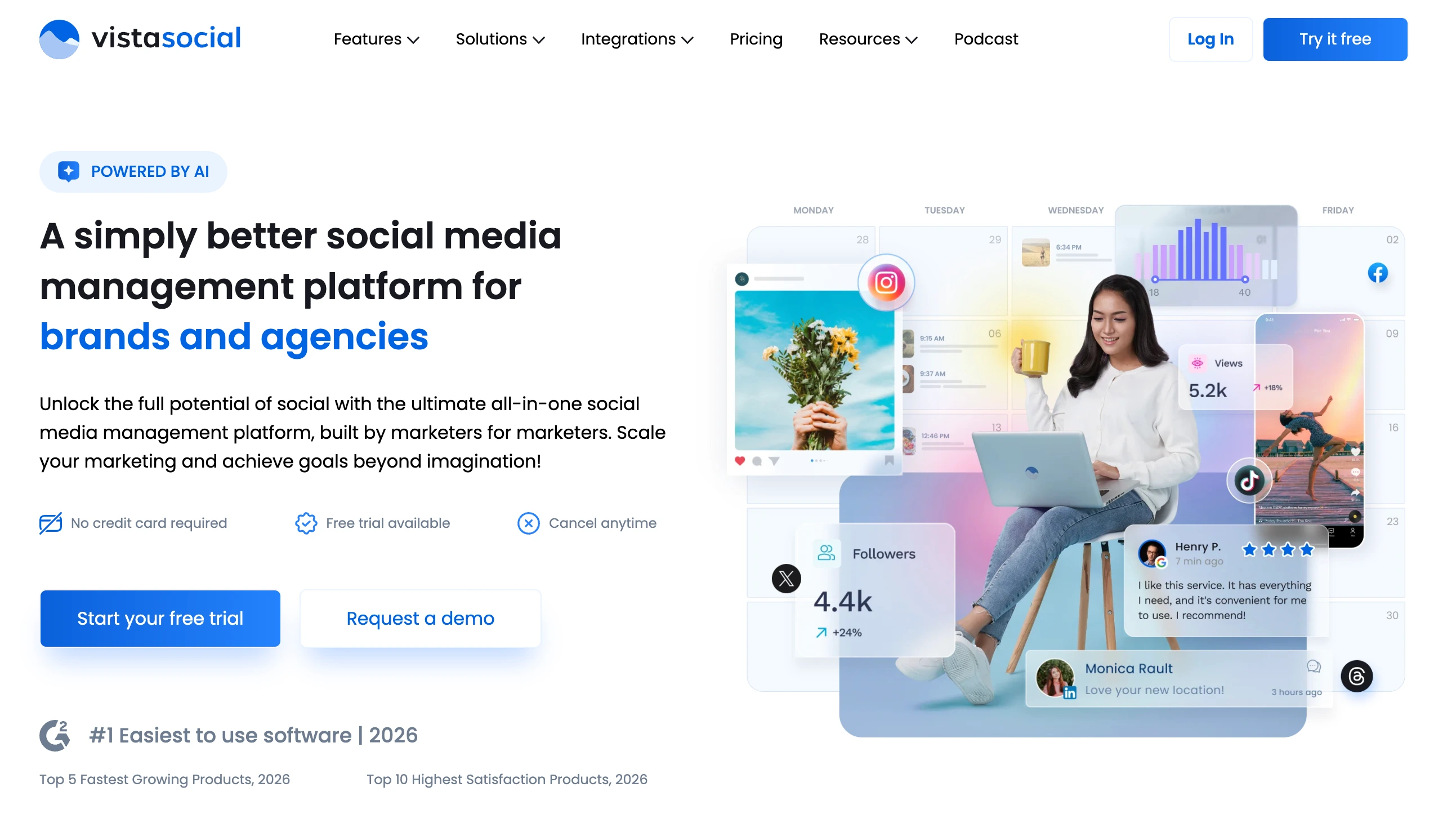
For a dealer, reputation tools plus breadth at a mid-market price is the appeal: review management, a Vista Page link-in-bio, DM automations, and social listening, from $79/month for 15 profiles — enough for a store or a small group. Two things to know: X/Twitter is a paid add-on, and the module count can feel heavy if you only want scheduling and reviews. (For the automotive-specific sites — DealerRater and Cars.com — you'll still manage those in their own dashboards.)
At a glance
- Pricing: $79 Professional (15 profiles) / $149 Advanced / $379 Scale per mo; 14-day trial, no free plan
- Best for dealerships: Reputation-focused stores that want reviews, scheduling, and inbox in one affordable all-in-one
- Ratings: 4.8/5 on G2 (1,071 reviews), 4.1/5 on Trustpilot (62), 4.9/5 on Capterra (scheduling)
How it fits: Excellent for a store or small group that wants native review-site management without enterprise pricing; the feature breadth is more than a scheduling-only dealer needs, and X costs extra.
Verdict: The all-in-one reputation pick — the best-rated tool here, and the strongest at managing Google, Yelp, and Facebook reviews from one place.
Learn more: Vista Social pricing, Vista Social reviews, and the best Vista Social alternatives.
6. Metricool — Best for Paid Social & Analytics
Metricool is the pick for a dealership that runs on paid social. Beyond analytics — competitor benchmarking, unlimited history, and clean reports — it includes native ad-campaign management for Facebook, Instagram, Google, and TikTok, so a store planning an inventory push or a weekend sales-event boost can build and track the ads in the same place it schedules organic posts.
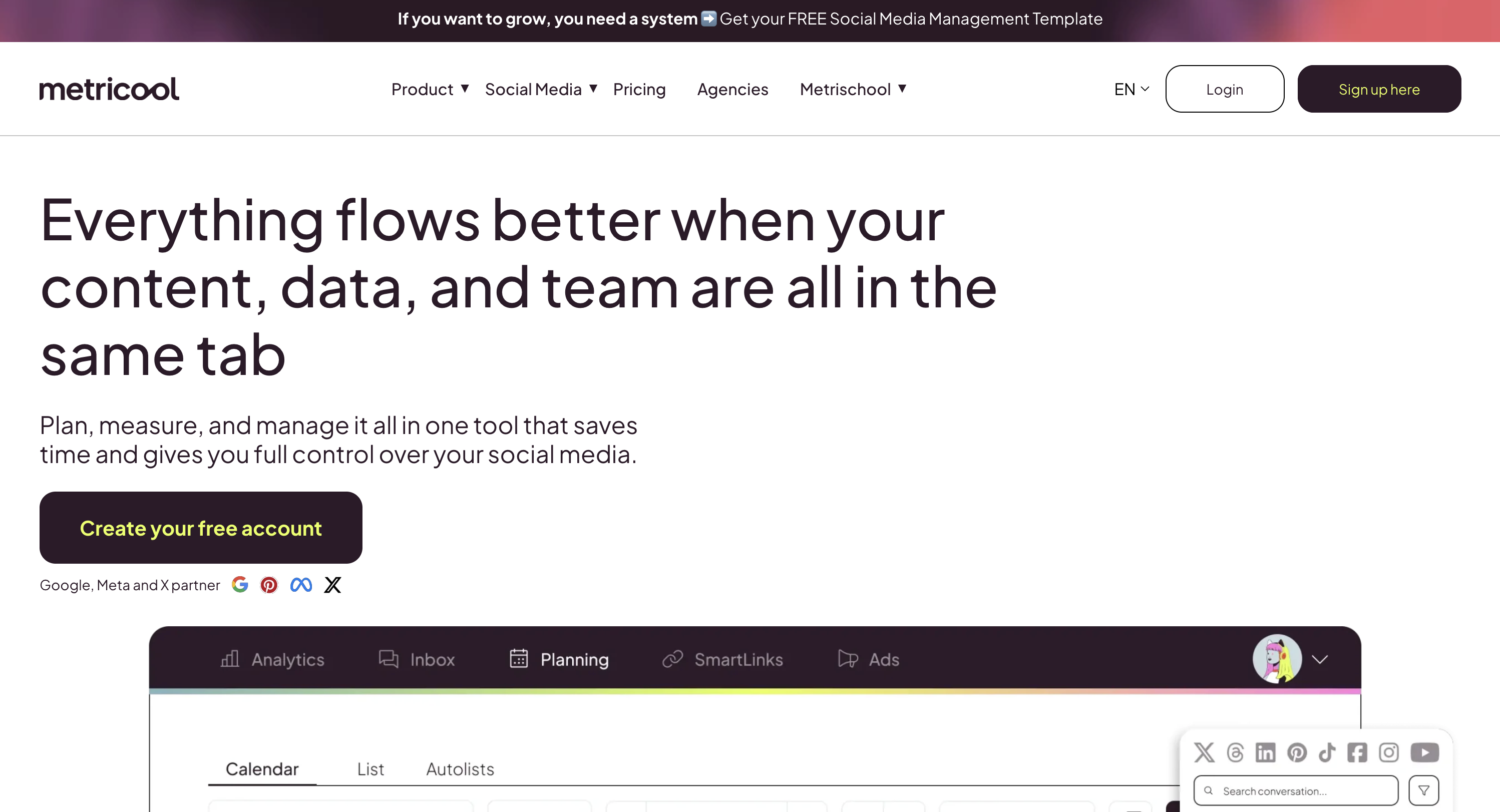
It's affordable, too: a free plan to start and paid plans from $25/month, plus SmartLinks for routing followers to inventory or a finance form. The trade-offs: it leans analytical over creative — AI captions and image tools are thin — and its inbox lacks the moderation depth an ad-heavy dealership wants for comment control. X/Twitter is a $5/month add-on, and the free plan excludes LinkedIn and X.
At a glance
- Pricing: Free (1 brand) / Starter from $25/mo / Advanced from $54/mo; free plan, no trial needed
- Best for dealerships: Stores and groups that want deep analytics and native ad management on a budget
- Ratings: 4.5/5 on G2 (83 reviews), 4.2/5 on Trustpilot (519), 4.8/5 on Capterra (ease of use)
How it fits: Ideal if paid social and reporting drive your decisions; less suited to a store that wants an all-in-one for content and engagement.
Verdict: The paid-social-and-analytics pick — the most affordable way to run and measure dealership ads, if you can live with lighter content tools.
Learn more: Metricool pricing, Metricool reviews, and the best Metricool alternatives.
7. Later — Best for Inventory Video & Visual Content
Later is the visual specialist, and dealerships are increasingly a visual — really, a video — business. Walkaround Reels and short vertical inventory clips are among the highest-converting content a store can post, and Later's drag-and-drop grid, media library, and scheduling make planning that feed straightforward.
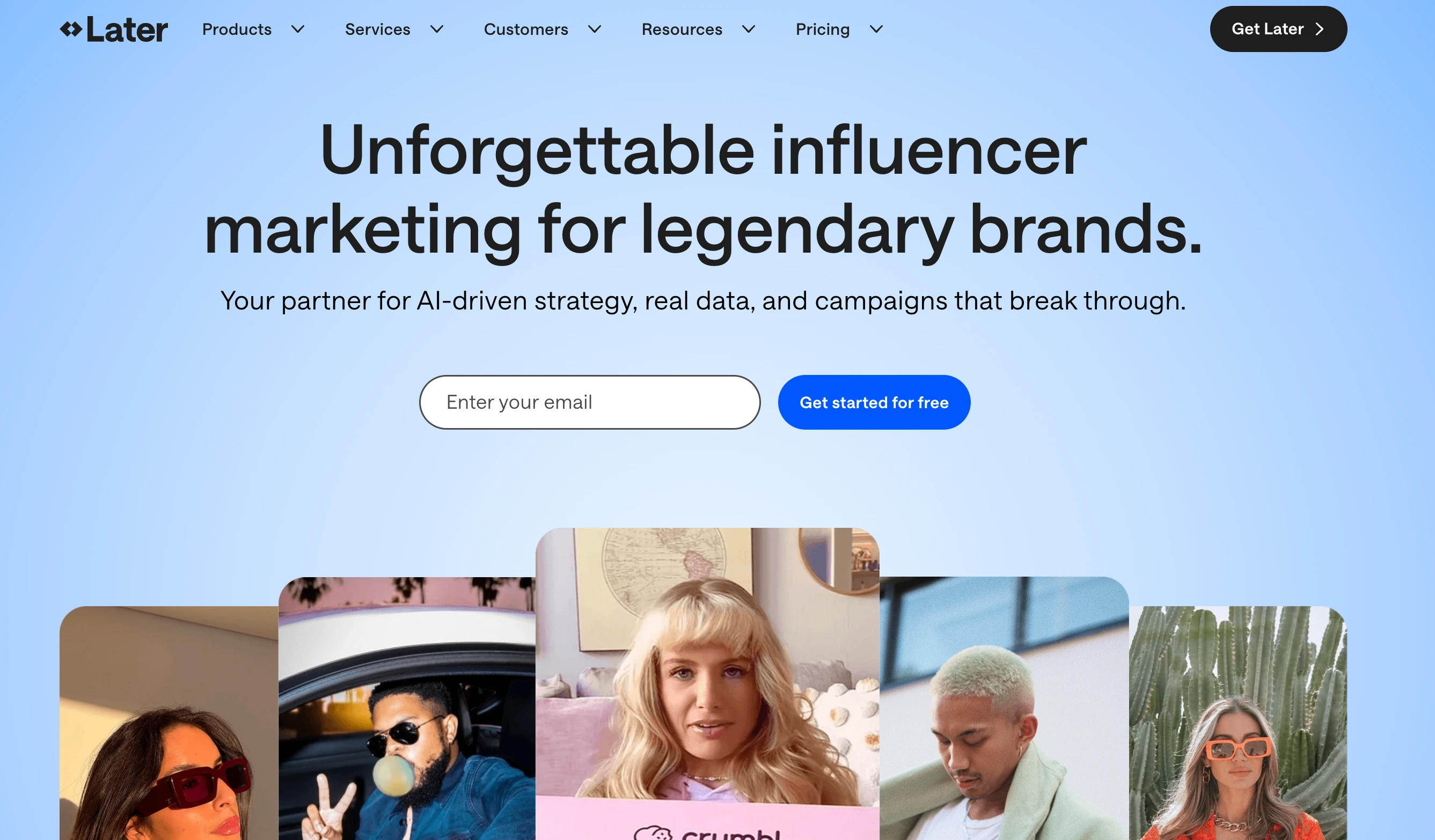
The catch for a dealership is meaningful: Later does not support Google Business Profile — where your local discovery and reviews live — so you'd manage that elsewhere, and it dropped X/Twitter in 2025. Its Linkin.bio page (on all plans) is useful for routing followers to a vehicle page or finance form, but the gap between its G2 rating (4.5) and Trustpilot score (1.3/5 across 329 reviews) is worth noting. Later is a visual front-end, not an all-in-one.
At a glance
- Pricing: $25 Starter / $50 Growth / $110 Scale per mo; limited free plan, 14-day trial
- Best for dealerships: Video-first stores that lean on Instagram and Reels for inventory
- Ratings: 4.5/5 on G2 (347 reviews), 1.3/5 on Trustpilot (329)
How it fits: Excellent for visual and video planning; the missing Google Business support means most dealers will run it alongside a review tool.
Verdict: The inventory-video pick — great visual planning, but not a complete dealership solution on its own.
Learn more: Later pricing, Later reviews, and the best Later alternatives.
8. Sendible — Best for Agencies Serving Dealerships
Sendible is built for agencies running social for multiple clients — including the automotive marketing firms many dealers hire. Its calling card is white-label client dashboards and branded reports, so an agency can give each dealership a portal under its own brand, with a Priority Inbox and client approval links.
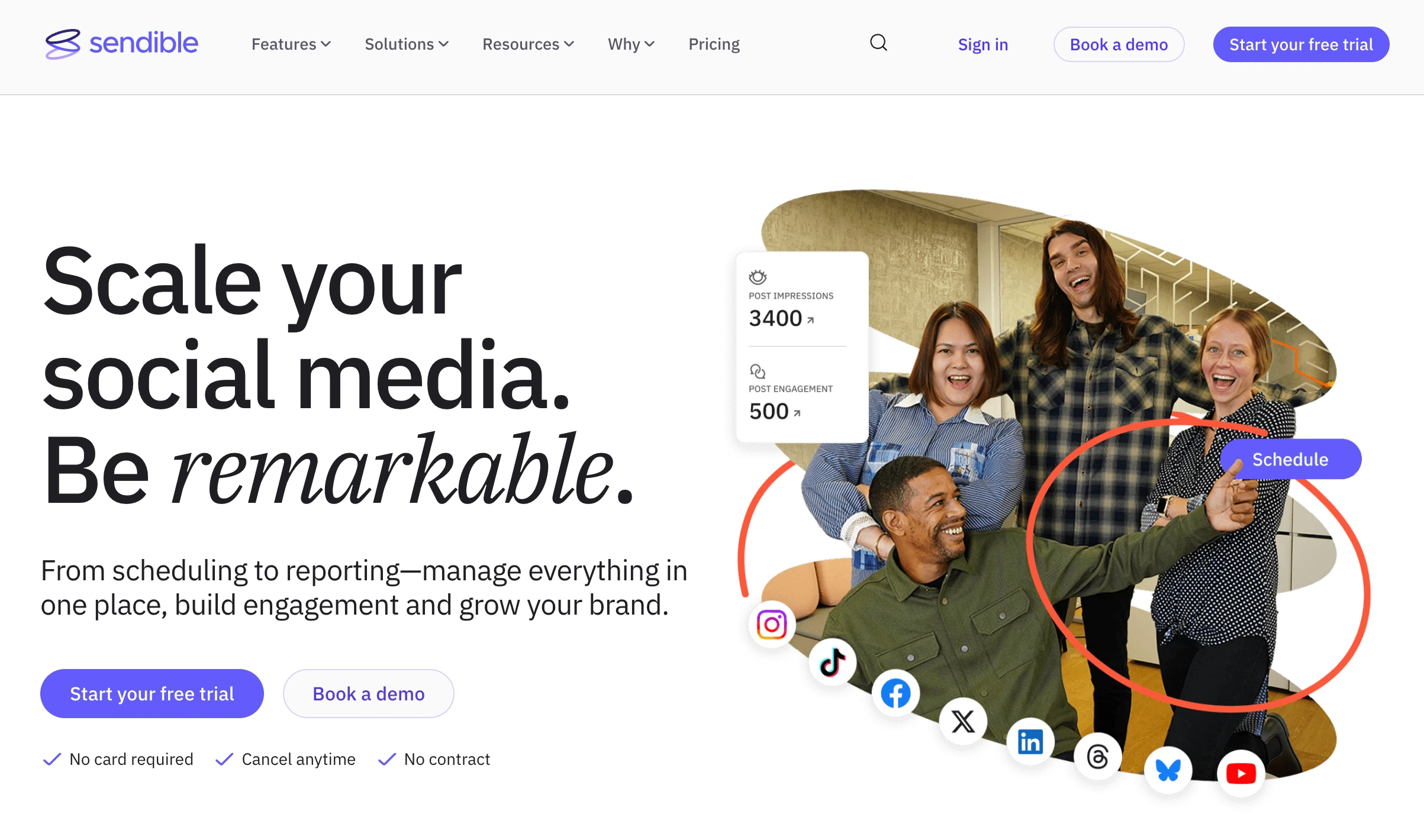
The strength is the agency workflow: run a dozen dealerships from one dashboard, group profiles by client, and route posts through approval links so a store signs off without ever logging in — and it supports Google Business. For a single dealership marketing itself, it's more than you need, and it lacks AI image generation, a built-in link-in-bio, and native ad management.
At a glance
- Pricing: $29 Creator → $89 Traction → $199 Scale → $299 Advanced → $750 Enterprise; 14-day trial
- Best for dealerships: Agencies managing social for several dealership clients
- Ratings: 4.5/5 on G2 (899 reviews)
How it fits: If you're a single store, this is more than you need; if you're the agency serving dealers, the white-label workflow is the draw.
Verdict: The agency pick — white-label dashboards and client approvals make it strong for firms managing multiple dealership accounts.
Learn more: Sendible pricing, Sendible reviews, and the best Sendible alternatives.
9. SocialPilot — Best Budget Multi-Rooftop Management
SocialPilot brings agency-style features — bulk scheduling, multi-account management, white-label reports, and Facebook post boosting — at a fraction of enterprise prices, a practical fit for a small auto group managing a few rooftops on a budget. It supports Google Business alongside the major networks.
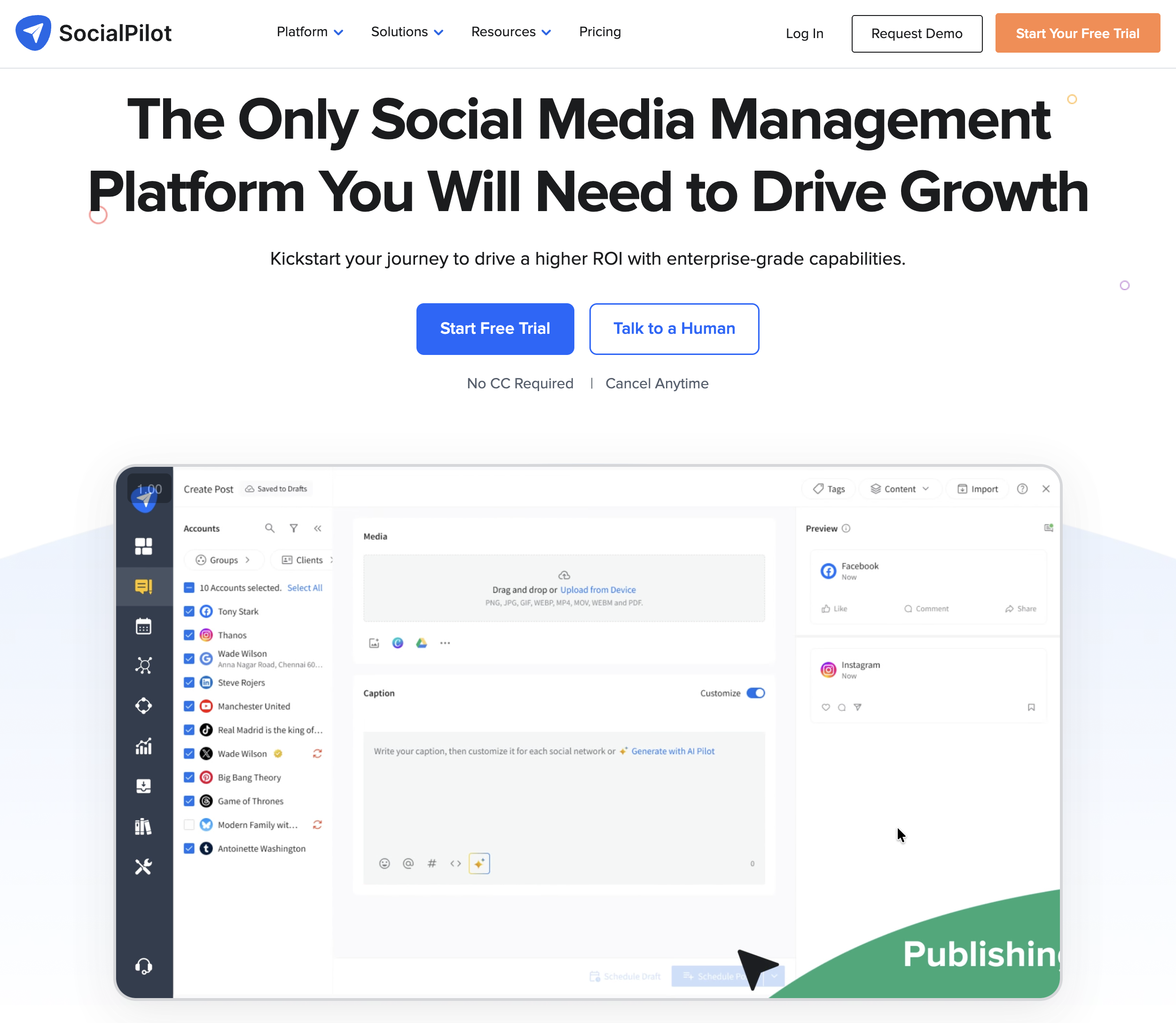
Cost-per-rooftop is the draw. A group can bulk-upload a month of posts for every store in one CSV, boost the best ones on Facebook, and send each location a white-labeled report from the Premium tier up — for $30–$100 a month. You trade polish for that value: the dashboard is busy, analytics are basic, and small per-account and per-user fees stack on lower tiers. But little else offers this much multi-rooftop reach this cheaply.
At a glance
- Pricing: $30 Essentials / $50 Standard / $100 Premium / $200 Ultimate per mo; 14-day trial
- Best for dealerships: Budget-conscious multi-rooftop groups and small agencies
- Ratings: 4.5/5 on G2 (841 reviews), 4.4/5 on Capterra
How it fits: Great value for managing multiple stores; the interface is functional rather than polished.
Verdict: The best value for multi-rooftop dealership management — white-label reports on Premium and bulk scheduling with boosting at a low price.
Learn more: SocialPilot pricing, SocialPilot reviews, and the best SocialPilot alternatives.
10. Buffer — Best for Single-Store Dealerships Getting Started
Buffer is the easiest on-ramp for a single store or independent used-car lot. Its interface is the cleanest in the category, its free plan covers three channels, and paid plans are just $6 per channel per month — so you can get consistent before there's a marketing budget.
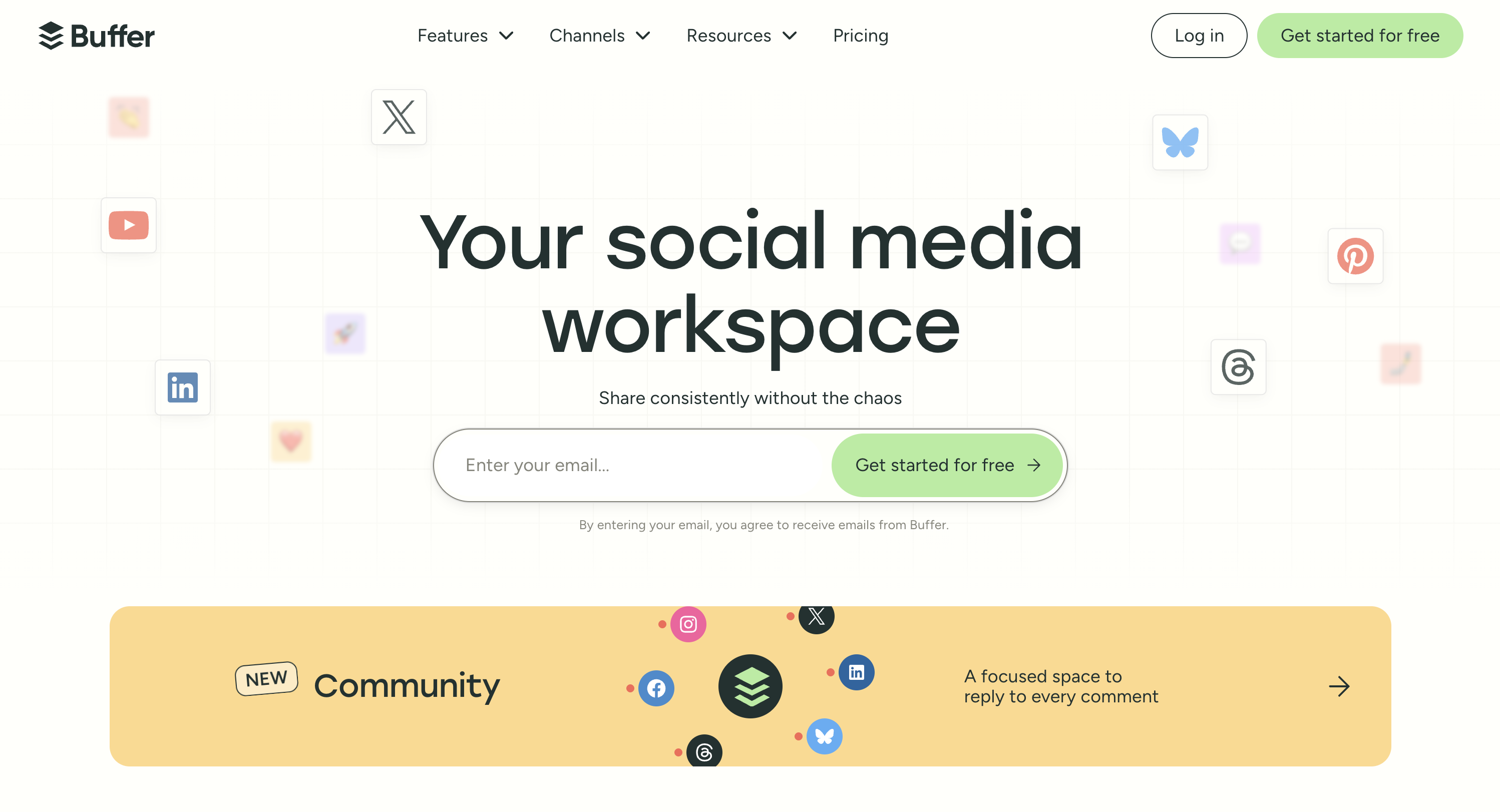
The simplicity has limits for a dealership. Buffer publishes to Google Business and includes a Start Page link-in-bio, but analytics are basic, its community inbox only covers Instagram, Facebook, and LinkedIn (so it won't do much for fast lead response), and there's no review management or ad tooling. For a small lot that wants steady posting, it's a fair start; once leads and reputation matter, you'll outgrow it.
At a glance
- Pricing: Free (3 channels) / $6 per channel (Essentials) / $12 per channel (Team) per mo; 14-day trial on paid
- Best for dealerships: Single stores and independent lots getting started
- Ratings: 4.3/5 on G2 (1,023 reviews), 2.1/5 on Trustpilot (93)
How it fits: Perfect for a small store that wants simple, consistent posting; light on leads, reviews, and analytics.
Verdict: The simplest, cheapest start — great for a single lot, limited once lead response and reputation matter.
Learn more: Buffer pricing, Buffer reviews, and the best Buffer alternatives.
Side-by-Side Comparison: All 10 Tools
| Tool | Starting price | Google Business | Review replies | Paid ad tools | AI content | Free plan/trial |
|---|---|---|---|---|---|---|
| PostPlanify | $99/mo (flat) | ✅ | ✅ (via inbox) | ❌ | ✅ | 7-day trial |
| Sprout Social | $199/seat/mo | ✅ | ✅ | ✅ | ❌ | 30-day trial |
| Hootsuite | $249/user/mo | ✅ | Add-on | ✅ | ❌ | 30-day trial |
| Agorapulse | $99/user/mo | ✅ | ✅ (via inbox) | Ad comments | ❌ | 30-day trial |
| Vista Social | $79/mo | ✅ | ✅ (6 sites) | ❌ | Via Canva | 14-day trial |
| Metricool | Free / $25/mo | ✅ | ❌ | ✅ | ❌ | Free plan |
| Later | $25/mo | ❌ | ❌ | ❌ | ❌ | Limited free |
| Sendible | $29/mo | ✅ | Limited | ❌ | ❌ | 14-day trial |
| SocialPilot | $30/mo | ✅ | Limited | Boosting | ❌ | 14-day trial |
| Buffer | Free / $6/channel | ✅ | ❌ | ❌ | ❌ | Free plan |
How Social Actually Sells Cars: Leads, Marketplace, and Speed-to-Lead
Posting inventory is only half the job — the other half is converting the interest it creates into a lead your team actually reaches. In automotive, that comes down to speed. The classic MIT/InsideSales lead-response study found the odds of contacting a lead drop about 100x when you wait 30 minutes instead of 5, and the odds of qualifying one drop 21x. Harvard Business Review found firms that responded within an hour were 7x more likely to have a meaningful conversation with a decision-maker — yet the average firm took 42 hours. On a Facebook Marketplace "is this still available?" message, the dealer who replies first usually wins the deal.
A few things move the needle:
- Answer social leads in minutes, not hours. Route Facebook and Instagram DMs and Marketplace messages into one inbox your team watches, with assignment and saved replies so nothing sits. A five-minute response should be the goal, not the exception.
- Lean into video. More than 75% of auto shoppers say online video has influenced their shopping, and 60%+ of those who watch a vehicle video visit a dealership or its site afterward (Think with Google). Walkaround Reels and short vertical inventory clips (make, model, price, mileage) are the highest-leverage content a store can make.
- Use paid social and Marketplace deliberately. Organic reach is limited; Facebook and Instagram lead ads and Marketplace listings are where much of the volume comes from. A tool that manages or reports on those ads keeps spend accountable.
- Guard your reputation everywhere it lives. Dealership reviews are spread across Google, DealerRater, Cars.com, Facebook, and Yelp — and 89% of consumers read Google reviews before choosing a business, while 88% prefer businesses that respond to all their reviews (BrightLocal). Respond to every review, fast, and move the specifics of a bad one offline with a named manager.
When you compare the tools above, weigh the inbox, reputation, and paid-social features as heavily as scheduling — for a dealership, those are what turn a scroll into a showroom visit.
Car Dealership Social Media Strategy: Platforms, Content, and Cadence
Which social media platform is best for a car dealership?
- Facebook + Marketplace — the center of gravity for local used-car shopping, Messenger leads, lead ads, and community reach.
- Google Business Profile — how new shoppers find you and the reviews that decide trust; dealerships rank #1 among local businesses for search-driven calls and clicks.
- YouTube — the highest video purchase influence: walkarounds, test drives, comparisons, and how-tos with lasting search value.
- Instagram — visual inventory, Reels, and Stories; strong for remarketing and cross-posting with Facebook.
- TikTok — viral car content and younger buyers; short vertical inventory clips with a make/model/price voiceover perform best.
Master Facebook (and Marketplace) plus Google first, then build a video habit on YouTube and Instagram.
What should a car dealership post?
- Vehicle walkaround videos and new-arrival features — your highest-leverage content
- "Just sold" and delivery-day customer photos — social proof that builds trust
- Customer testimonials and reviews — turn a great review into a post
- Staff and culture — people buy from people they like
- Service-department content — retention-driving and it converts well
- Financing and how-to education — for payment-focused shoppers
- Community, events, and seasonal sales — local reach and in-market intent
How often should a dealership post?
Most stores do well with 5+ posts per week, plus daily inventory and Marketplace activity. But cadence matters less than two things: consistency, and fast lead response. Batch a week of inventory and evergreen content in one sitting, then keep DMs and Marketplace messages answered in real time — that's where the deals actually come from.
How to Choose the Right Tool for Your Dealership
- Single store or used-car lot: PostPlanify (Google Business + reviews + AI inventory posts + a fast inbox, flat $99/mo) or Buffer for a free start.
- Lead- and reputation-focused store: Agorapulse for the strongest lead inbox, or Vista Social for Google/Yelp/Facebook review management.
- Ad-heavy dealership: Metricool for native ad management and analytics on a budget.
- Video-first store: Later for inventory Reels — paired with a tool that covers Google Business.
- Multi-rooftop group: PostPlanify for bundled stores and Google Business in one plan, or SocialPilot for budget multi-account scheduling and boosting.
- Large auto group: Sprout Social or Hootsuite for enterprise analytics, paid social, and governance.
- Agency serving dealers: Sendible for white-label client dashboards.
Frequently Asked Questions
What is the best social media management platform for car dealerships?
For most dealerships, PostPlanify is the best all-around choice — it bundles Google Business publishing and review replies, AI captions and images for inventory posts, video and Reels scheduling, a link-in-bio for inventory or finance, and one inbox for fast lead response, on one flat plan from $99/mo (no per-seat fees). The best fit still depends on your needs: Sprout Social or Hootsuite for large auto groups that need enterprise analytics and paid social, Agorapulse for lead response and ad-comment moderation, Vista Social for review and reputation management, Metricool for paid social and analytics on a budget, Later for inventory video, Sendible for agencies, SocialPilot for budget multi-rooftop groups, and Buffer for a single store starting out.
Which social media platform is best for a car dealership?
Facebook (with Marketplace) and Google Business Profile are the two most important — Facebook for local used-car shopping, Messenger leads, and lead ads, and Google Business for how shoppers find you and the reviews that decide trust. YouTube has the highest video purchase influence for walkarounds and reviews, and Instagram and TikTok drive visual, younger reach. Most dealers should master Facebook and Google first.
How do car dealerships get more leads from social media?
Combine three things: consistent inventory content (especially walkaround video), paid social — Facebook/Instagram lead ads and Marketplace listings — to reach in-market shoppers, and fast follow-up on every DM and message. The last one matters most: whoever answers an "is this still available?" message first usually wins the deal, so route all social messages into one inbox and aim to respond within minutes.
How fast should a dealership respond to a social media lead?
As close to five minutes as you can manage. Lead-response research shows the odds of reaching a lead drop roughly 100x when you wait 30 minutes instead of 5, and firms that respond within an hour are far more likely to have a real conversation — yet most take many hours. Use a shared inbox with saved replies and, ideally, an auto-responder to acknowledge messages instantly, then follow up personally fast.
How do dealerships use Facebook Marketplace to sell cars?
List inventory on Marketplace with clear photos, price, mileage, and a strong first line, then treat the Messenger conversations it generates as hot leads — answer immediately, qualify, and move toward a visit or call. Marketplace is one of the highest-volume, lowest-cost used-car lead sources, but its value depends almost entirely on response speed, so pair it with a lead inbox your team monitors constantly.
How should a dealership respond to a negative online review?
Respond quickly and professionally — within hours for a negative — thank the person, apologize even if you disagree, avoid copy-paste replies, and offer a named manager's direct contact to resolve it offline. Future shoppers judge you by how you handle criticism, not just the rating, and with 88% of consumers preferring businesses that reply to all reviews, a calm, personal response protects your reputation more than silence.
Do walkaround videos actually sell cars?
Yes — video is the single highest-leverage content a dealership can make. More than 75% of auto shoppers say online video has influenced their purchase, test-drive and walkaround videos are the most influential types, and 60%+ of shoppers who watch a vehicle video go on to visit a dealership or its website. Short, honest walkarounds that show the actual car outperform polished ads.
Is PostPlanify a good tool for a car dealership?
Yes — it's our top pick for most stores. It covers Google Business publishing and review replies, AI captions and images for inventory and sales events, video and Reels scheduling, a link-in-bio for inventory or finance, and one inbox for fast lead response, on flat pricing from $99/mo with no per-seat fees. Because that pricing is flat, it scales from a single store to a multi-rooftop group without per-seat costs piling up; very large auto groups that need deep social listening and enterprise ad management may want a dedicated suite for that layer alongside it.
Making the Switch
Switching tools is simpler than it sounds — your Facebook, Instagram, and Google Business accounts live on those platforms, not inside your old scheduler, so you reconnect with a secure login and carry on. Set your posting schedule, add your sales team with the right permissions, load your best inventory photos and video into the media library, connect your inbox so leads are answered fast, and point your link-in-bio at your inventory or finance page.
If PostPlanify fits your store, you can start a free trial here.
Related Reading
-
13 Best Google My Business Tools: Listings, local rank tracking, and review-generation tools for a dealership's Google presence
-
Best Social Media Tools for Franchises and Multi-Location Brands
PostPlanifyAll your social media in one simple dashboard
Schedule posts, track analytics, and reply to comments/DMs without switching tabs.
Engagement
+18%
Views
52.8k
About the Author

Hasan Cagli
Founder of PostPlanify, a content and social media scheduling platform. He focuses on building systems that help businesses, agencies, and teams plan, publish, and manage content and social media more efficiently across platforms.


